 A Proud Canadian Company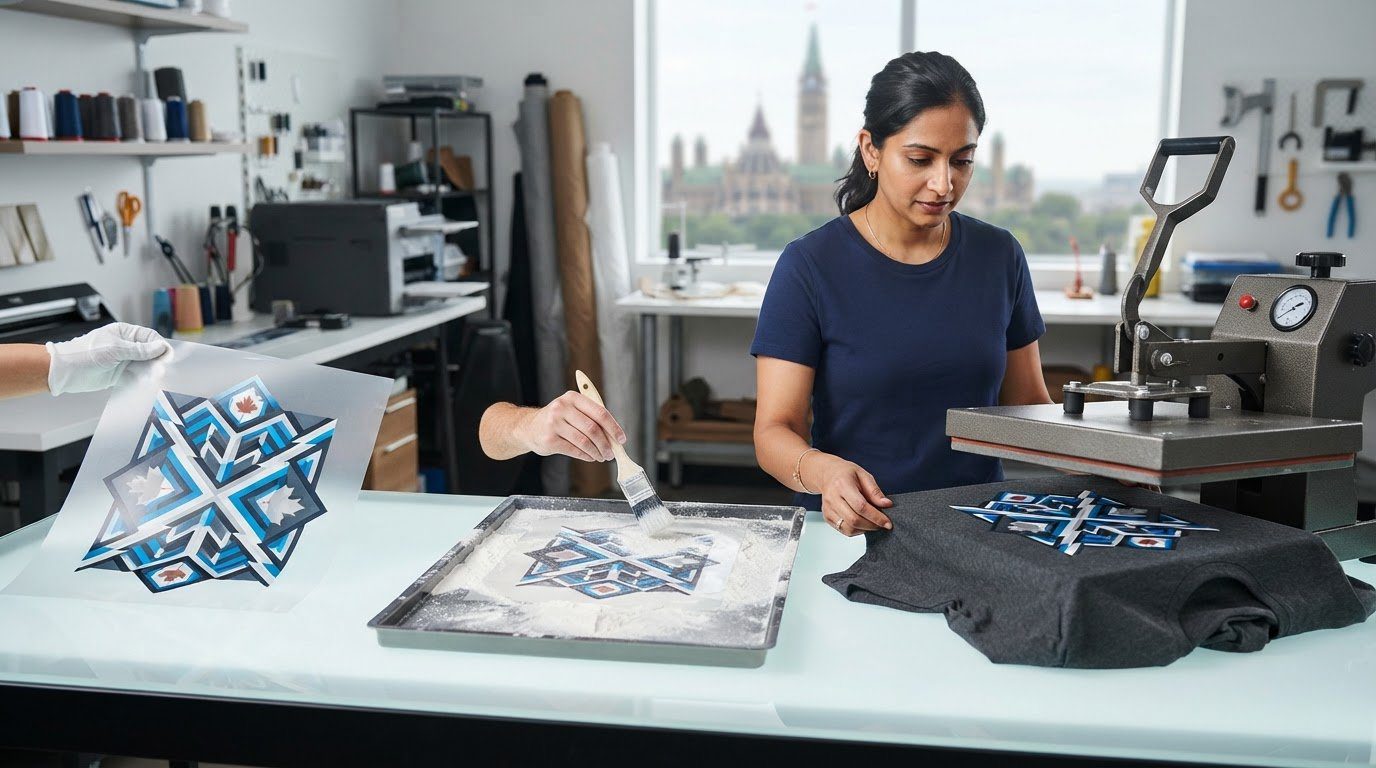
What if a garment graphic made a brief stop on a sheet of film before becoming part of a T-shirt? That’s the basic idea behind DTF, and it makes the question “what is DTF printing technology” easier to picture. The process is straightforward: artwork is printed onto special film, coated with adhesive powder, then heat-pressed onto fabric.
If you’re comparing DTF with a graphic printed directly onto a garment, choosing fabric for a custom design, or wondering what affects the finished result, you’re asking the right questions. DTF has practical strengths, but it isn’t automatically the best fit for every garment or design.
This guide explains the DTF process in plain language, compares it with direct-to-garment printing, and covers factors to consider when choosing fabric, preparing artwork and caring for a print. You’ll also find questions to ask a local print provider before ordering custom apparel or transfers.
Key Takeaways
- Learn what is DTF printing technology and how artwork printed on film becomes a fabric graphic.
- Understand the main production steps, while keeping in mind that equipment and process details can vary by provider.
- Assess how fabric, garment surface, artwork and application can influence the finished print.
- Prepare useful questions about your design and garment before contacting a print provider.
- Explore custom apparel printing and DTF stickers and films through Printwell Canada, with online ordering or an Ottawa showroom at St. Laurent Shopping Centre.
What Is DTF Printing Technology, and What Does the Name Mean?
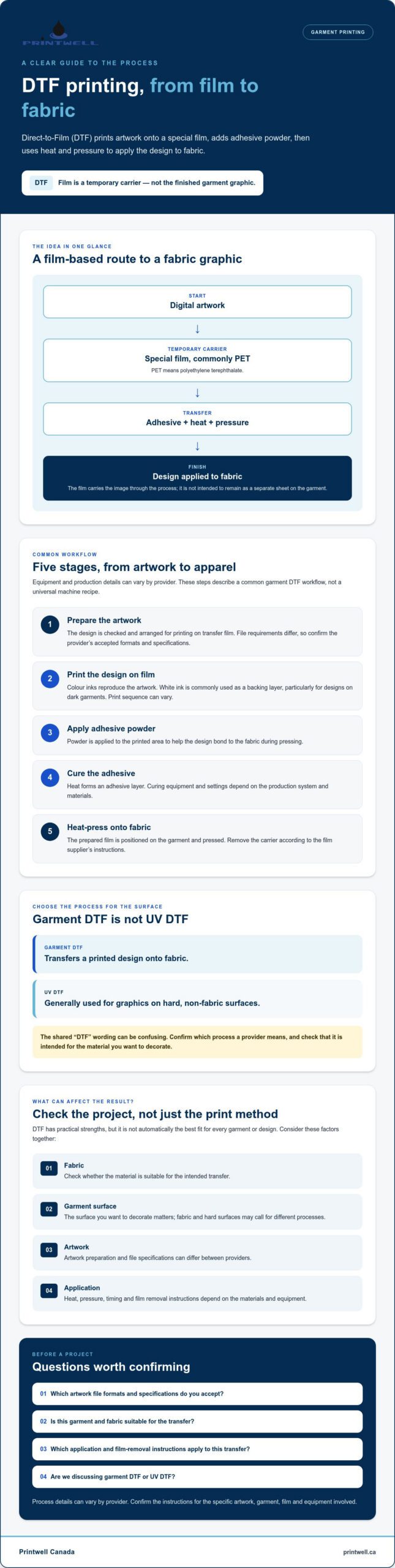
DTF printing technology is a garment-printing method that prints artwork onto special film, which is then used to transfer the design onto fabric. DTF stands for Direct-to-Film. The film is part of the production process, not the finished garment. It temporarily carries the printed image until the design is applied to the fabric.
If you’re asking “what is DTF printing technology,” picture the film as a stepping stone between a digital design and a piece of apparel. Instead of printing artwork straight onto a T-shirt, the printer first places it on a carrier sheet. Heat and pressure are then used to apply the design to the garment. The result is a graphic on fabric, not a separate film sheet intended to remain on the garment.
What does Direct-to-Film mean?
“Direct-to-Film” describes where the artwork is printed before it reaches the fabric. In common garment DTF workflows, the design is printed onto a type of plastic film called PET, short for polyethylene terephthalate. The PET film acts as a temporary carrier. It holds the image in position so it can be moved and applied to a garment. In everyday terms, a transfer is a design prepared in one place, then pressed onto another surface.
This distinction makes the name easier to understand. “Direct” refers to printing the artwork onto the film, not directly onto the final T-shirt. For an overview of the method and related considerations, see Direct-to-film printing (DTF).
What is the difference between DTF and UV DTF?
Garment DTF and UV DTF are distinct processes for different applications. Garment DTF transfers a printed design onto fabric. UV DTF is generally used to apply graphics to hard, non-fabric surfaces. The shared “DTF” wording can be confusing, so confirm which process a provider means when discussing a project. This article focuses on garment DTF, not UV DTF.
The distinction matters when you’re choosing a method for custom apparel or a transfer. A process intended for fabric isn’t automatically suitable for a hard surface, and vice versa. Start with the material you want to decorate, then check that the printing method and transfer are intended for that use.
How DTF Printing Works: From Digital Artwork to Fabric
DTF turns prepared digital artwork into a film-based transfer, then uses heat and pressure to apply it to a garment. Equipment and production details vary, so the steps below describe a common workflow rather than a universal machine recipe.
- Prepare the artwork. The design is checked and arranged for printing on the transfer film. File requirements differ between providers, so confirm accepted formats and specifications before submitting artwork.
- Print the design. Compatible printers use colour inks to reproduce the artwork on the film. In many garment DTF workflows, white ink is also printed as a backing layer, particularly when the design is for a dark garment. The print sequence can vary.
- Apply adhesive powder. Adhesive powder is applied to the printed area while it is prepared for transfer. The powder helps the design bond to the fabric during pressing.
- Cure the adhesive. The powder is heated to form an adhesive layer. Curing equipment and settings depend on the production system and materials, so there is no single setting for every workflow.
- Press the transfer onto fabric. The prepared film is positioned on the garment and heat-pressed. The carrier film is then removed according to the film supplier’s instructions.
How is the design printed onto transfer film?
The artwork is printed onto a compatible film carrier using inks suited to the DTF process. Colour ink creates the visible image, while white ink is commonly used to help colours show on darker garments. Not every setup handles these layers in precisely the same way. Ask the provider for its artwork requirements rather than assuming a particular file format, colour profile or white-ink arrangement.
How does the printed film transfer onto a garment?
The adhesive layer helps the printed design attach to the fabric under heat and pressure. The press applies the transfer, but the correct temperature, pressure and duration depend on the materials and equipment. After pressing, the film may need to cool or be peeled while warm, depending on its specifications. Follow the provider’s or supplier’s instructions instead of treating one peeling method as universal.
In short, DTF prints artwork onto film, adds an adhesive layer, then uses a heat press to transfer the design to fabric. That film-to-fabric sequence makes DTF a distinct garment decoration method. If you’re learning what is DTF printing technology to plan a custom apparel project, understanding these stages can help you ask informed questions about artwork, garment compatibility and care instructions.
For a local option, Printwell Canada offers custom apparel printing, including DTF. Explore custom apparel printing online or visit the Ottawa showroom at St. Laurent Shopping Centre.
DTF Printing Results: What Affects Fabric Suitability and Durability?
A DTF transfer can work across a range of apparel, but it won’t look or perform identically on every garment. Fabric composition, surface texture, stretch, artwork and application all influence the finished result. Knowing what is DTF printing technology can help you set expectations, but the specific garment and transfer still need to be considered together.
Which fabrics can work with DTF transfers?
Cotton and polyester are common examples, but that doesn’t guarantee every cotton or polyester garment is suitable. A smooth surface may provide a more consistent area for the transfer, while textured fabric, seams or raised details can affect how evenly it sits. Stretch matters too: a design on a flexible garment may respond differently as the fabric moves. Check unusual materials and garment construction with the print provider before ordering.
What affects the look and lifespan of a DTF print?
Fine artwork details, colour contrast, design size and placement can all affect how clearly a print appears on the chosen garment. Application matters as well. Pressing conditions need to suit the transfer and fabric, and aftercare can affect how the print holds up over time. Follow the care instructions supplied for the garment and transfer rather than relying on a general wash-life claim as a guarantee for your project.
For a broader industry perspective, FESPA’s discussion of the future of DTF printing provides context on how the technology is developing. For your own order, a provider’s guidance and a sample checked on the intended garment are more useful than assuming every material will behave the same way.
Potential strengths
- Can support detailed, colourful artwork when the design and garment are a suitable match.
- Uses a film-transfer workflow that may offer flexibility across different apparel projects.
Points to check
- Fabric texture, stretch and construction can affect application and appearance.
- Pressing and care requirements vary, so performance shouldn’t be assumed across garments or uses.
Before ordering, ask whether the specific garment is compatible, whether the artwork is suitable, and whether a sample can be checked for appearance and application. These practical checks help distinguish general process capabilities from results verified for your project.
How to Decide Whether DTF Printing Fits Your Project
Choose a print method based on the project, not just the equipment. Consider the artwork, garment, intended use and what the provider can accommodate. If you’ve been asking “what is DTF printing technology,” use the checklist below to turn that general understanding into practical questions.
| Project factor | What to assess | What to confirm |
|---|---|---|
| Design detail | Is the artwork a logo, fine-line illustration or detailed image? Are the colours and placement clear? | Ask about accepted file formats, dimensions, colour expectations and artwork preparation requirements. |
| Garment | Note the fabric, surface texture, stretch, seams and construction. | Check that the specific garment is suitable and ask whether the provider can work with it. |
| Project purpose | Consider whether the apparel is for a team, event, business or personal use, and how it will be worn and cared for. | Share the intended use so the provider can advise on application and care instructions. |
| Provider requirements | Gather the artwork and garment details before requesting a quote or recommendation. | Confirm available film options, placement, application guidance and other project-specific requirements. |
What should you confirm before requesting a DTF print?
Bring the design file, approximate print dimensions, preferred placement and garment details. Ask which garment types, artwork formats and film options the provider accepts. Clarify how colours may appear on your chosen fabric, whether the artwork needs preparation, and which pressing and care instructions apply to that transfer. Requirements can differ, so checking first helps avoid assumptions.
If you’re combining several designs for transfer, ask how they can be arranged on film and whether that approach suits your project. This guide to DTF gang sheet printing in Canada explains the idea of grouping designs together.
When might another printing approach be worth considering?
Another method may be worth discussing if your preferred garment, artwork, order quantity or intended use calls for different production requirements. There isn’t one best choice for every project. Share your priorities with the provider and ask which approach suits the combination. If your plans include more than apparel, explore options in custom promotional products in Canada.
For custom apparel printing, including DTF, explore custom apparel printing with Printwell Canada. Customers can order online or visit the showroom at St. Laurent Shopping Centre in Ottawa.
Exploring DTF Printing with Printwell Canada
Once you understand how DTF transfers work and what can affect the result, check how the process fits your specific project. Printwell Canada is an Ottawa-based printing business offering custom apparel printing, including DTF, as well as DTF stickers and films. Garments, artwork requirements and film options for a particular order should be confirmed before you proceed.
What DTF-related products and services does Printwell offer?
Printwell offers custom apparel printing and DTF stickers and films. If you’re planning branded apparel, a team or event shirt, or looking into films, start by describing what you need and how you intend to use it. That gives the team a clearer basis for confirming which current options fit your project, without assuming every garment or artwork file is suitable.
Customers can order online or visit Printwell’s showroom at St. Laurent Shopping Centre in Ottawa. Printwell also ships nationwide, so customers outside Ottawa can explore its offerings too. Confirm shipping details for your order directly, as availability doesn’t indicate a specific delivery time.
What information helps start a DTF enquiry?
A useful enquiry gives the provider a clear picture of the finished piece you have in mind. Before reaching out, gather these details:
- Garment: Share the garment type and, if known, its fabric composition and surface details.
- Artwork: Provide the design file or a description, along with approximate dimensions and placement.
- Purpose: Explain whether the apparel is for personal use, a group, an event or business branding.
- Questions: Ask about accepted file formats, garment compatibility, available film options, application guidance and care instructions.
These details turn “what is DTF printing technology” into a practical conversation about your intended garment and design. They also help identify which specifications still need confirming before an order is placed. You don’t need to assume that a certain file type, fabric or transfer option will be accepted. Ask what Printwell currently supports for your project.
For an Ottawa-based option with online ordering and nationwide shipping, Ask Printwell about custom DTF printing. Share your garment, artwork, placement and project purpose, then confirm the current requirements and suitability with the team.
Take the Next Step with a Clear DTF Plan
Now that you know what is DTF printing technology, you can see how artwork moves from film to fabric and why the result depends on more than the printing process alone. The garment, design, application and care instructions all matter. Confirm compatibility and requirements with your print provider before placing an order, especially if you have a particular fabric or detailed artwork in mind.
Printwell Canada is an Ottawa-based Canadian custom printing business offering custom apparel printing, including DTF, as well as DTF stickers and films. Customers can order online or visit the showroom at St. Laurent Shopping Centre. Printwell also ships nationwide, so you can explore its offerings from elsewhere in Canada.
Have your garment details, artwork and intended use ready, then ask Printwell about custom DTF printing. Confirm what’s suitable for your project and take the next step with a clear plan for your design.
Frequently Asked Questions
What is DTF printing technology?
DTF printing technology, or Direct-to-Film printing, is a garment-decoration process where artwork is printed onto a film carrier and later transferred to fabric. An adhesive layer and heat are commonly used to apply the design. The film carries the artwork during production; it isn’t intended to remain as the finished garment. Production and handling steps can vary with the equipment, transfer materials and provider instructions.
How does DTF printing work?
In a common DTF workflow, artwork is prepared, printed onto transfer film, given an adhesive layer and cured before being heat-applied to a garment. The film is then peeled or handled according to its supplier’s directions. This is a general outline, not a universal recipe. Ink systems, curing methods, press instructions and peeling steps can differ, so follow the guidance provided for the specific transfer.
Is DTF printing suitable for cotton and polyester?
DTF is commonly used with cotton and polyester garments, but that doesn’t mean every item made from either fabric is suitable. Texture, stretch, seams and garment construction can influence how the transfer applies and looks. Before ordering, tell the print provider which garment you have in mind, including its fabric composition if known. Confirm compatibility and ask for care instructions for that specific garment and transfer.
How durable are DTF prints on clothing?
There isn’t one guaranteed lifespan for every DTF print. Durability can depend on the garment, transfer materials, application and care. A transfer applied to one fabric may perform differently on another, and washing habits can also affect its condition. Follow the provider’s washing and care instructions. For apparel with a specific purpose, ask whether the garment and transfer combination has been tested for that kind of use.
Can DTF printing reproduce detailed, full-colour artwork?
DTF workflows can be used for detailed, multi-colour garment designs, but the result depends on the artwork file, printing process and chosen garment. Fine lines, gradients and colour expectations are worth reviewing before production, especially if small details are central to the design. Share the artwork with the print provider and ask about accepted file formats, preparation requirements and any limitations that apply to your order.
Is DTF printing the same as UV DTF?
No. Garment DTF transfers are intended for applying printed designs to fabric, while UV DTF is a separate process associated with other decorated surfaces. The similar names can cause confusion, so confirm which process a provider is discussing before ordering. If your project is apparel, specify the garment and ask about garment DTF rather than assuming a product labelled “DTF” is meant for fabric.
Can I order DTF printing in Ottawa from Printwell?
Yes. Printwell Canada is an Ottawa-based custom printing company offering custom apparel printing, DTF stickers and films. You can order online or visit its showroom at St. Laurent Shopping Centre in Ottawa. Printwell also ships nationwide. Before preparing your project, confirm garment and material compatibility, artwork requirements and application guidance directly with Printwell, as these details can vary by order.