
 A Proud Canadian Company
 Explore FAQ and popular topics
What is the differance between landscape and portrait orientation?
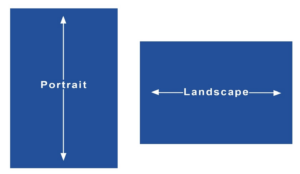
The main difference between portrait and landscape image orientation is that landscape images are in horizontal orientation and portrait images are captured in vertical orientation.
Can I bring my own apparel?
Yes you can. Please contact us by email [email protected] before placing an order.
What are the Material Types that you print on?
Promotional items can be printed on a variety of materials, each chosen for its suitability for the intended use and the printing method. Here are some common material types used in promotional item printing:
1. Textiles
– Cotton: Commonly used for t-shirts, tote bags, and other apparel items. It’s breathable and easy to print on.
– Polyester: Often used for sportswear and promotional items that require durability and moisture-wicking properties.
– Blends: Combinations of cotton and polyester or other fibers to balance comfort and durability.
2. Plastics
– PVC: Used for items like keychains, pens, and badges. It’s durable and can be molded into various shapes.
– Polypropylene: Lightweight and resistant to chemicals and moisture, making it ideal for reusable shopping bags and drinkware.
– Acrylic: Used for awards, signs, and display items. It’s clear and can be easily engraved or printed on.
3. Paper and Cardboard
– Cardstock: Thick paper used for business cards, postcards, and packaging.
– Corrugated Cardboard: Used for packaging, shipping boxes, and displays.
– Coated Paper: Glossy or matte finish paper used for flyers, brochures, and posters.
4. Metal
– Aluminum: Lightweight and rust-resistant, used for items like water bottles, keychains, and promotional tools.
– Stainless Steel: Durable and sleek, often used for drinkware, tools, and executive gifts.
– Brass and Copper: Used for high-end promotional items and awards.
5. Wood
– Birch Ply: Used for signs, coasters, and promotional display items.
– Bamboo: An eco-friendly option for items like cutting boards, utensils, and phone stands.
– Hardwoods: Used for luxury items like custom boxes, awards, and desktop organizers.
6. Ceramics and Glass
– Ceramics: Used for mugs, plates, and decorative items. Can be sublimated or printed on.
– Glass: Used for drinkware, awards, and decorative items. Can be etched or printed on.
7. Silicone and Rubber
– Silicone: Used for wristbands, phone cases, and kitchen items. It’s flexible and durable.
– Rubber: Used for items like keychains, stress balls, and grips.
These materials provide a wide range of options for creating personalized and effective promotional items. Each material has its own set of properties that make it suitable for different types of printing and applications. If you have a specific promotional item in mind, I can help you choose the best material for it!
What is Digital Printing?
Digital printing is a modern method of printing that involves transferring digital images directly onto various media. It’s a versatile and efficient process widely used for both commercial and personal printing needs. Here’s a closer look at how it works and its applications:
Key Features:
– Speed: Digital printing is quick because it eliminates the need for printing plates and extensive setup.
– Versatility: Can be used on various materials, including paper, cardstock, fabric, and more.
Applications:
– Business Cards: Quick and efficient for producing high-quality business cards.
– Marketing Materials: Used for brochures, flyers, posters, and banners.
– Custom Apparel: Digital printing on fabric for t-shirts, hoodies, and other clothing items.
– Personalized Items: Photo books, custom invitations, and greeting cards.
Advantages:
– Customization: Easily customizable, allowing for personalized designs and variable data printing (e.g., names, addresses).
– Quality: Produces high-quality prints with excellent color accuracy and detail.
– Flexibility: Suitable for both small and large print runs, and capable of printing on demand.
Digital printing has revolutionized the printing industry by providing a fast, flexible, and cost-effective solution for producing high-quality prints. Whether you need a few copies or a large batch, digital printing can meet a wide range of needs. If you have a specific project in mind or need further details, feel free to ask!
Can I request a rush order?
Please contact us at [email protected] before you place your order if a rush is required.
Can I see a proof or mockup of my custom design before it is printed?
Yes, at Printwell, we will provide a proof or mockup of your custom t-shirt design for you to review and approve before the order is printed. This allows you to make any necessary changes or adjustments to the design before it is finalized.
Are there any limitations on the design of a custom t-shirt or other customizable product?
At Printwell, we do not print designs that contain copyrighted or trademarked images. We also have specific guidelines which you can discuss with our team before or when you place your order.
What File Types are accepted?
We recommend to ensure your image is saved to have the highest resolution as possible with a minimum of 300 dpi. Images downloaded from websites can be used to show us what you want but are usually un-usable. We will always let you know in advance if the artwork needs to be changed to fit the product printing guidelines.
When preparing designs for promotional products, it’s important to use the right file types to ensure the best quality. Here are some accepted file types we work with:
Vector Files
– AI (Adobe Illustrator)
– EPS (Encapsulated PostScript)
– CDR (Corel Draw)
– SVG (Scalable Vector Graphics)
High-Resolution Bitmap Files
– PDF (Portable Document Format)
– PSD (Adobe Photoshop)
– TIFF (Tagged Image File Format)
Other Image Files
– JPG/JPEG (Joint Photographic Experts Group)
– PNG (Portable Network Graphics)
– GIF (Graphics Interchange Format)
Low-Resolution Files
– BMP (Bitmap)
– DOC (Microsoft Word)
– PPT (Microsoft PowerPoint)
– DST (please note there is an $85 charge to convert these files).
Vector files are generally preferred because they can be scaled without losing quality. If you provide a raster image (like JPG or PNG), it might need to be converted to a vector format for the best results.
What is the difference between Screen Printing vs. Transfer Printing
Screen Printing is ink that is passed through a screen, printed and heated directly onto the shirt. Transfer printing is ink that is printed on a thermal paper then heated onto the shirt. Both are permanent prints, but screen printing is more durable. Screen printing takes a longer time because the “set up” screens associated with that type of printing.
Screen printing is ideal for text and logo printing on tshirts, hoodies and jackets.
What is the difference between Vinyl vs. Embroidery
Embroidery is thread stitched directly into the material and is usually paired with thicker type materials. Vinyl is cut and heated directly onto the material and is highly recommended for customizing logos or images.
Can I use my own design for a custom t-shirt?
Yes, Printwell allow customers to use their own designs for custom t-shirts and other customizable products. You can use the online designer tool to upload your graphics.
What is the process for custom t-shirt printing?
The process for custom t-shirt printing typically involves the following steps:
1. Designing or selecting a design for the t-shirt
2. Choosing the t-shirt material and style
3. Submitting the design and placing an order
4. Receiving a proof or mockup of the design for approval
5. Printing the t-shirts and preparing them for delivery
Will my uploads be used by Printwell for any other application than my order?
No, we do not use any of your uploaded images in any marketing materials or on our site unless you provide explicit permission to do so in writing.
Do you have a reseller program?
We do offer a reseller program with quick onboarding and low fees. This program has been designed to help you extend your brand and create a revenue stream for your business. Get in touch with us through [email protected] to learn more.
Print Types
Learn more about the various print types and methods used to personalize products including the latest high quality method, UV Direct to Film (DTF)