 A Proud Canadian Company
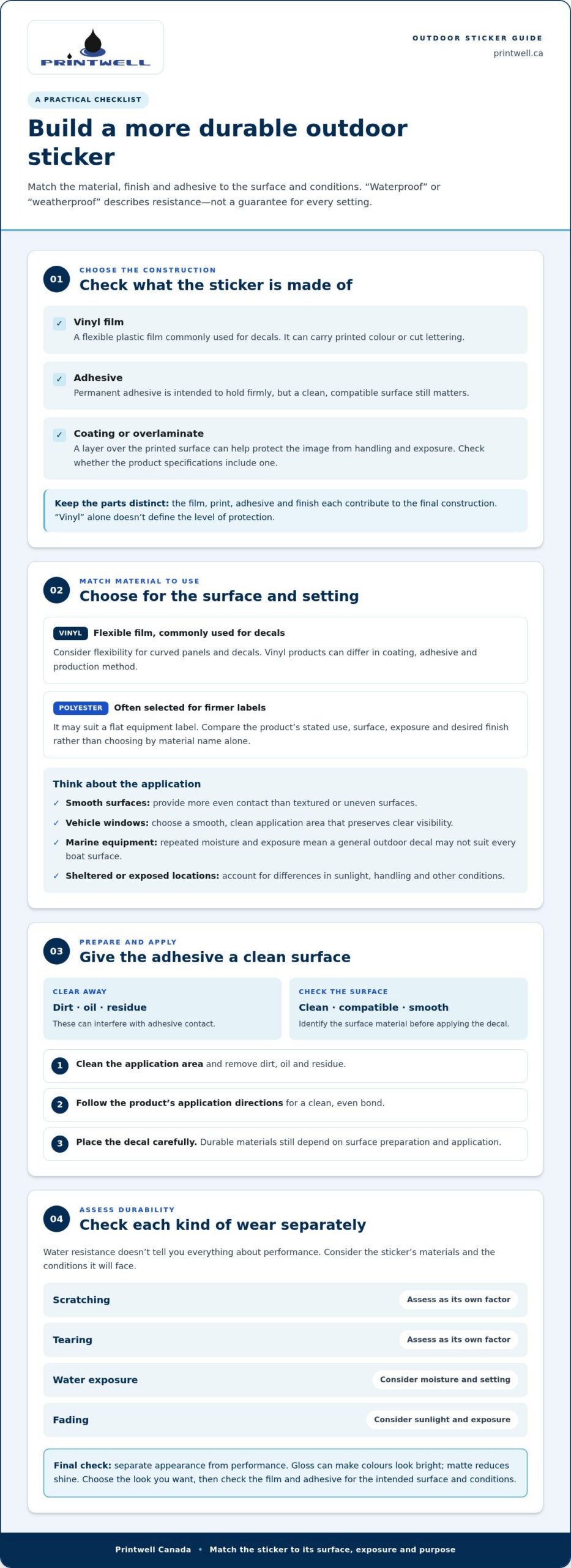
Outdoor stickers need more than a bold design. Waterproof and UV resistant stickers are often made from vinyl with an adhesive backing, but resistance to scratching, tearing, water and fading depends on the materials and conditions they face. A durable finish helps, but the surface and application matter too.
When choosing stickers for outdoor use, consider how they’ll hold up to everyday exposure. This guide explains how vinyl and adhesive affect durability, what can wear a sticker down, and how to prepare a surface for a secure bond.
You’ll also learn where outdoor stickers work well, how to apply them carefully, and what to consider when comparing materials. The aim is to help you choose a sticker with a clear understanding of its intended use.
Key Takeaways
- Learn how sticker construction affects performance on marine, automotive and other outdoor surfaces.
- Compare vinyl and permanent adhesive to understand what each contributes to a durable application.
- Use surface-preparation steps that help remove barriers to adhesion before applying a sticker.
- Assess scratching, tearing, water exposure and fading as separate factors when choosing an outdoor material.
- Match vinyl or polyester to the surface, conditions and finish you need.
What Are Waterproof and Weatherproof Stickers?
Waterproof and weatherproof describe resistance, not a guarantee that every sticker suits every setting. For outdoor use, match the material and adhesive to the surface, exposure and purpose.
Marine, Automotive and Outdoor Applications
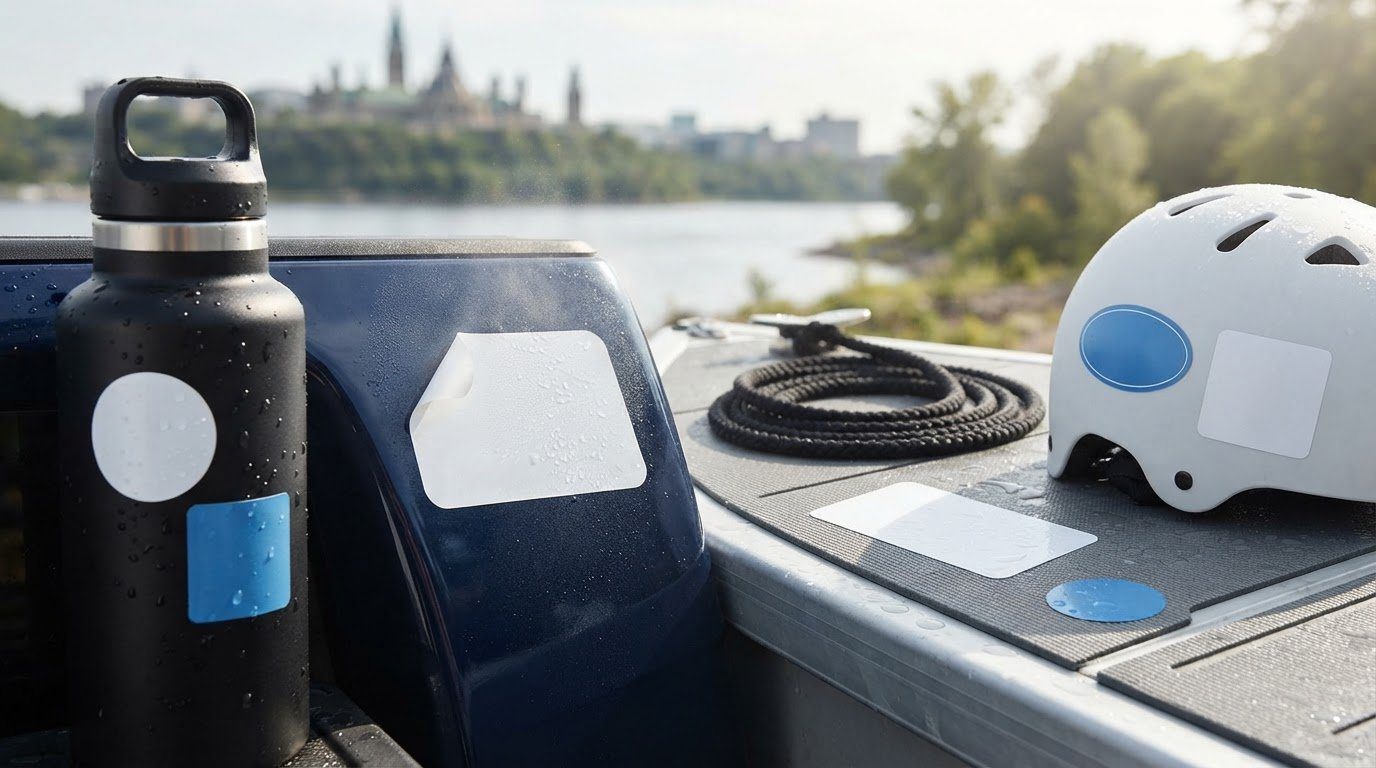
Outdoor decals can identify equipment, support promotions or add graphics to smooth vehicle surfaces. Common applications include car windows, water bottles, laptops and helmets, but the intended surface matters. Marine settings involve repeated moisture and exposure, so don’t assume a general outdoor decal is suitable for every boat surface. Consider where it will go and what it will encounter.
For a vehicle window, prioritize a smooth, clean application area that preserves clear visibility. For marine equipment, distinguish a general outdoor label from a product specifically intended for that environment. The right choice depends on whether the sticker’s construction suits its purpose.
Outdoor Durability and Weather Resistance
A weatherproof label is designed to resist exposure, but its durability depends on more than the description. Water, sunlight, rubbing and temperature changes can affect stickers in different ways. A sticker on frequently handled equipment may wear differently from a decal displayed outdoors with little contact.
For outdoor promotions, consider how long the message needs to stay legible and where people will see it. A graphic on a sign faces different demands from a label on equipment. Waterproof and UV resistant stickers can suit these applications, but material and exposure still matter.
Outdoor Decals for Smooth Surfaces
Smooth surfaces give a decal more even contact than textured or uneven ones. Before applying it, identify the surface material and clean away dirt, oil and residue. A sticker may be described for use on car windows, laptops, water bottles or helmets, but those surfaces aren’t interchangeable.
For year-round use, consider the location’s exposure and handling. A sheltered window and an exposed outdoor sign face different conditions. Choose a sticker for the intended surface, then follow its application directions for a clean, even bond.
How much do custom waterproof UV-resistant stickers cost in Canada? The price depends on details such as sticker size, material, finish and order quantity. Compare specifications to understand why prices can vary, and don’t assume every option uses the same construction.
Which Canadian sticker printers offer waterproof UV-resistant stickers? Look for Canadian print providers that produce vinyl decals. Compare their stated materials and intended applications instead of relying on the word “weatherproof” alone.
Are waterproof UV-resistant stickers recyclable or safe for food-contact surfaces? Don’t assume either from water or UV resistance. Recycling depends on the sticker’s materials and local acceptance, while food-contact suitability requires explicit product guidance. Keep decals off food and food-contact surfaces unless they’re specifically designated for that use.
Premium vinyl and permanent adhesive
Vinyl provides a flexible base for many outdoor decals, while the adhesive helps keep them attached. For a lasting result, consider the surface, finish and exposure together.
Vinyl Materials and Coatings
Vinyl is a flexible plastic film that can carry printed colour or cut lettering. A coating or overlaminate adds a layer over the printed surface, which can help protect the image from handling and exposure. These components aren’t interchangeable: the vinyl, print and finish each contribute to the final construction.
For a vehicle window graphic, check whether the specifications describe a coating and its intended use. A glossy finish can make colours look bright, while a matte surface reduces shine. The word “vinyl” alone doesn’t define the level of protection.
Vinyl Finishes and Premium Options
Vinyl stickers can pair the film with an adhesive selected for the application. Permanent adhesive is intended to hold firmly, but adhesion still depends on a clean, compatible surface. Dust, oil and moisture can interfere with contact, so surface preparation matters even with durable materials.
Finish also affects a sticker’s look and feel. Gloss can suit a vivid promotional decal; matte can give lettering a more understated appearance. Cut vinyl lettering is cut from coloured film rather than printed as a full-colour image, making it a good fit for simple names or symbols.
Vinyl or Polyester for Outdoor Use
Vinyl and polyester are different film materials, so compare each product’s stated use rather than choosing by material name alone. Vinyl is flexible and commonly used for decals; polyester is often selected for firmer labels. The best fit depends on the surface shape, exposure and desired finish.
For a curved panel, flexibility may matter more than a crisp, rigid feel. For a flat equipment label, a firmer film may be suitable. Check what the material and adhesive are designed to handle, including sunlight and repeated contact.
Before ordering, note the decal’s size, surface and intended placement. These details help narrow your material and finish choices without relying on a broad “premium” label. They also make comparisons more useful: vinyl decals can differ in coating, adhesive and production method.
Turnaround is another practical consideration for planned promotions. Production and delivery schedules vary by order and print workflow, so allow time to apply the stickers before an event or installation. Even if a sticker arrives early, the surface still needs cleaning and the decal needs careful placement.
Separate appearance from performance when making design decisions. Choose a finish for the look you want, then assess the film and adhesive for the setting. A bright graphic for a sheltered display and cut lettering exposed to sunlight have different priorities.
Resistance to scratching, tearing, water and fading
Durability has several parts. A sticker may resist splashes but scuff with handling, or stay intact while its printed image fades in sunlight. Consider each exposure separately, then match the material and application to the object. A label on a frequently handled bottle faces different wear from a decal on a sheltered window.
Can waterproof UV-resistant stickers go in a dishwasher or on a water bottle? Stickers can be applied to water bottles, but water resistance alone doesn’t mean they’re dishwasher-safe. Heat, detergent and repeated spray can affect the print and adhesive, so follow the sticker’s stated care instructions.
Water exposure is only one factor. A bottle used by hand may encounter splashes and wiping, while a dishwasher adds heat, detergent and forceful spray. Those conditions can stress the adhesive edges and printed surface. On a bottle, place the decal on a smooth area, away from seams and curves, and follow the material’s care directions when washing.
Scratching and tearing also depend on construction and use. A sticker on a helmet or equipment case may rub against other objects, while a window decal sees less direct handling. One commenter described thermal stickers as a Tyvek-type material that couldn’t be torn by hand. This illustrates tear resistance, but doesn’t establish how other sticker materials perform.
Fading deserves separate consideration. A commenter cautioned that thermal labels left outdoors too long can turn completely black. Another recommended testing thermal labels outdoors to observe their performance. These reports concern thermal labels, not every vinyl sticker, but they show why print technology and sunlight exposure matter when a design must stay legible.
- Water: Distinguish occasional splashes from repeated washing or prolonged exposure.
- Scratching: Consider rubbing from hands, equipment or storage.
- Tearing: Check whether the film can stretch, split or resist hand tearing.
- Fading: Assess the amount of direct sunlight and the need for lasting colour.
A commenter reported that USPS labels remained usable through 4 Canadian winters and summers. That experience is one person’s report, not a durability rating for all labels. Another commenter said USPS labels may fade faster than vinyl stickers. The practical lesson: compare the actual material and intended conditions, rather than treating all labels as equivalent.
To test a sticker outdoors, place a sample on the intended surface and observe it under the conditions it will face. Check whether the edges lift, the image changes or the film scuffs. A simple trial can show the difference between water resistance and resilience against combined weather, handling and sunlight.
Surface preparation and application
A clean, dry surface gives a sticker a better chance of making full contact. Before applying an outdoor decal to a car window, remove dirt, road film and cleaning residue. Moisture, oil and dust between the adhesive and surface can weaken contact, particularly around the edges.
Start by checking the surface itself. Glass, painted metal, plastic and a bottle’s curved wall each behave differently. Confirm the sticker suits the material, then choose a smooth area without seams, deep grooves or loose paint. A decal across a panel gap may catch during cleaning or regular handling.
- Clean: Wash the intended spot to lift visible dirt and grime. For a vehicle window, clean the full area where the decal will sit.
- Remove residue: Wipe away oily marks, soap film and leftover cleaner. A clean cloth helps prevent lint from becoming trapped underneath.
- Let it dry: Wait until the surface is fully dry, including edges and shallow grooves. Applying over moisture can interfere with adhesive contact.
- Position: Hold the sticker over the chosen spot before removing its backing. Check alignment against a window edge or a panel line.
- Apply: Lower the sticker gradually, pressing from the centre outward. Smooth it with a clean cloth to push out trapped air.
For a small decal, peel the backing carefully without touching the adhesive. Position one edge first, then guide the rest into place. For a larger graphic, use a temporary alignment mark to keep lettering straight on a vehicle door or display panel.
After applying the sticker, press along the edges, especially around corners and narrow lettering. Check for bubbles, lifted sections or dust beneath the film. If a bubble remains, follow the sticker’s application guidance instead of repeatedly pulling the decal back. Repositioning can stretch the film or bring dirt onto the adhesive.
Consider exposure before choosing where to apply a sticker. A bottle handled throughout the day receives more rubbing than a sheltered window decal. A sign exposed to rain and sunlight faces different conditions from one under a roof. Keep the intended use in mind when selecting the surface and placement.
Follow the sticker’s instructions for application and care. They may specify how to prepare a material or treat the decal after placement. Avoid washing or scrubbing the area until the adhesive has settled as directed. For an outdoor promotion, apply the graphic before installation day, then check its edges and alignment in place.
Are vinyl or polyester stickers better for outdoor use?
Neither material is best for every outdoor application. Vinyl is flexible and widely used for stickers, while polyester is another film option. Choose by matching the material to the surface, exposure and intended use. A curved water bottle, flat sign and equipment label each place different demands on a sticker.
Vinyl can suit graphics that need to follow a smooth curve or display printed colour. One commenter recommended vinyl as an all-around choice for retaining vibrancy and resisting harsh conditions. That’s one perspective, not a performance rating for every vinyl product. Adhesive, coating, printing method and exposure all affect the finished sticker.
Polyester may suit applications where a firmer label is preferred, such as a flat equipment panel. Suitability depends on the specific film and adhesive, not the material name alone. Compare the product’s intended applications and finish. A rigid label on a flat surface has different needs from a flexible decal on a bottle.
Use this comparison to frame your decision:
- Surface shape: Flexible vinyl may be easier to place on a gentle curve. Flat polyester labels may suit smooth, level panels.
- Handling: A bottle carried by hand faces repeated contact. A sign mounted out of reach faces less rubbing.
- Appearance: Printed colour, cut lettering and finish affect the result. Check whether the chosen film supports the look you want.
- Exposure: Direct sunlight, rain and cleaning can affect the sticker. Consider the actual location rather than “outdoor” as one condition.
Compare the adhesive too. A film that suits the shape may still perform poorly if its adhesive doesn’t match the surface. Glass, painted metal and plastic each call for different considerations. Check that the sticker is intended for the material, then prepare the surface as directed.
For year-round Canadian use, consider the full setting. A vehicle window decal faces changing weather and regular cleaning, while a sheltered sign gets less direct exposure. No material label alone describes how a finished sticker will respond to every combination of conditions.
Before choosing, write down the surface, shape, exposure and desired finish. Then compare vinyl and polyester products against those practical needs. If you’re exploring printed sticker options for a design, browse custom DTF stickers and films. Select based on the intended use, and don’t assume a material name guarantees a specific outdoor lifespan.
Printwell Canada: Custom T-Shirts
Printwell Canada helps businesses and events create branded apparel and printed materials in Ottawa, Ontario. If your outdoor campaign also needs branded clothing, consider Custom T-Shirts, Embroidered Hoodies or Custom Hats alongside your sticker plans. DTF Stickers and Films offer another way to carry a design across suitable materials.
Consider each item’s purpose: outdoor decals need materials suited to their surface and exposure, while apparel supports team identity, events and promotions. Planning the pieces together can create a more cohesive presentation without treating every product as interchangeable.
For custom printing options to complement your project, contact Printwell Canada or visit printwell.ca.
Make Your Next Outdoor Design Count
Before preparing artwork, turn the application into a clear project brief. Note the surface, placement, intended audience and the message people should notice first. A decal for a vehicle window may need a different layout from one for a promotional display. These choices keep the design focused and help guide production decisions.
For waterproof and UV resistant stickers, connect the visual goal with the conditions the finished piece will face. Consider whether the design needs to work alongside other branded materials, such as event clothing or team apparel. Printwell Canada offers DTF Stickers and Films, Custom T-Shirts and Embroidered Hoodies, bringing related printing and apparel needs together.
Gather your design, intended surface and project goals, then contact Printwell Canada about your stickers. A thoughtful brief is a strong first step toward an outdoor design that communicates clearly.
Frequently Asked Questions
How Are They Made?
Outdoor stickers are typically made by printing a design onto a suitable film, then adding adhesive to the backing. Some constructions also use a clear protective coating over the printed face. The material can be cut into individual shapes or lettering. Each layer serves a purpose: the film carries the design, the adhesive attaches it, and a coating can help shield the print.
What materials make stickers waterproof and UV resistant?
Vinyl is a common base for outdoor stickers, while polyester suits certain applications. The film alone doesn’t determine performance. Adhesive, ink and any protective layer also affect how a finished sticker handles moisture and sunlight. For a vehicle window or outdoor sign, compare the complete construction and intended use, not just the material name.
How long do waterproof UV-resistant stickers last outdoors?
Outdoor lifespan varies with a sticker’s construction, placement and exposure. A sheltered window decal faces different conditions from a sign exposed to direct sunlight, rain and regular cleaning. Handling and abrasion can also affect appearance. For a long-running display, test a sample in its intended location and look for colour changes, lifted edges or surface wear before planning a larger installation.
What laminate or coating protects stickers from water and UV fading?
A clear overlaminate or protective coating covers the printed face and can add a barrier against moisture and surface wear. Some coatings are designed to help reduce fading from sunlight. The right choice depends on the print process and intended environment. Ask for the coating type and intended use in writing, especially if the decal will face frequent washing or prolonged outdoor exposure.
What surfaces do outdoor stickers adhere to best?
Smooth, clean surfaces such as glass, finished metal and suitable plastics generally provide more consistent contact than rough or porous materials. Silicone-treated surfaces, textured panels and peeling paint can make adhesion difficult. Consider the exact finish, not just the base material: two plastic panels can have different textures. A small test decal can show whether the sticker sits flat and holds at the edges.
How do you apply waterproof outdoor stickers for a long-lasting bond?
Follow the sticker maker’s directions and apply the decal to a clean, dry surface. For a larger graphic, use masking tape to hold it in position before peeling away the backing. Press gradually from the centre toward the edges, smoothing air pockets with a clean applicator or cloth. Finish by pressing around the perimeter, where lifting often appears first.
Which Canadian sticker printers offer waterproof UV-resistant stickers?
Look for Canadian print providers that produce vinyl decals. Compare their stated materials and intended applications rather than relying on “weatherproof” alone.