 A Proud Canadian Company
A school’s identity should feel right to wear, not just look good. The right school spirit wear supplier in Canada can help match branded apparel to a school’s needs, from garment styles and decoration to sizing and order details. Spirit wear and uniforms serve different purposes, so decide whether students need everyday dress-code clothing, school-branded items for events, or both.
Planning apparel for a whole school takes more than choosing a colour and adding a logo. Fit, fabric, age groups and intended use all shape a practical order. Clear sizing information also helps families choose with confidence.
This guide explains how to compare spirit wear and uniforms, plan sizing and prepare an order for a Canadian school. It also covers the details to gather before production so the apparel feels cohesive and ready to represent the school community.
Key Takeaways
- Decide whether the order is for everyday uniforms, optional spirit wear, or both before selecting garments.
- Use garment measurements and clear size guidance to help families choose suitable fits across age groups.
- Compare fabric and decoration choices with the garment’s intended use, comfort and care in mind.
- Prepare a complete order with approved artwork, colours, sizes, quantities and delivery details to keep production organized.
- Match the supplier’s apparel and customization capabilities to the school’s needs, from T-shirts and hoodies to hats and printed designs.
Sizing and ordering guidance
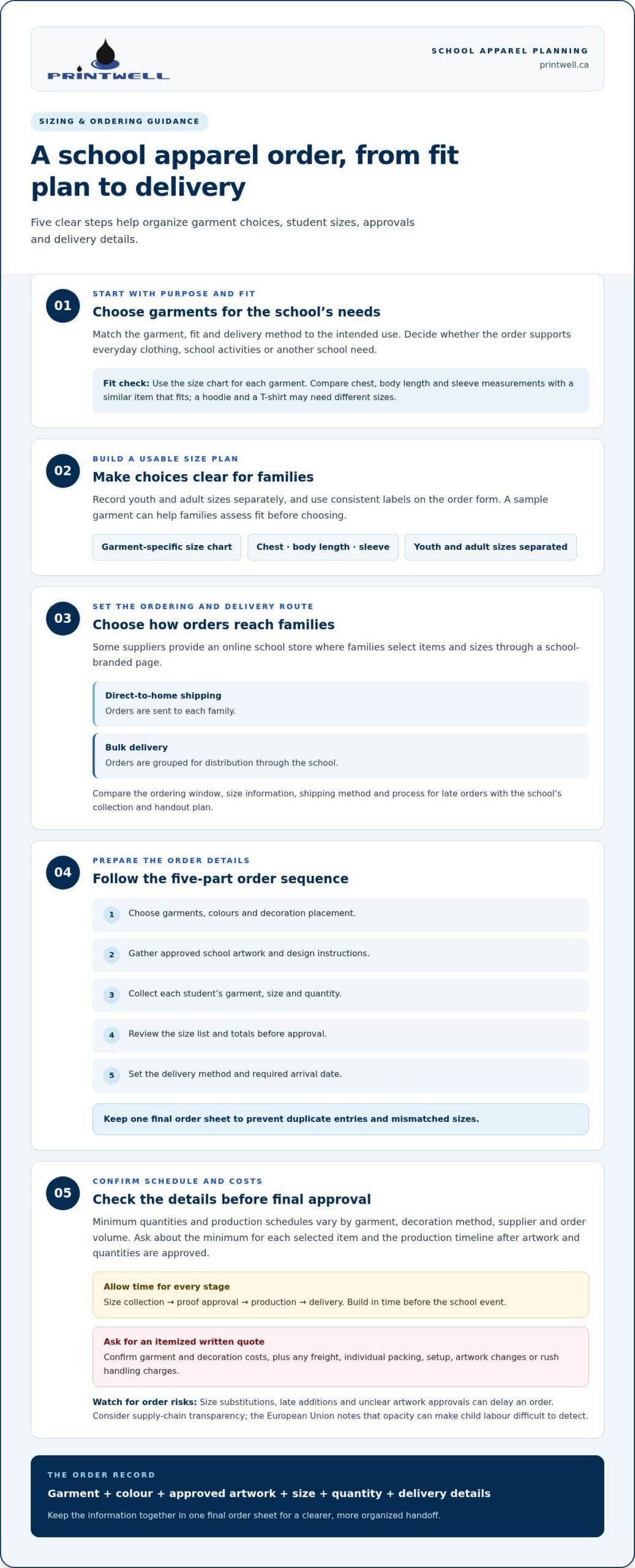
A clear size plan and order record reduce confusion. Start by matching the garment, fit and delivery method to the school’s needs.
Build a usable size plan
Use the size chart for each garment rather than relying on a general age guide. Compare chest, body length and sleeve measurements with a similar item that fits. A student may need a different size in a hoodie than in a T-shirt. Record youth and adult sizes separately, and use consistent labels on the order form. A sample garment can help families assess fit before choosing.
Online Stores and Home Delivery
Some suppliers offer online school stores where families select items and sizes through a school-branded page. Direct-to-home shipping sends orders to each family; bulk delivery groups them for school distribution. Compare the ordering window, size information, shipping method and process for late orders. Choose the approach that fits the school’s collection and handout plan.
Order Minimums and Production Times
Minimum quantities and production schedules vary by garment, decoration method, supplier and order volume. One design across several sizes may be handled differently from separate designs or small batches. Ask for the minimum for each selected item and the production timeline after artwork and quantities are approved. Allow time for size collection, proof approval, production and delivery before the school event.
Ordering Steps and Requirements
Prepare the order in a clear sequence:
- Choose garments, colours and decoration placement.
- Gather approved school artwork and design instructions.
- Collect each student’s garment, size and quantity.
- Review the size list and totals before approval.
- Set the delivery method and required arrival date.
Keep one final order sheet to prevent duplicate entries and mismatched sizes.
Ordering Risks and Additional Costs
Freight, individual packing, setup, artwork changes and rush handling can affect the total. Ask for these charges to be itemized in the written quote alongside garment and decoration costs. Size substitutions, late additions and unclear artwork approvals can also delay an order. Garment supply chains can be difficult to assess; the European Union notes that opacity can make child labour difficult to detect. Consider supply-chain transparency when comparing options.
Featured school-branded products
Choose products according to how students will use them. A school logo can appear on everyday clothing, event apparel or keepsakes, with each item giving the school a different kind of visibility. Start with a clear purpose, then match the garment and decoration to it.
For example, the John Marshall Bulldogs youth pullover hooded sweatshirt is made from 50/50 fabric. The Gordon Public School youth long-sleeve T-shirt is made from 100% cotton. These examples show how named school apparel can differ in fabric composition. Compare each garment’s own details before choosing items for students.
Apparel for everyday wear and events
T-shirts suit casual school days and activity events. Long-sleeve shirts offer more coverage on cooler days, while hoodies add a layer for school activities. Hats carry a school mark without adding another full garment. Consider logo placement and how often students might wear each item. A consistent colour palette can distinguish school gear from everyday clothing.
Fabric affects feel, appearance and care. School apparel may use cotton or blended fabrics, and fibre content varies by garment. Review the fabric information alongside the care instructions. Consider whether the item is for frequent wear, a special event or a school team, then choose accordingly.
Printing and embroidery choices
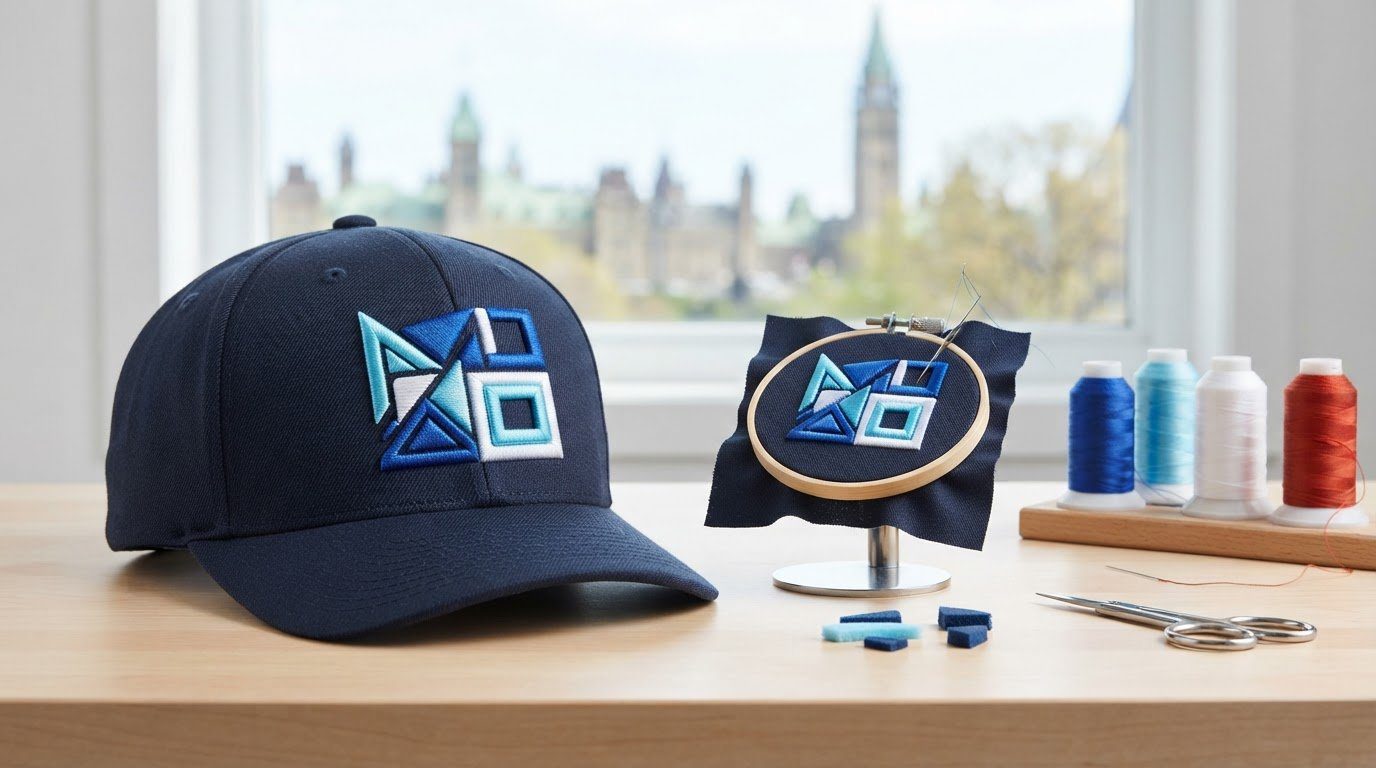
Canadian school apparel suppliers may offer screen printing, direct-to-garment printing, heat-applied designs and embroidery. The right method depends on the artwork, placement, garment fabric and desired look. Embroidery creates a stitched logo, while printing reproduces artwork on fabric. Compare the appearance and intended use before choosing.
Artwork should suit the decoration method. Fine lines and small lettering may need simplifying for clarity. A bold crest can work on the front of a shirt, while a smaller mark may suit the chest or sleeve. Decide on placement before preparing final artwork, and keep the school name readable at the finished size.
For a stitched look on hoodies, embroidered hoodies are one apparel option. Match thread colours to the school’s approved palette. A printed design may suit artwork with multiple colours or fine detail. The product and decoration should work together, not compete for attention.
Accessories and related school materials
Custom hats can extend a school’s visual identity beyond clothing. DTF stickers and films can also support branded designs on suitable items. For displays, poster or foam board printing can carry the same artwork into hallways and event spaces. Keep colours and logo proportions consistent across apparel and printed materials.
Before approving a product, compare its fabric, fit, colour and decoration area. Review a proof for spelling, logo placement and colour treatment. A short product list can simplify decisions: one core garment, one layer and one optional accessory. Each choice should suit the intended use and audience.
School spirit wear and uniforms
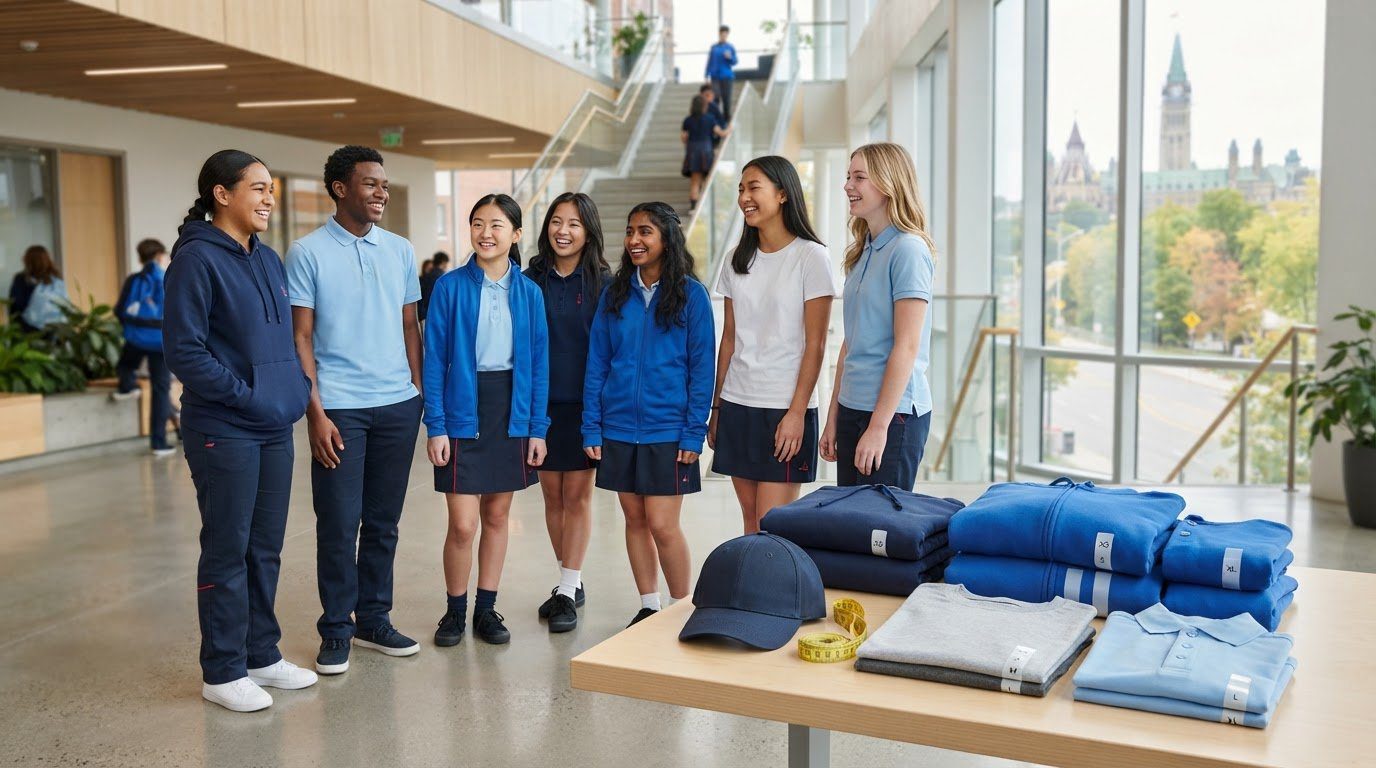
Uniforms and spirit wear serve different purposes. Compare how each garment supports school routines, events and student identity.
Supplier Selection and Comparison
Compare garment choices, decoration methods, size ranges and delivery options. Consider how clearly each supplier explains ordering and artwork approval. A school seeking matching daily clothing may prioritize consistent restocking, while a one-time event order may need a simpler range. Delivery depends on the supplier’s network, so match the shipping destination to the school’s needs.
Canadian suppliers may offer local pickup, bulk delivery or parcel shipping. Delivery routes can differ between provinces and remote communities. Compare the destination, handout plan and order format together. An online school store can collect family orders, while one bulk order may suit school distribution.
Use artwork approved by the school or its rights holder. Confirm permission before printing or embroidering a crest, mascot or wordmark. Keep a record of the approved file and design version. This helps prevent unauthorized use and confusion about which artwork belongs on the finished garments.
Custom Apparel and Accessories
Canadian suppliers may offer custom T-shirts, hoodies, hats and other school accessories. Match each product’s intended use to its decoration area. A chest crest may suit a hoodie, while a larger design may work better on a T-shirt. Keep the school’s approved colours and logo proportions consistent across items.
Sustainable or Canadian-made clothing depends on the specific garment and supplier. A Canadian supplier does not automatically mean the clothing was made in Canada. Compare each product’s origin, fibre information and sustainability claims. This helps distinguish local printing from local garment manufacturing.
Accessories can extend a school’s visual identity beyond clothing. A school might coordinate hats with event shirts and carry matching colours into printed displays. Choose each item for its role, audience and setting. A cohesive collection does not require every student to choose the same product.
Per-Item Pricing
There is no single per-item price for custom school spirit wear in Canada. The total depends on the garment, decoration method, artwork, order quantity and delivery arrangement. Compare quotes for the same products and design details; otherwise, a lower item price may exclude costs included elsewhere.
Ask the school treasurer to compare the full order total, not just the garment cost. Separate garment, decoration, setup, packing and shipping charges, then divide the complete total by the number of items ordered. This gives the school a useful per-item comparison for that specific order, without assuming that every size or product costs the same.
Order changes can affect the total. Adding another design or changing quantities, for example, may alter production requirements. Include the approved artwork, item list and delivery plan when comparing quotes. A clear written breakdown helps the school explain the final amount to families and make an informed choice.
What are the best school spirit wear suppliers in Canada?
No single supplier suits every school. The right fit depends on product, decoration, ordering and delivery needs. A school in Ontario may have different logistics from one in Yukon. Compare each option against the actual order rather than relying on a broad ranking.
Start with the garment range. Does it cover the school’s intended mix? T-shirts may suit field days and clubs, hoodies can work for colder outdoor events, and hats can support team identity. Check the colours, sizes and fabric details for each item. A clear product range makes it easier to build a coordinated selection.
Next, compare decoration choices. Embroidery gives logos a stitched finish, while printing can suit larger or more detailed artwork. Consider the design’s size, placement and colours. Ask how artwork approval works and review the proof carefully. A school crest needs readable lettering and correct proportions. Choose a method that suits both the garment and the artwork.
Ordering tools matter, too. An online school store can collect individual family selections, while a bulk order may suit centralized distribution. Compare order windows, size entry, payment collection and delivery arrangements. A school handing out apparel at an assembly needs a different plan from one sending parcels to families. Match the supplier’s process to the school’s plan.
Review the full order process. Identify who gathers sizes, approves artwork and submits final quantities, and confirm how changes are handled after approval. Ask for a written breakdown of garment, decoration and delivery charges. Compare like with like, using the same product and design details. A low garment price alone does not show the complete order cost.
Delivery deserves attention. Canada’s provinces and territories involve different distances, routes and destinations. Schools in remote communities should include their exact destination in the plan. Location can affect the choice between centralized delivery and separate family shipments. Set the handout schedule around the school calendar, not just production.
Use this short comparison checklist:
- Garment choices, sizes and colour options
- Printing or embroidery that suits the artwork
- Clear proof approval and order-change steps
- Online ordering or bulk distribution options
- Itemized charges and delivery arrangements
Consider sourcing claims carefully. A Canadian supplier does not automatically mean its garments are made in Canada. Review each garment’s stated origin and sustainability details. The strongest choice meets the school’s needs, explains its process clearly and fits the intended budget and delivery plan.
Which Canadian suppliers offer custom school apparel and accessories?
Canadian schools can consider three supplier types: custom apparel decorators that print or embroider garments, promotional-product suppliers that offer items such as drinkware, and print shops that produce event materials. Some businesses combine these services; others focus on one category. The right fit depends on the school’s product list and order plan.
Start with the items students will use. A school may need T-shirts for a field day, hats for a team or mugs for staff recognition. Consider whether one supplier can coordinate them. A combined order can simplify artwork review, while separate suppliers may suit distinct apparel and event needs.
Compare each supplier’s product range with the intended audience. A student club may want casual apparel, a graduating class may prefer a keepsake, and staff apparel may call for a different look from student spirit wear. List the item, wearer and occasion to turn a broad search into a focused shortlist.
Decoration choices matter, too. Embroidery creates a stitched logo on apparel, while printing can reproduce a larger graphic. For a school crest, review how lettering and fine details look at the finished size. Ask for a proof showing placement, then confirm the approved school colours and artwork version before authorizing production.
Accessories can support a coordinated school identity. Custom hats can complement event shirts, and custom mugs can work as staff or volunteer gifts. Printed posters can carry the same theme into a gym or hallway. Keep one approved logo file and colour reference for all items to maintain a consistent appearance across formats.
Compare suppliers using the same project details. Prepare a shortlist with these points:
- Garments and accessories needed
- Decoration method for each item
- Artwork format and proof process
- Size and colour selections
- Delivery destination and distribution plan
Then review how each supplier handles the order. A school store may suit family-selected items, while a consolidated order may suit school distribution. Consider who collects sizes, approves the design and communicates changes. Assigning a coordinator helps keep those steps organized and avoid duplicate requests or incomplete order details.
Canadian-made apparel is a separate consideration. A supplier operating in Canada does not automatically mean its garments are made here. Review each garment’s origin and sustainability information, then compare those details with the school’s priorities rather than relying on a broad label.
For a coordinated school project, plan your custom school apparel order around the garments, artwork and accessories students will use.
Printwell Canada: Custom T-Shirts
Printwell Canada can help schools prepare branded apparel for events, clubs and student groups. Custom T-shirts offer a practical way to share approved school artwork, while embroidered hoodies and custom hats add other apparel options. DTF stickers and films can carry coordinated designs beyond garments.
Turn to Printwell Canada once your school has chosen its items, gathered sizes and quantities, and prepared its artwork. A clear order plan helps match the design to suitable apparel and decoration. Printwell Canada accepts online orders and ships across Canada, making it a reliable school spirit wear supplier Canada trusts. Based in Ottawa, Ontario, Printwell Canada also produces custom printing in-store.
For a school apparel order, contact Printwell Canada to discuss your project.
Make the next school order count
A school apparel project can help students recognize their community. Give it a clear purpose from the start: decide who will wear the items, what they should represent and how families will take part. That shared direction keeps choices focused and gives the finished design meaning beyond the garment.
When choosing a school spirit wear supplier in Canada, consider how the order can support your school’s identity across groups and occasions. Printwell Canada offers Custom T-Shirts, DTF Stickers and Films, and Embroidered Hoodies for school-branded projects. Bring your preferred items and approved artwork together as a starting point.
Contact Printwell Canada about school apparel to discuss your project. A thoughtful plan can help your school create apparel students are proud to wear.
Frequently Asked Questions
What are the steps to order custom spirit wear for a Canadian school?
Choose one school coordinator to keep approvals and records together. First, get permission to use the school crest and appoint someone to manage the design. Select garments and decoration, set an order closing date, and collect requests using a student or family identifier. Submit one consolidated order with the artwork and size totals. Review the proof for spelling, colour and placement before approval, then share the delivery plan with families.