 A Proud Canadian Company
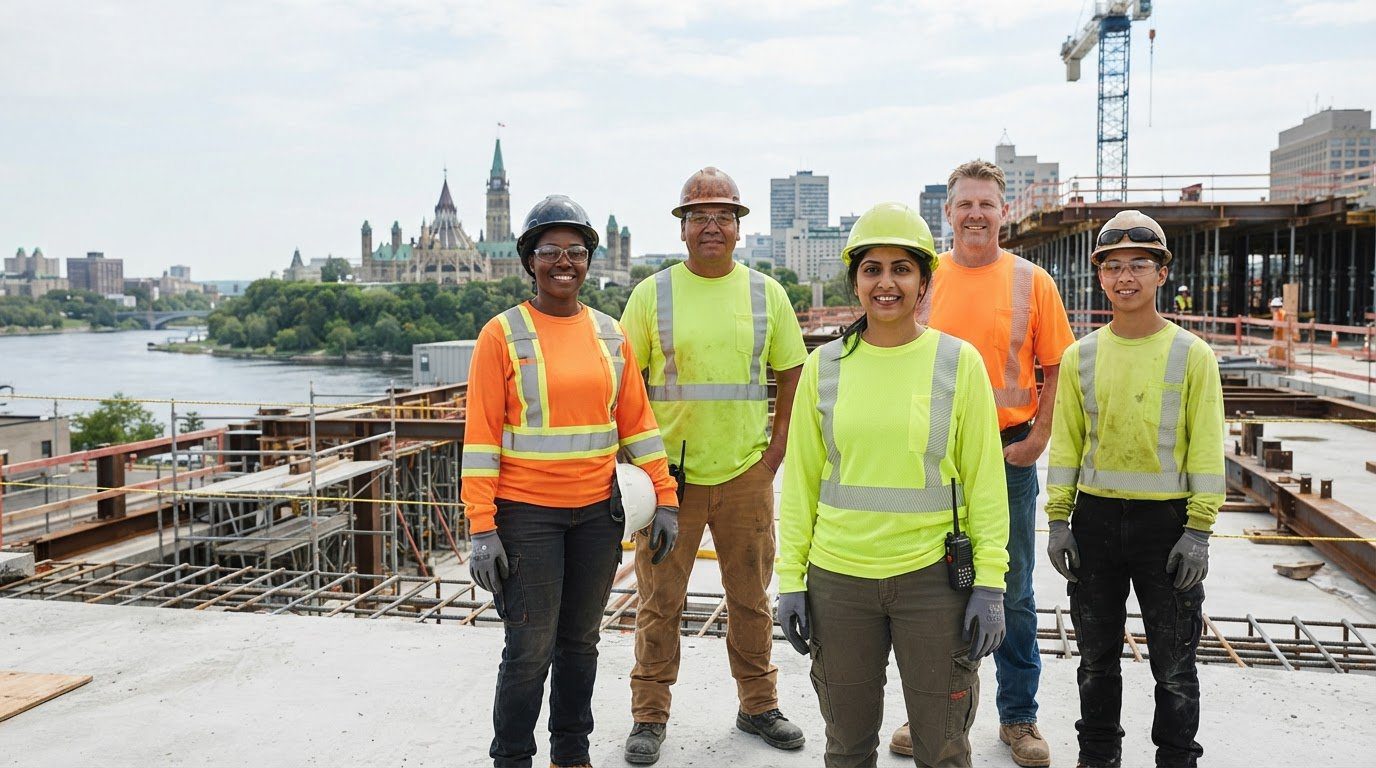
The right construction company safety shirts depend on the work, conditions and visibility requirements, not just the colour. Choose a high-visibility style with an ANSI Class 1, Class 2 or Class 3 rating suited to the job; short- and long-sleeve options are available. Fluorescent fabric helps workers stand out during the day, while reflective striping supports visibility in low light.
It’s sensible to weigh comfort, durability and weather alongside how the shirt will be used. When comparing construction company safety shirts, consider the material, reflective details and customization, since each can affect cost. This guide covers shirt styles, materials, ANSI classes and common volume-pricing structures to help you choose apparel that suits your team’s needs.
Key Takeaways
- Match shirt style and sleeve length to the crew’s tasks, work conditions and comfort needs.
- Compare fluorescent fabric and reflective striping to understand how visibility changes between daylight and low-light work.
- Use the job environment and work being performed to guide the choice between ANSI Class 1, Class 2 and Class 3 options.
- When planning a crew order, weigh garment features and order quantity, since both can affect pricing and volume discounts.
- Learn how custom T-shirts can help crews create a consistent team look without treating customization as a substitute for required high-visibility gear.
High-visibility shirt styles for construction work
Choose shirt styles based on the task, site conditions and visibility needs. Start by considering where your crews work and what they do.
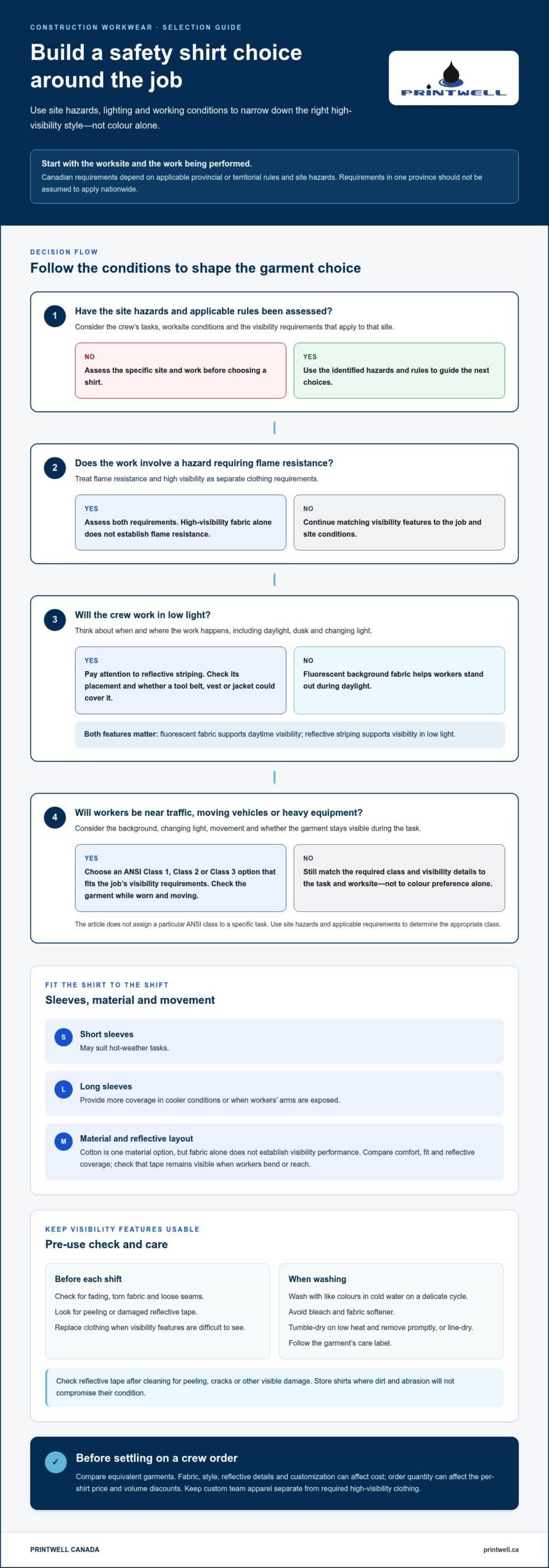
Canadian requirements depend on the applicable provincial or territorial rules and the hazards at each worksite. Don’t assume requirements in one province apply nationwide. Assess the specific site and work being performed.
Flame-resistant high-visibility shirts may be needed when the work involves hazards requiring both flame resistance and visibility. High-visibility fabric alone doesn’t establish flame resistance, so assess these as separate clothing requirements.
Short- and Long-Sleeve Shirt Styles
High-visibility shirts and tees come in short- and long-sleeve styles. Short sleeves may suit hot-weather tasks, while long sleeves provide more coverage in cooler conditions or when workers’ arms are exposed. Compare the task, weather and comfort needs before choosing. For example, a crew moving between outdoor and indoor work may want a style that stays comfortable in both settings.
Visibility Around Traffic and Equipment
Near moving vehicles, traffic and heavy equipment, high-visibility clothing can help drivers and operators notice workers sooner and take precautions. Choose a shirt that stands out against the site background and remains visible as workers move. Consider changing light, passing vehicles and equipment movement. For roadside work at dusk, pay attention to reflective details as well as the fluorescent background colour.
High-visibility apparel combines fluorescent background material with reflective elements. Fluorescent colour helps workers stand out in daylight, while reflective striping helps them remain visible in low light. Check the placement of reflective areas when the shirt is worn, including whether a tool belt, vest or jacket covers them. The garment needs to remain visible during the actual task, not just look bright on a hanger.
Construction shirts and tees can be part of a broader clothing plan. A cotton work shirt may suit a crew’s comfort preferences, but its visibility details and required class must still fit the job. Don’t treat colour alone as proof that a garment meets site requirements. Choose shirts based on the garment label and the worksite’s visibility needs.
- List the crew’s tasks, such as directing traffic, working beside equipment or building indoors.
- Note when and where the work happens, including daylight, low light and changing weather.
- Compare sleeve length, comfort and reflective placement against those conditions.
This review helps narrow down shirt styles before you compare materials or ANSI classes. A crew working beside moving equipment, for example, can prioritize visibility during movement, while a crew facing changing temperatures can weigh sleeve coverage and comfort. Choose a shirt for the task, not just the company’s preferred colour.
Construction clothing materials and reflective tape
High-visibility garments combine fluorescent background colours with reflective striping. Fluorescent fabric helps workers stand out during the day, while reflective details help them remain visible in low light. Both matter: choose clothing with a layout suited to the crew’s tasks, working conditions and required visibility class.
Material affects comfort during a shift and how a garment feels in changing weather. Cotton is one option in high-visibility shirts, but fabric alone doesn’t establish visibility performance. Consider reflective details, fit and intended work alongside material. For example, workers who bend or reach need clothing that remains comfortable and keeps reflective areas visible as they move.
Reflective tape comes in different stripe designs, including segmented layouts. Compare its placement and coverage across the front, back and sleeves, then consider whether tools or outer layers might cover it. A design that looks clear laid flat may be partly hidden when a worker wears a harness, tool belt or jacket. Check the garment while worn, not just on a hanger.
Visibility depends on the garment staying clean and in usable condition. Before each shift, inspect shirts for fading, torn fabric, loose seams, or peeling or damaged reflective tape. Replace clothing when wear makes its visibility features difficult to see. There’s no single inspection interval for every crew, so make a pre-use check part of the work routine.
Care matters too. Wash high-visibility clothing with like colours in cold water on a delicate cycle. Avoid bleach and fabric softener, which can affect the garment’s appearance and condition. Tumble-dry on low heat and remove garments promptly, or line-dry to help extend reflective tape life. Follow the care label, since its instructions apply to that specific fabric and construction.
- Separate high-visibility garments from heavily soiled clothing before washing.
- Check reflective tape after cleaning for peeling, cracks or other visible damage.
- Store shirts where dirt and abrasion won’t compromise their condition before the next shift.
Consistent care helps prevent fading that can reduce a garment’s ability to alert vehicle and machinery operators. A shirt that has lost its brightness, or tape that no longer reflects clearly, may no longer provide the intended visibility. Keep crew apparel in good condition and assess each garment against the job’s requirements. For separate team apparel, custom T-shirts can help crews maintain a coordinated look without replacing required high-visibility clothing.
Workwear pricing and volume discounts
In Canada, construction safety shirt costs depend on fabric, style, reflective details and customization. Bulk orders can affect the per-shirt price, while the total also depends on quantity and selected features.
Compare equivalent garments before assessing a quote. A yellow short-sleeve shirt with basic reflective striping isn’t directly comparable to a long-sleeve work shirt with pockets, heavier fabric or added decoration. List the required features, then compare options against that list. This prevents a lower-cost garment from seeming equivalent when it serves a different purpose.
Volume pricing often uses quantity tiers, where the per-item rate can change at a stated breakpoint. The total still rises as you add shirts, so compare both the unit price and the full amount. For a construction workwear program, estimate crew sizes, replacement needs and upcoming hires before setting an order quantity. A consistent size and style plan also makes repeat orders easier to organize.
Planning for weather can help crews choose practical garments throughout the year. A summer road crew may prioritize lighter fabric and short sleeves, while cold-weather work may call for long sleeves and additional layers. Rainy or low-light conditions can also influence the visibility clothing workers need. Plan seasonal orders around actual tasks and conditions instead of choosing every garment for one season.
Customization affects a shirt’s appearance and the ordering process. A company logo can make a work shirt part of a recognizable team uniform, but its placement and colours should remain legible against the garment. For example, review the logo against a yellow background before approving the artwork. Keep decoration clear of reflective areas so it doesn’t obscure visibility features.
Use a simple purchasing checklist to plan your workwear program:
- Record the garments, sizes and replacement needs for each crew.
- Separate high-visibility requirements from optional choices, such as logo placement or pockets.
- Compare fabric, sleeve style, reflective layout and customization across matching options.
- Review quantity tiers and total order costs together before choosing an order size.
Seasonal planning can also prevent last-minute mismatches. A crew moving from summer roadwork to cooler outdoor projects, for example, may need different sleeves or a new layering plan. Maintain the required visibility while adapting garments to the task and weather. Record styles, sizes and approved logo placement to help keep future orders coordinated.
Costs depend on fabric, garment style, reflective details and customization, so compare equivalent shirts rather than unlike options. Bulk orders may lower the per-shirt rate at quantity breakpoints, but the total depends on the number of shirts and selected features. Custom decoration also affects the cost.
ANSI Class 1, 2, and 3 shirt options
High-visibility shirts are offered with ANSI Class 1, Class 2 and Class 3 ratings. In Canada, CSA Z96 is the standard referenced for high-visibility safety apparel. Treat the garment’s marking and the worksite’s requirements as separate details to assess.
ANSI class labels help distinguish shirt options, but a class name alone doesn’t address every job’s needs. Consider the work environment, traffic exposure, vehicle movement and visibility conditions before selecting apparel. A crew working near active traffic, for example, faces different conditions from workers inside a controlled construction area. Let those differences guide your choice rather than relying on colour or price alone.
Look for the garment’s label and product information. Confirm which standard or rating it identifies, then compare that marking with the site’s required clothing. A shirt labelled ANSI Class 2 should not automatically be treated as CSA Z96 compliant. Likewise, a bright colour or reflective stripe doesn’t prove a garment meets a particular standard. Check the actual garment details before ordering shirts for a crew.
Class 1, Class 2 and Class 3 shirts are among the available rated options. Enhanced-visibility and non-ANSI options also appear in the market, but those labels aren’t interchangeable. For each worker, record the task, nearby hazards and visibility conditions, then identify the applicable site requirement. This makes the reason for choosing a class clear and helps prevent inconsistent selections across one crew.
- Class 1: Check the garment’s rating and compare it with the worksite’s stated visibility needs.
- Class 2: Review the label, intended use and surrounding traffic or equipment exposure.
- Class 3: Confirm that this specific class matches the required workplace selection.
These checks offer a way to make a decision, not a substitute for site safety requirements. A shirt’s ANSI rating may be only one part of the clothing selection, especially when workers also wear jackets or other layers. Consider whether those layers cover reflective areas or garment markings. Clothing that meets the requirements on paper should remain suitable when worn during the task.
Keep a record of the chosen class and standard for each work group. If crews move between sites, compare the new workplace requirements before reusing the same shirts. Inspect labels and reflective details, and replace garments when wear obscures their markings or visibility features. Clear records help supervisors make consistent choices across traffic, equipment and changing work environments.
Prices of construction safety shirts
Construction safety shirt prices vary with garment type, fabric, reflective details and customization. For a Canadian crew order, compare matching specifications first: a lightweight orange shirt and a durable long-sleeve shirt with pockets aren’t equivalent. Bulk pricing can also depend on quantity, so assess the per-shirt rate alongside the full order total.
There isn’t one construction shirt brand that’s best for every job. Choose based on the garment’s stated standard and class, visibility features, construction and fit for the worksite. A brand name alone doesn’t establish that a shirt meets site requirements. Compare the product label and details with the crew’s tasks, including whether workers are near traffic, equipment or active construction sites.
Use a consistent comparison process. First, define the required class and site specifications. Next, list the needed sleeve length, fabric, colour, reflective layout and features such as pockets. Then compare quotes for garments with the same attributes. This makes differences easier to understand and helps prevent a lower-priced shirt from being mistaken for an equivalent option.
Customization can affect the order’s overall cost and appearance. Include logo size, placement and application method when comparing customized garments. For example, a logo should remain legible against bright orange fabric without covering reflective areas. Request a clear breakdown of the order total and any quantity-based pricing rather than comparing unit prices without considering order size.
Safety vests may be a separate option from shirts. A lightweight vest can be worn over regular work clothes, while a shirt may suit workers who prefer a single garment. Compare both with the work environment, required visibility class and expected wear. The lowest-cost option isn’t automatically the best value if its fabric, fit or construction doesn’t suit the crew’s duties.
For a repeat workwear program, record garment specifications, sizes, logo placement and order quantities. Review the list before each reorder. If the next order needs to account for different weather or crew tasks, update the garment requirements before comparing costs. This makes seasonal purchasing more organized and supports consistency across teams without assuming every order qualifies for the same discount.
- Compare the same shirt type, class, fabric and reflective details.
- Review both the unit rate and the total for the planned quantity.
- Include customization and logo placement in the comparison.
- Choose garments to suit the task and worksite, not brand recognition alone.
For coordinated branded apparel outside required high-visibility gear, explore custom T-shirts as a separate team-uniform option.
Printwell Canada: Custom T-Shirts
Printwell Canada helps crews create coordinated team apparel with custom T-shirts. They suit company events, shop teams and off-site work where certified high-visibility clothing isn’t required. Keep custom shirts separate from safety garments when a jobsite calls for specific visibility ratings or reflective features.
For a consistent crew identity beyond shirts, Printwell Canada also offers DTF stickers and films, embroidered hoodies and custom hats. These options can complement branded apparel without replacing protective workwear. Choose items that suit how and where your team will use them.
For custom apparel, contact Printwell Canada or visit printwell.ca.
Plan a Workwear Choice Your Crew Can Stand Behind
Make workwear decisions part of a broader crew plan. Keep required protective garments distinct from apparel used for team identity, and record the styles, sizes and branding choices your team wants to carry forward. This helps organize future orders as crews, roles and projects change. Choosing construction company safety shirts should start with worksite needs; branded clothing can support a consistent look without replacing required protective gear.
For non-protective team apparel, Printwell Canada offers custom T-shirts, DTF stickers and films, and embroidered hoodies. These options can carry a company identity across different settings while keeping safety clothing decisions grounded in job requirements. Plan for both needs, but treat them separately.
Ready to discuss branded apparel for your crew? Contact Printwell Canada about custom apparel, and take the next step toward a practical, cohesive workwear plan.
Frequently Asked Questions
What safety shirt classes and visibility levels are required for construction workers in Canada?
The required class depends on the worksite’s hazards and applicable provincial or territorial requirements. Class 1, Class 2 and Class 3 high-visibility shirts are available, but the class number alone doesn’t determine what a particular crew needs. For example, assess whether workers are exposed to moving traffic, mobile equipment or changing light, then match the garment’s labelled rating to the site’s safety requirements.
What types of construction safety shirts are available, including long-sleeve, short-sleeve, and FR options?
Options include high-visibility short- and long-sleeve shirts, tees and flame-resistant styles for work involving flame hazards. Flame resistance and high visibility are separate garment requirements: a bright shirt or reflective details don’t establish flame resistance. Assess a worker’s exposure to heat or flame separately from the need to be seen, then choose clothing that addresses each relevant hazard.
How do Class 2 and Class 3 safety shirts differ for construction work?
Class 2 and Class 3 are distinct high-visibility ratings, and the right selection depends on the work environment and site requirements. Don’t choose between them based on colour or reflective appearance alone. Compare the garment’s label and documented rating with the assigned tasks. A crew working across different areas may need a consistent rule for identifying which approved garment each role uses.
Where can Canadian construction companies buy safety shirts with company logos?
Ottawa-based Printwell Canada offers custom T-shirts for logo-branded team apparel, with online ordering and a showroom at St. Laurent Shopping Centre. Keep general branded apparel separate from required high-visibility protective clothing. Adding a logo doesn’t establish a shirt’s safety rating, so use custom T-shirts for team identity only when they meet the job’s clothing requirements.
How should employers choose safety shirt sizes, fit, and materials for different seasons?
Choose a fit that lets workers move, then consider what they’ll wear underneath or over the shirt. For example, test the fit with the layers expected during a cold-weather shift and check that jackets don’t hide sleeves or reflective areas. For warmer work, compare short sleeves and fabric comfort. Use the garment’s size information and workers’ measurements rather than ordering every shirt in one size.