
 A Proud Canadian Company

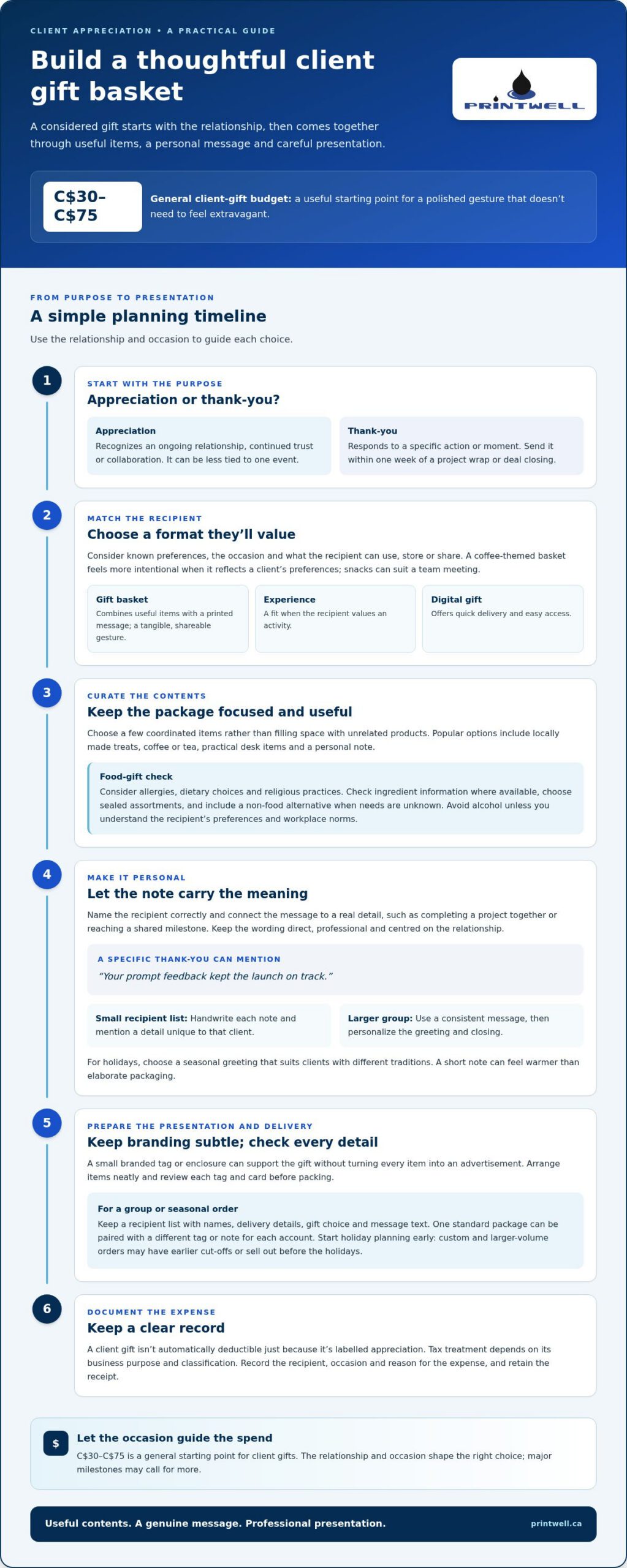
A gift basket isn’t too casual for client appreciation when its contents feel considered and suited to the recipient. Client appreciation gift packages can be personal without being extravagant; a general budget of C$30 to C$75 is a useful starting point for client gifts. The right choice depends on the relationship, the occasion and the impression you want to leave.
It’s natural to wonder whether a basket feels thoughtful enough or whether a more personal gift would make a stronger statement. Both can work. The difference often comes down to purpose: appreciation recognizes an ongoing relationship, while a thank-you gift responds to a specific action or moment.
This guide explains when baskets fit, how appreciation gifts differ from thank-you gifts, and what to consider across budgets and gift types. Find practical ways to match a gift to the occasion, from simple branded items to more personal packages, and choose something useful, polished, and genuinely considerate.
Key Takeaways
- A gift basket can feel professional and thoughtful when its contents, message and presentation suit the recipient and occasion.
- Choose an appreciation gift to recognize an ongoing relationship; reserve a thank-you gift for a specific action or milestone.
- Use the relationship and occasion to guide your budget: general client gifts commonly fall around C$30-C$75, while major milestones may call for more.
- Plan corporate gifts around the recipient and timing, and consider personalized apparel or accessories when a lasting branded touch fits.
1. Are gift baskets appropriate for showing client appreciation, or is it too casual?
Yes. A gift basket can show client appreciation without feeling too casual when its contents suit the relationship and occasion. A coffee-themed basket, for example, feels more intentional when it reflects a client’s known preferences. Choose useful items, arrange them neatly, and add a personalized message explaining why you’re thanking them.
Personalized branding should support the gift, not overpower it. Add a small branded detail, such as a tag or enclosure, rather than turning every item into an advertisement. Spell the recipient’s name correctly and connect the message to a real detail, such as completing a project together or reaching a shared milestone. That specific reference makes the gift feel personal.
A short note can feel warmer than elaborate packaging. Try: “Thank you for your partnership on the office move. We appreciated your clear direction and thoughtful collaboration.” For a holiday basket, use a seasonal greeting that suits clients with different traditions. Keep the wording direct, professional, and centred on the relationship.
For a small recipient list, handwrite each note and mention a detail unique to that client. For a larger group, prepare a consistent message, then personalize the greeting and closing. A typed card can still feel thoughtful when it names the recipient and gives a genuine reason for the gift. Review every tag and card before packing.
Personalization can scale with a simple fulfilment process. Keep a recipient list with names, delivery details, gift choice, and message text. Use one standard package, then vary a tag or note for each account. For holiday gifting, start planning early because custom and larger-volume orders may have earlier cutoffs or sell out before the holidays.
Gift baskets suit clients who appreciate a tangible, shareable gesture, such as snacks for a team meeting. Experience gifts work better when the recipient values an activity, while digital gifts offer quick delivery and easy access. A basket lets you combine useful items with a printed message. The best format depends on the recipient’s preferences and the occasion.
In Canada, a client gift isn’t automatically deductible simply because it’s labelled appreciation. Tax treatment depends on its business purpose and classification. Record the recipient, occasion, and reason for the expense, and retain the receipt.
A general client appreciation budget of C$30 to C$75 can support a polished basket without making the gesture feel extravagant. Choose a few coordinated items rather than filling space with unrelated products. That detail keeps the package focused, memorable, and appropriate for a professional relationship.
2. Differences between client appreciation and thank-you gifts
Client appreciation recognizes an ongoing relationship; a thank-you gift responds to a specific action. For example, send an appreciation gift during the holiday season, then thank a client after a successful project. Let the purpose shape the gift, message, and timing. Both gestures can be thoughtful, but they shouldn’t feel interchangeable.
A thank-you gift is strongest when it connects directly to a moment. Send it within one week of a project wrap or deal closing. A short note can name the contribution, such as “Your prompt feedback kept the launch on track.” Appreciation gifts can be less tied to a single event, recognizing continued trust or collaboration.
For holidays, choose a seasonal message that doesn’t assume every client celebrates the same tradition. For an event, match the gift to its purpose, such as a useful item for a conference attendee. For a milestone, name the achievement. For ongoing appreciation, choose a gift that reflects the relationship rather than the calendar.
Thoughtful corporate gifts balance usefulness, recipient preferences, and professional boundaries. Ask yourself: would this item make sense for this person outside the business relationship? Avoid gifts that feel overly personal or put pressure on the recipient. A clear note explaining the occasion adds context and keeps the gesture from seeming transactional.
Food gifts need extra care. Cookies may contain ingredients that conflict with allergies, dietary choices, or religious practices. Check ingredient information where available, choose sealed assortments, and include a non-food alternative when recipients’ needs are unknown. Avoid alcohol unless you understand the recipient’s preferences and workplace norms.
Sustainable or locally made options can include products from nearby makers, reusable packaging, and gifts with practical use beyond the occasion. For example, pair a local treat with a reusable container instead of disposable filler. Consider packaging, shipping distance, and whether the recipient can use each item, not just its label.
For event-based gifting, a useful detail can connect the gift to the gathering and help guests remember its purpose. Explore event gifting ideas as you plan a polished, recipient-focused gesture.
3. Branded drinkware and drink gift sets
Branded drinkware can make a daily coffee or tea break a reminder of your business relationship. A mug suits a client who works at a desk, while a travel cup may fit someone who commutes. Treat that range as a planning guide for the set, not a price for every drinkware gift.
Build the set around one clear use. Pair a mug with coffee beans for a morning routine, or choose tea and a cup for an afternoon break. A short card can explain the selection: “For your next coffee break, with thanks for your partnership.” This detail connects the contents to your message.
Keep branding visible but restrained. A logo on the drinkware makes the gift recognizable, while a personalized card carries the relationship-focused message. Avoid adding a logo to every part of the package. One branded item, one note, and coordinated presentation can feel more considered than several promotional pieces competing for attention.
Think about the recipient before choosing a format. A ceramic mug may suit someone who uses a shared office kitchen, while a travel cup may be more useful for a client often on the move. If you don’t know their routine, choose a versatile style and avoid assumptions about how or where they’ll use it.
Drink gift sets can feel generic when the contents seem unrelated. Give each item a role: drinkware for repeated use, coffee or tea for enjoyment, and a note for context. For a project team, matching sets can create a shared gesture. For an individual client, address the card by name and refer to a specific collaboration.
For a polished presentation, coordinate the cup, drink, card, and packaging before assembly. Check the recipient’s name and make sure the message suits the occasion. A holiday gift might include a seasonal greeting; a project-completion gift should thank the recipient for their contribution. Keep the logo and wording consistent across every package.
Prioritize drinkware the recipient can use, then add a drink or personal note that reinforces the purpose. A strong gift set doesn’t need to be elaborate. It needs a clear connection between the item, the recipient, and your appreciation.
4. Client gift budget tiers
Set a per-recipient budget before choosing a gift, then match its contents to the relationship and occasion. General client gifts often use a C$30 to C$75 planning range. For valuable relationships and major milestones, a suggested range is C$100 to C$150. These are useful starting points, not rules that every gift must follow.
Gift packages are often grouped into different tiers because their contents and purposes vary.
Other budget descriptions group gifts differently. These ranges overlap because “premium” and “high-touch” describe a gift’s positioning, not a standard package.
Choose the tier by asking what the gift needs to accomplish. For a new partnership, a welcome kit can introduce the working relationship. For a significant milestone, a more substantial selection can mark the achievement. For a seasonal touchpoint, a smaller package can keep the gesture consistent across recipients. Choose what fits the context rather than simply reaching the top of a range.
Plan the complete package, not just its main item. Include the gift, personalized message, packaging, and delivery in your internal budget. Decide whether every recipient receives the same curated package or a tailored option. A shared seasonal gift may suit a team, while an individual milestone deserves a note tied to that person’s contribution.
Allow time for assembly and delivery so gifts arrive for the occasion. Holiday orders, especially custom or larger-volume ones, may have earlier cutoffs and can sell out before the holidays. Build your schedule around preparation, address collection, and delivery windows. A planned package is more useful than a costly gift that arrives after its moment.
Canadian gift budget tiers are planning ranges, not tax rules or a universal legal spending limit. Record the business purpose, recipient, occasion, and expense details. Tax treatment depends on the circumstances and how the expense is classified.
5. Corporate gifting for clients, employees, and partners
A corporate gift should recognize the relationship, not just carry a logo. For a client, connect the gesture to shared work, such as a completed project. For an employee, recognize a contribution or team achievement. For a business partner, acknowledge collaboration. A note naming the reason helps each recipient understand why you chose the gift.
Canadian companies can source corporate gift packages through gift basket businesses, local makers, food producers, and custom-printing companies. The right fit depends on the gift: a basket works for shareable treats—such as gourmet culinary items from Mediterraneo Taste Spain—while a printed item suits a practical branded gesture. Choose a supplier whose offering matches your intended contents and presentation.
Before ordering, build a simple recipient record. Include each person’s preferred name, organization, delivery address, occasion, and message. This helps prevent a package intended for one office from going to an outdated address. For a team gift, address the note to the group and recognize a shared result, such as supporting a successful launch.
Timing matters. Send a thank-you gift within one week of a project wrap or deal closing. For a holiday package, plan ahead so preparation and delivery align with the season. A milestone gift should arrive near the achievement, while an employee recognition package can follow the contribution it celebrates. Tie the date to the purpose.
Keep client, employee, and partner messages distinct. A client note might recognize trust and collaboration. An employee message can name a specific contribution, such as coordinating a major event. For a partner, mention the work both organizations completed together. These details make a consistent gift format feel relevant to each recipient.
For larger groups, organize fulfilment with a shared list and a final review. Match each package to its recipient and message before dispatch. Check spelling, office details, and delivery instructions. If employees work across locations, choose a package that travels well and doesn’t depend on everyone gathering in one place. An organized process protects the personal touch.
Branded items can help recipients remember your business, but keep the balance practical. Choose one useful item, add a concise message, and avoid making the package feel like advertising. For an event, event badges can support identification and provide a functional touchpoint. For a broader corporate gifting plan, explore custom gift printing options to create branded items for clients, employees, or partners.
Printwell Canada: Custom T-Shirts
Printwell Canada helps businesses create branded items for thoughtful client appreciation gifts. Custom T-Shirts can give a team or event a coordinated look, while Embroidered Hoodies and Custom Hats offer wearable alternatives. DTF Stickers and Films can add a branded detail to a package or handout.
Choose an item that suits the recipient and occasion, then pair it with a personal message. A Custom T-Shirt may fit an event kit, while a hat can make a practical thank-you gift. These options add a consistent visual touch to client appreciation gift packages without making them feel impersonal.
Contact Printwell Canada or visit printwell.ca to discuss custom gift items.
Make Your Next Client Gesture Count
A gift can open the door to a more meaningful business conversation. Think beyond the moment it arrives: choose something the recipient can use, connect it to a genuine message, and let the gesture reflect the partnership you want to build. Thoughtful client appreciation gift packages can make that connection tangible without feeling like a sales pitch.
For a coordinated branded touch, Printwell Canada offers Custom T-Shirts, DTF Stickers and Films, and Embroidered Hoodies. Choose the format that suits your recipients and how you plan to recognize them. A practical, well-chosen item gives your message room to stand out.
Contact Printwell Canada about client gifts and explore an option for your next appreciation gesture. A personal detail can help turn a simple gift into a lasting expression of partnership.
Frequently Asked Questions
Can I add my company logo or branded materials to client gifts?
Yes, branded items can add a recognizable business touch to a gift. Printwell Canada offers custom apparel and promotional items, including Custom T-Shirts, Custom Mugs, and Business Cards. Choose one item that suits the recipient rather than filling the package with repeated branding. Designs can’t contain copyrighted or trademarked images, so use suitable original artwork.
Can I include a personal message?
Yes, include a separate card or note with the gift to make its purpose clear. Mention the recipient by name and refer to a specific contribution, such as thoughtful feedback during a project. For a group gift, address the whole team and recognize a shared effort. Keep the message concise, warm, and appropriate for your working relationship.
Can I send client appreciation baskets to multiple people at different addresses?
Yes, you can plan a gifting round for recipients at separate addresses. Prepare a recipient list with each person’s preferred name, complete delivery address, package choice, and message. Track which package goes to each recipient, then match labels and notes before dispatch. This simple check helps prevent a personalized message from arriving with the wrong gift.
Do you handle corporate gifting?
Printwell Canada supports corporate gifting with custom-branded merchandise, rather than curated baskets or gift-box fulfilment. For example, businesses can use Custom T-Shirts, Embroidered Hoodies, or DTF Stickers and Films as branded gifts or event items. Select merchandise that matches your purpose, then add your own note or basket contents to create a complete gift for clients, employees, or partners.
How does scheduled delivery and tracking work for a big client gifting round?
For a large gifting round, set a target arrival date and work backwards through address collection, package preparation, and dispatch. Keep each recipient’s details in one organized list, and group deliveries by destination where practical. After shipment, use the delivery service’s tracking reference to monitor each parcel. Share tracking details with recipients if that helps them plan for arrival.
How much do client appreciation gift packages cost in Canada?
In Canada, a general client gift budget is often C$30 to C$75 per recipient. Valuable relationships or major milestones may call for C$100 to C$150. These are gift-planning ranges, not prices for printing services.
What are the best client appreciation gift packages by budget?
For a modest budget, choose a focused gift with one useful item and a personal note. Match the contents to the recipient, not just the tier.
Can client appreciation gifts be customized with company branding in Canada?
Yes, Canadian businesses can use custom apparel and printed materials to give gifts a consistent visual identity. Printwell Canada provides a proof or mockup before printing, so you can review the design before production. Supply suitable artwork and check names, spelling, and placement carefully. Designs containing copyrighted or trademarked images aren’t printed, so use original artwork you have permission to reproduce.