 A Proud Canadian Company
A promotional item earns attention through usefulness, not just a logo. What makes a good promotional item? It suits its audience, feels well made and fits the occasion. Promotional products are branded items, such as merchandise printed with an organization’s logo or message, that people can use, keep or remember.
It makes sense to want a giveaway that reflects well on your organization and doesn’t end up forgotten in a drawer. The right choice depends on who will receive it and where: an event, trade show, school, retail promotion or everyday business setting can each call for something different. This article explains how to match promotional products to people’s needs, balance practicality with brand fit, and choose merchandise that supports your purpose without losing sight of quality. You’ll also see how thoughtful choices can make a branded item feel useful and personal, rather than like another piece of advertising.
Key Takeaways
- Choose merchandise that reflects your organization’s purpose and feels consistent with its brand.
- For a small business, prioritize quality and usefulness so the item feels worth keeping.
- Compare practical value, audience relevance and visual appeal when choosing an item.
- Think about who will receive the merchandise and what they’re likely to use in their daily lives.
- Match the item to the setting, whether it’s a trade show, school activity, community event or retail promotion.
What are promotional products?
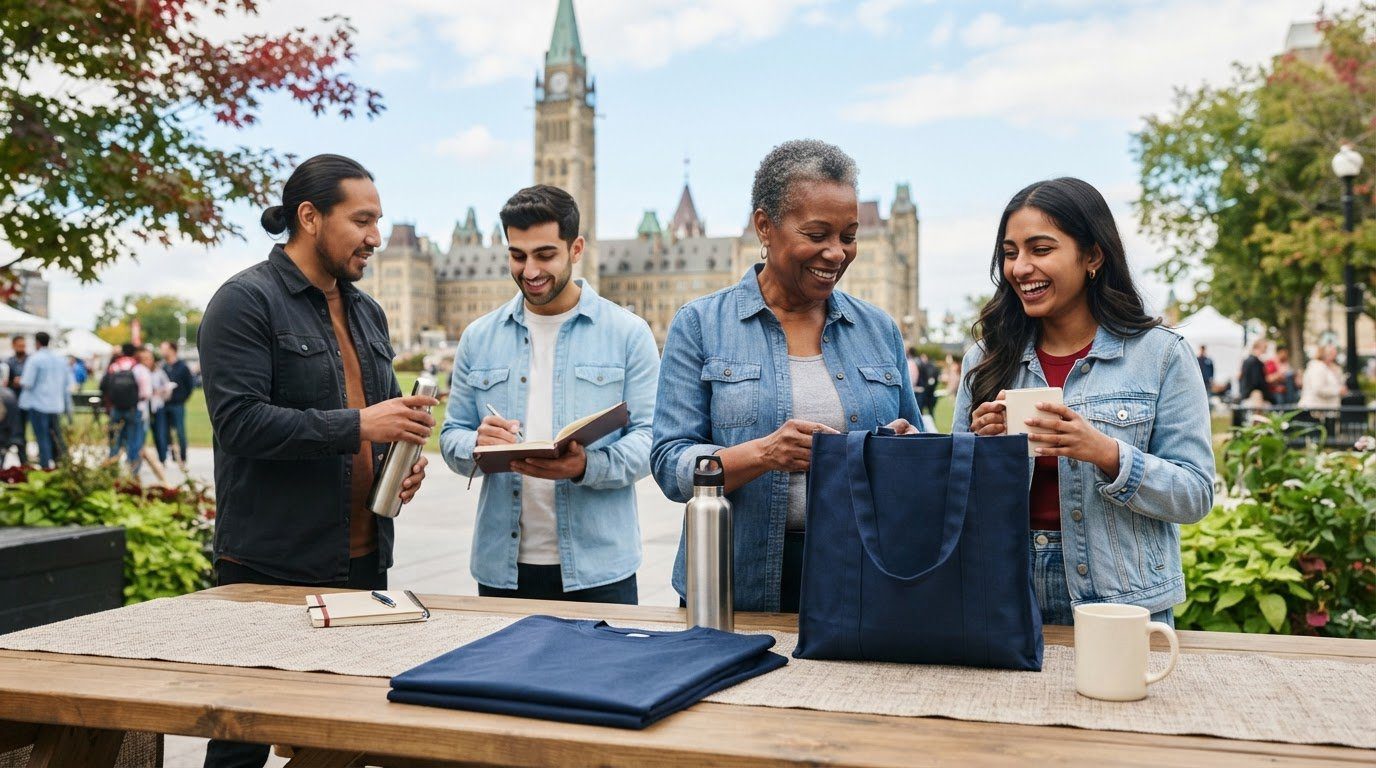
Branded merchandise is a physical item marked with an organization’s name, logo or message. A community festival might offer tote bags, while a clinic could give visitors pens or reusable mugs. These items bring a brand into everyday settings, from a desk to a grocery trip, reminding recipients of the organization and the experience connected with it.
Good choices reflect an organization’s mission, not just its colours. A sustainability-focused business might choose a reusable item that supports its environmental message. A youth sports program could select something participants will use at practice. The product’s design, material and purpose should align with the organization’s actions. What makes a good promotional item starts with whether it fits those values.
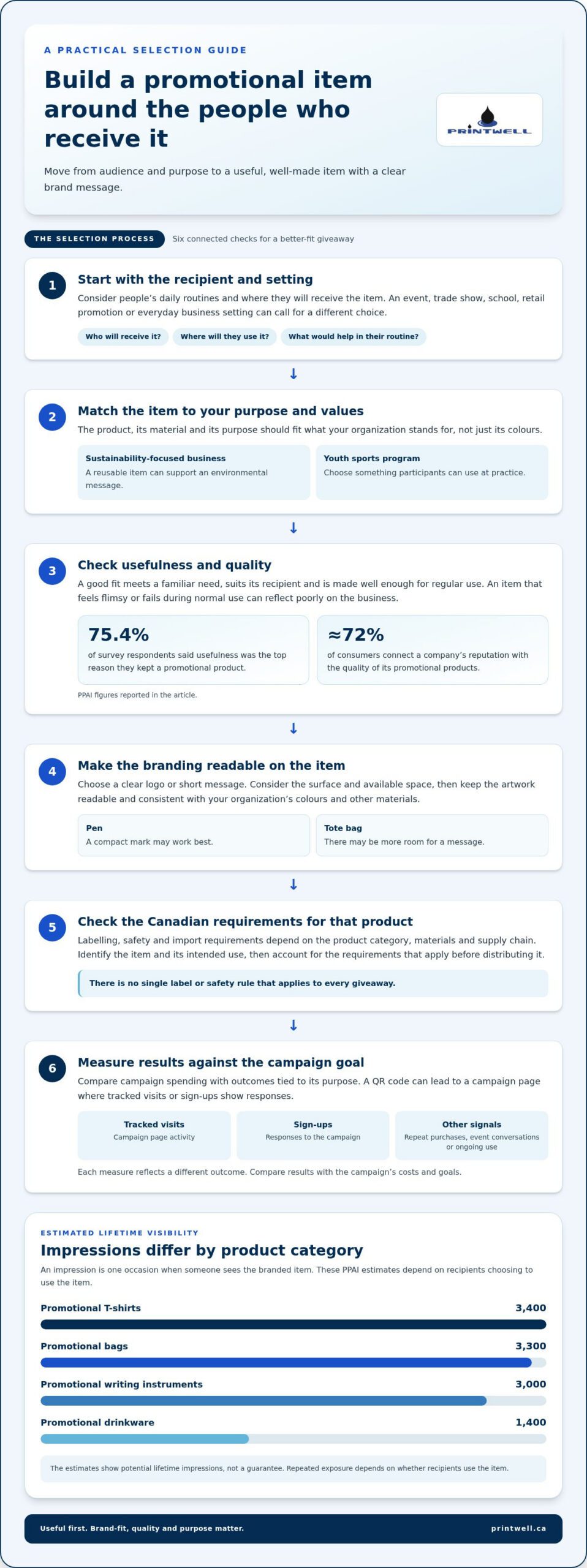
Usefulness can extend awareness beyond the moment someone receives a giveaway. A tote bag carried to a market or a mug used at work may be seen repeatedly by its owner and others. PPAI estimates that promotional t-shirts can generate 3,400 impressions over the item’s lifetime. An impression is one occasion when someone sees the branded item. That exposure depends on whether recipients choose to use it.
Promotional items work differently from digital advertising. A digital ad appears on a screen; a physical giveaway can stay with someone and be used again. Unlike a consumed sample or a handout that is quickly discarded, a durable item may provide repeated brand exposure. Each format serves a different purpose, so decide whether you want a brief interaction, a product trial or a useful reminder.
To choose merchandise that fits your brand and audience, start with the people receiving it and the setting. Consider their daily routines, what they would find useful and whether the item reflects your organization’s values. A reusable tote could suit a neighbourhood market, while a branded notebook may work well at a training session. The best promotional item connects both the audience and the message.
Canadian labelling, safety and import requirements depend on the product category, materials and supply chain. No single label or safety rule applies to every giveaway. Identify the item and its intended use, then account for the Canadian requirements that apply before distributing it.
Customization turns a plain object into branded merchandise. Choose a clear logo or short message, then consider how the artwork will look on the item’s surface. A compact mark may work on a pen, while a tote bag offers more room for a message. Keep the design readable and consistent with your organization’s colours and other materials.
To measure return on investment, compare campaign spending with outcomes tied to its purpose. A QR code, for example, can lead recipients to a campaign page, where tracked visits or sign-ups show responses. Compare those results with the campaign’s costs and goals. Repeat purchases, event conversations or ongoing use may also indicate value, though each measure reflects a different outcome.
Promotional products for small businesses
For a small business, a giveaway can introduce the brand, support a local event or thank customers. A neighbourhood café, for example, might choose an item that fits its service and customers’ daily habits.
Popular categories include writing instruments, bags, drinkware and apparel. The best fit depends on where customers will use the item and how the business wants to stand out. A pen may suit a trade show where visitors need something to write with, while a reusable bag can travel between shops and errands. PPAI estimates that promotional writing instruments can generate 3,000 impressions over the item’s lifetime, and promotional bags can generate 3,300.
Suppliers and distributors help businesses turn an idea into a finished giveaway. A supplier provides products, while a distributor can help narrow options and coordinate customization. Customization may involve an imprint, or a logo or message added to an item. A small business could choose a branded pen with a readable logo, then use the same colours and wording on its business cards.
Quality and Recipient Retention
Quality and recipient retention describe how an item’s construction and finish affect whether someone keeps using it. This matters because a giveaway that feels flimsy or fails during normal use can reflect poorly on the business. PPAI reports that approximately 72 percent of consumers connect a company’s reputation with the quality of its promotional products. Choose a product that feels suitable for its purpose, such as a pen that writes reliably.
Reusable Products and Impressions
A reusable promotional product is designed for repeated use, giving the brand more chances to be seen. This can make it an effective promotional choice when recipients already need the item. PPAI estimates that promotional drinkware can generate 1,400 impressions over the item’s lifetime. A reusable mug or bottle can travel from home to work, while a business can connect its logo with an everyday routine.
For a trade show, match the giveaway to what visitors can carry and use afterward. A compact item may be easier to take home than a bulky one, while a practical choice can keep the brand visible beyond the event. Small businesses considering custom promotional pens can use them for customer visits, event tables or everyday business conversations.
What are the most useful promotional items?
Useful promotional items meet a small, familiar need. A shirt may suit a community team, while a tote bag can help shoppers carry purchases.
Practicality, Relevance, and Quality
Practicality, relevance and quality mean an item is useful, suited to its recipient and made well enough for regular use. Together, these qualities help a giveaway feel thoughtful instead of random. In a PPAI survey, 75.4% of respondents said usefulness was the top reason they kept a promotional product. A useful item can also support brand loyalty by connecting the organization with a positive everyday experience.
Fit for the Recipient
Recipient fit means choosing an item based on people’s routines, interests and setting. The same giveaway won’t suit every group. A shirt may be welcome at a team event, while a tote bag may be more practical for shoppers. Consider recipients’ routines and the occasion before choosing to make the item more likely to be used and remembered.
Consumer responses show why usefulness matters. PPAI research found that 59% of people would rather receive a useful promotional product than see advertising across traditional and digital media. That preference doesn’t mean every product suits every person. A desk item may fit an office audience, while a portable item makes more sense for people travelling between work, school and home.
Timing also shapes the experience. A useful item can feel like a welcome part of an event when it arrives at the right moment, such as a tote bag at a retail promotion or a shirt at a community gathering. PPAI reports that approximately 96 percent of consumers would like advance notice of an organization’s promotional-item giveaway. Sharing details ahead of time can help people understand what to expect.
Common mistakes include choosing an item only because it catches the eye, using a hard-to-read message or overlooking whether recipients can use it. A flashy giveaway may go unused if it doesn’t suit the audience. Before ordering, compare the item’s purpose, audience and design. For a group event, for instance, choose a shirt that looks comfortable rather than assuming everyone wants the same thing.
Match the product to the occasion and how recipients are likely to use it. At a school activity, a practical item participants can take home may work better than something intended for an office. For a retail promotion, choose merchandise that fits customers’ shopping routines. Give people a clear reason to keep and use the item, and remember the organization behind it.
Matching merchandise to audience preferences
A strong match starts with the recipients, not the product catalogue. Consider their routines, the setting and what the campaign should help them do.
Audience and Generational Preferences
Audience preferences are the practical needs and tastes of the people receiving merchandise. An item that suits one group may not work for another. Consider work, hobbies and daily routines, not just age. A coffee tumbler may suit commuters, while a notebook could be more useful for workshop participants. These examples help narrow choices without assuming everyone in a generation wants the same thing.
For a corporate audience, the setting can guide the style. A team event may call for something employees can use at work, while a community open house may suit an item visitors can take home. Consider what recipients carry, use or need during the activity. A brief conversation with event organizers can clarify useful details, such as whether attendees will be seated, travelling or moving between booths.
Treat generational preferences as clues, not rules. A younger recipient may value a current design, but personal interests matter too. An older attendee may appreciate a familiar, practical object, though preferences vary within every age group. Compare the audience’s habits with the campaign setting, then choose merchandise that respects both. This keeps decisions grounded in the people receiving the item.
Campaign Objectives and Merchandise
Campaign objectives are the outcomes an organization wants merchandise to support. Define the goal first: a giveaway for brand awareness has a different role from a thank-you gift. For a new café opening, a branded item could keep the business name visible after a first visit. For employee recognition, a thoughtful piece may communicate appreciation more clearly than a generic handout.
Match the item to one clear objective. To invite people to a booth, choose merchandise that starts a conversation or supports the activity. To encourage repeat visits, connect the item’s message to a customer routine. A café, for example, could pair a coffee-related giveaway with a reminder of its new location instead of adding several competing messages.
Distribution also shapes the choice. A corporate event may leave time to explain why an item was chosen, while a busy retail counter calls for a simple, clear message. Consider how recipients will receive and carry the product. A compact giveaway may suit a crowded event, while a larger item may work better when attendees can take it home directly.
Before choosing, write down the audience, campaign goal and intended message. Compare each product against those three points. One that supports all three is more purposeful than one chosen for appearance alone. For example, a community program promoting participation could choose an item attendees can use during activities, reinforcing the message through the experience.
Use at events, trade shows, schools, and retail promotions
Promotional products work best when they fit the setting. A trade show, school event and retail promotion each create different needs for the item, message and handoff.
At a community event, the goal may be to help visitors remember who organized it. Choose an item connected to the activity, such as apparel for volunteers or a practical giveaway at an information table. Keep the brand message easy to read and the item simple to carry. A useful giveaway can keep the organization in mind after visitors leave.
A trade show has a different rhythm. Visitors move between booths, collect information and decide what to take with them. Choose an item that is easy to pick up, carry and use after the show. Pair it with a brief explanation that gives people a reason to remember your organization. A clearly marked pen, for example, can support note-taking during a product demonstration.
At a school event, consider students, families, educators and the activity itself. A school fair giveaway should be easy to hand out and suitable for those attending. For a club or team gathering, apparel can help participants feel connected. Let the event’s purpose guide the choice: merchandise should support participation, not distract from it.
Retail promotions can connect merchandise with a purchase, opening or seasonal display. A local shop could offer a branded item at a launch table, where customers see the product and understand the message together. Place the giveaway near the relevant display and make the connection clear. This helps the item reinforce the shopping experience instead of feeling unrelated.
In every setting, think about the handoff. At a crowded trade show, staff may need to explain the item in a few words. At a school fair, organizers may distribute products from a table. In a shop, the item may be offered at checkout. Choose merchandise suited to the space, audience and time available for conversation.
Match the design to the setting. A large, readable message may help at a busy event, while a smaller logo can suit an item used every day. Keep the campaign’s central reason clear: welcome visitors, support a school activity or introduce a retail offer. One focused message is easier to recall than several competing details.
If an event needs attendee identification or a useful handout, explore event badges and promotional pens for the occasion.
Printwell Canada: Custom T-Shirts
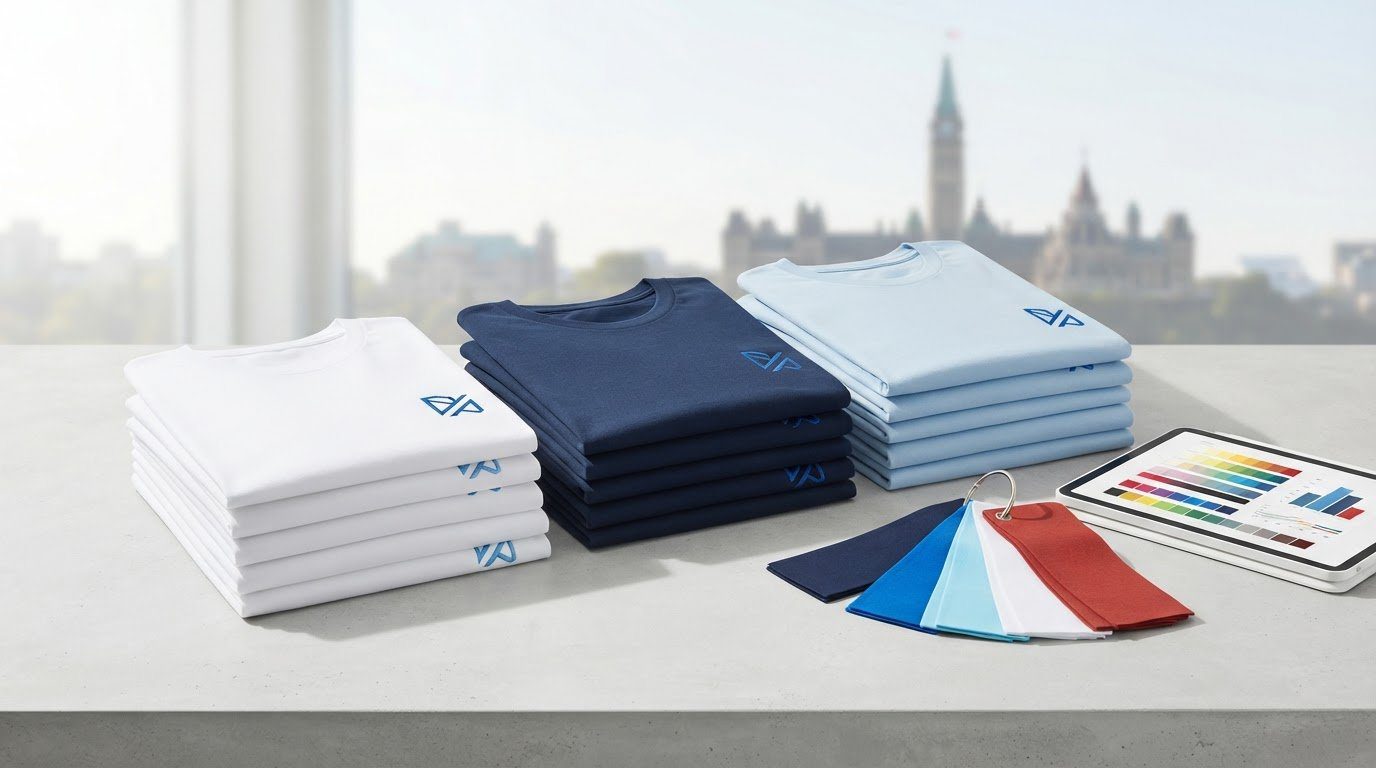
Printwell Canada helps Ottawa businesses, schools and event organizers turn merchandise ideas into branded apparel. Custom T-Shirts can give teams a consistent look at a community event, school activity or retail promotion. Embroidered Hoodies and Custom Hats offer other apparel options, while DTF (direct-to-film) Stickers and Films add branded details to a campaign.
Choose an item based on its purpose: who will wear or use it, where they’ll receive it and what message should stand out. Matching the product and branding to the occasion creates a thoughtful giveaway, rather than one that feels disconnected from the event.
Contact Printwell Canada to discuss custom merchandise for your audience or upcoming promotion in Ottawa.
Make your next promotion more intentional
Give your next campaign a clear purpose before choosing merchandise. Decide what you want recipients to feel, remember or do, then let that goal guide the item and its design. What makes a good promotional item depends on the people receiving it, not on choosing whatever seems popular.
For branded apparel and campaign materials, Printwell Canada offers Custom T-Shirts, Embroidered Hoodies, and DTF Stickers and Films. These options can give a team, event or promotion a shared look. A focused message and a thoughtful product choice make the finished item feel connected to the occasion.
When you’re ready to shape your idea into custom merchandise, contact Printwell Canada to discuss your promotional items. A considered choice can give your next promotion a personal touch and a useful role in people’s day-to-day lives.
Frequently Asked Questions
How Do Organizations Use Them?
Organizations use promotional items to welcome people, support campaigns and recognize participation. An Ottawa community association might include a branded item in a volunteer welcome package, while a local business could give one to customers at an opening. Employers can use merchandise to help staff feel part of a team. The purpose determines who receives the item, what it says and when to distribute it.
What are good giveaway items?
Good giveaway items suit their recipients and where they’ll use them. A notebook may help workshop participants, while a cap could suit an outdoor community event. For a customer appreciation event, a mug or tote may feel more personal than a generic handout. Before choosing, consider whether the item is easy to carry, appropriate for the occasion and connected to the organization’s message.
What is branded merchandise?
Branded merchandise is a physical item customized to identify an organization, usually through its name, logo or message. Examples include staff apparel, school team clothing and a community group’s event keepsake. Branding can be subtle or prominent, depending on how people will use the item. A clear visual connection helps recipients recognize the organization without making the product feel like a sign.
What is the best giveaway for marketing?
The best marketing giveaway supports a specific campaign goal and feels relevant to its recipients. A business introducing a new service, for example, could offer an item that starts a conversation about it. A community organization seeking event registrations might choose something attendees can take home with event details. Link the giveaway to a clear next step, such as visiting a display or learning about a program.
What qualities make a promotional item useful and memorable?
A useful, memorable item combines a clear purpose with a distinctive detail. A local arts festival might choose merchandise featuring its artwork, giving attendees a reminder of the event beyond its name. Clear branding, suitable construction and a connection to recipients’ interests all help. Avoid so much text or decoration that people can’t quickly recognize the organization or enjoy the item.
Which promotional items have the highest perceived value and everyday use?
Perceived value depends on the recipient and how well an item fits their routine, so there’s no universal ranking. Apparel, drinkware, bags and writing tools can all be useful in different situations. A team member may value a hoodie for work events, while a customer who travels by transit may prefer a compact tote. Choose based on the audience’s habits instead of assuming one category suits everyone.
How do print quality, customization, and branding affect promotional item effectiveness?
Clear printing and thoughtful customization make an item look intentional and its message recognizable. Use artwork that remains legible at print size, and choose colours that contrast with the product. Place the logo where people can see it during ordinary use, not where a hand or strap will cover it. A consistent look across apparel and event materials can make an organization easier to recognize.