 A Proud Canadian Company
What makes a direct to film transfer supplier a good fit for your business? Look beyond equipment claims and focus on what your project needs: suitable DTF products, a clear way to order, and fulfilment that fits your production plan.
Choosing a supplier can feel uncertain because listings may mix ready-to-use transfers with DTF printers and production equipment. Artwork dimensions, design counts, garment type and order timing all affect how smoothly a project runs. This guide explains how to distinguish between products and equipment, prepare an order, and compare practical details that matter for apparel projects.
For Canadian businesses, a local option can make sourcing more convenient. Printwell Canada is based in Ottawa, with a showroom at St. Laurent Shopping Centre, online ordering and Canada-wide shipping. Its DTF stickers and films complement custom apparel printing for clothing and branding projects. Read on to assess supplier fit and plan an order around your workflow.
Key Takeaways
- Distinguish between ordering ready-to-use DTF transfers and purchasing equipment to print them in-house.
- Match a direct to film transfer supplier to your garment type, artwork dimensions, order quantity and production schedule.
- Compare product fit, ordering, shipping and support for repeat projects.
- Prepare garment and design counts, artwork measurements and intended application before placing an order.
- Explore Printwell Canada’s DTF stickers and films through online ordering, its Ottawa showroom or Canada-wide shipping.
What a Direct to Film Transfer Supplier Provides, and What It Does Not
A DTF transfer is a printed design on film that can be applied to a garment using a heat press. A direct to film transfer supplier provides printed film for garment decoration, allowing a business to source designs without producing them in-house.
Search results can mix suppliers of printed film with retailers of DTF printers and production equipment. Both relate to the same printing method, but they serve different needs. The Direct-to-film printing (DTF) overview explains the broader process and equipment. For your purchase, the key question is whether you need printed film or the tools to make it.
Finished DTF transfers versus DTF printing equipment
Finished transfers are purchased for application to garments. DTF equipment is used to produce transfers in-house and requires a separate production setup. If your business already has a way to apply transfers but no DTF printing operation, sourcing printed film may suit your workflow. If your goal is to print transfers yourself, you’re evaluating equipment rather than placing a transfer order.
Consider what your team needs to do after the purchase. Ordering finished film means preparing the design and project details, then organizing the transfers for garment application. Equipment makes transfer production part of your own workflow. Keeping these categories separate helps you compare like with like and avoid choosing a machine when you need printed designs for an apparel run.
When a business might source transfers
Sourcing transfers can suit a business that wants custom garment decoration without bringing DTF printing equipment into its workspace. A small business preparing branded staff shirts, a team organizing clothing for an event, or a shop creating merchandise can source printed film and focus on the rest of the project.
This approach can also make sense when transfer printing isn’t a regular part of production. Rather than setting up an in-house operation for occasional orders, a business can source printed film for a particular run. The fit depends on the work: how many garments need decoration, how many designs are involved, and whether the business has a way to apply the transfers.
Printwell Canada offers DTF stickers and films alongside custom apparel printing, connecting DTF products with apparel and branding projects. Start by identifying what you need to buy. For printed film, look for a supplier of finished DTF products; for in-house production, evaluate equipment and how it would fit your operation. That distinction gives your project a clearer starting point.
How to Match a DTF Transfer Supplier to Your Project
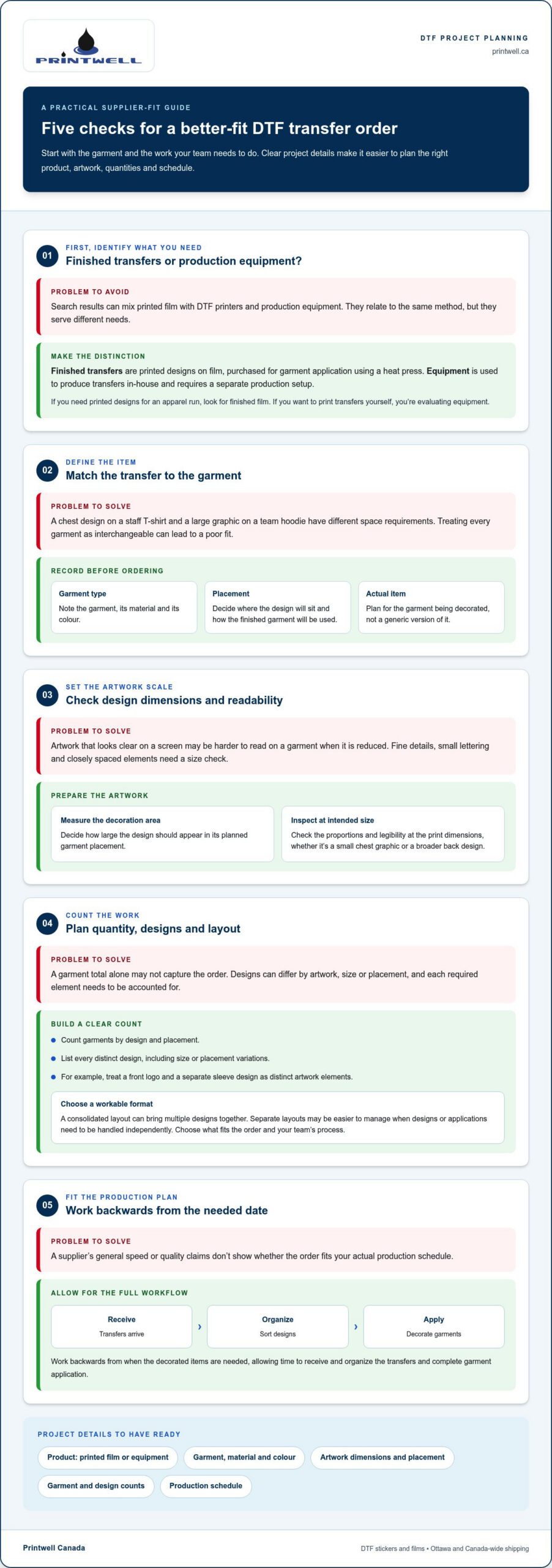
Start with the garment, not a supplier’s biggest product claim. A design planned for the chest of a staff T-shirt has different space requirements from a large graphic intended for the back of a team hoodie. Define what you’re decorating, where the design will sit and how the finished garment will be used. These details give you a practical basis for planning an order.
Use four project details to narrow the fit:
- Garment: Record the garment type, material and colour. This helps you plan for the actual item rather than treating every garment as interchangeable.
- Artwork: Measure the decoration area and decide how large the design should appear on the garment.
- Quantity: Estimate garment counts and list each distinct design, including variations in size or placement.
- Schedule: Work backwards from when the decorated items are needed, allowing time to receive and organize the transfers and complete garment application.
Start with the garment and artwork
Prepare artwork at the intended print dimensions, then inspect it at that size. Fine details, small lettering and closely spaced elements can be harder to read on a garment than on a screen. Check that the design proportions suit the placement, whether it’s a small chest graphic or a broader back design. The PRINTING United Alliance provides broader printing-industry resources, but your project requirements should guide the order.
Material, colour and placement describe the item being decorated. For example, plan a logo for the front of a dark hoodie specifically for that garment and location, rather than simply reusing a layout made for a light T-shirt. Clear dimensions help keep the artwork, transfer layout and garment placement aligned.
Plan quantity, format and production timing
Count garments by design and placement before deciding how to organize the order. If one run includes a front logo and a separate sleeve design, list them as distinct artwork elements. A consolidated layout can bring multiple designs together, while separate layouts may be easier to manage when designs or applications need to be handled independently. Choose a format that fits the order and your team’s process.
For several designs, a DTF gang sheet printing guide can help explain how multi-design layouts are organized. Before ordering, count the garments, designs and required sizes. This simple step can prevent a mismatch between the artwork you’ve prepared and the transfers needed for the run.
Separate project requirements from marketing language. General claims about quality or speed don’t tell you whether the layout, artwork dimensions and quantities suit your garments. Use your project details as the measure, and set a realistic schedule that includes receiving the transfers, sorting designs and completing application. For an Ottawa-based option, Printwell’s DTF stickers and films can be part of your apparel and branding plans.
How to Evaluate DTF Transfer Supplier Quality and Fulfilment
A supplier’s claims matter less than how well its products and ordering process fit your work. Compare details you can assess, such as the DTF products offered, how orders are placed and how they can reach your business. Keep those service details separate from performance claims about colour consistency, wash life or repeat-order results, which need evidence relevant to your project.
Supplier suitability depends on product fit and order workflow. Use the comparison below to see whether the practical details support your current project and future planning.
| What to compare | What to look for | Why it matters |
|---|---|---|
| Product fit | Descriptions that clearly identify the transfer products relevant to your project. | Helps you match the order to the intended application. |
| Order process | A clear way to submit artwork and specify designs and quantities. | Organized details reduce the risk of misunderstandings. |
| Location | A physical location or showroom, if in-person access is useful to your business. | Local access may suit buyers who prefer a nearby destination. |
| Shipping | Published information about shipping reach and online ordering. | Useful for planning when your business is outside the supplier’s city. |
| Customer support | Clear order information and a defined way to get help with the process. | Good communication can make repeat project planning more straightforward. |
Assess product fit and order communication
Start with product descriptions. They should make clear what kind of DTF product you’re ordering and help you connect it to the intended use. Then consider how artwork and order details are handled. Organize the design dimensions, number of designs and required quantities before submitting an order. Clear inputs help keep project requirements aligned.
Claims still need context. A statement about durability or consistent results isn’t the same as evidence showing how it applies to your garment, artwork and use. Broader industry reports, such as Grand View Research’s Textile Printing Market Analysis, can offer context on textile printing, but they don’t establish the performance of a particular supplier’s transfers. Keep your comparison grounded in details relevant to your own order.
Compare location and fulfilment options
Local access and shipping serve different preferences. An Ottawa business may value an in-person destination, while a business elsewhere in Canada may prioritize online ordering and nationwide shipping. Printwell Canada offers online ordering, a showroom at St. Laurent Shopping Centre and Canada-wide shipping for its DTF stickers and films.
For repeat projects, keep a record of the product, artwork details, design quantities and order information used each time. This gives you a consistent planning reference without assuming a supplier guarantees identical results. Businesses looking for a Canadian source of DTF products can explore Printwell’s DTF stickers and films as part of their fulfilment planning.
A Practical Checklist for Ordering DTF Transfers
A well-prepared order starts with the project details, not the checkout screen. Before placing an order with a direct to film transfer supplier, map each design to its garment, placement and quantity. This makes the order easier to review and helps your team stay organized from submission through application.
Prepare a clear transfer order
Gather the project information first. Record garment types, decoration locations, design versions and estimated quantities. Give artwork files descriptive names so each design and revision is easy to identify. These habits help keep the order details aligned and reduce the chance of confusing one version with another.
- Define the project. Note what the transfers are for, such as staff apparel, team clothing or merchandise, and when the decorated garments are needed.
- List the garments. Record garment type and count, grouping items by project or intended application when that makes the order easier to manage.
- Count the designs. Identify each distinct design and any versions, sizes or placements that need separate attention.
- Measure the artwork. Set the intended print dimensions and check that the design is legible at that size and suits its placement on the garment.
- Organize the files. Use clear names that distinguish designs and versions, so the artwork you intend to order is easy to recognize.
- Review the order details. Before submission, compare the listed designs and quantities against your project notes. Check that no artwork version or garment group has been missed.
Coordinate the order with production
Plan when you need the transfers, then account for the fulfilment method and the time your team needs to sort and apply them. Avoid building a schedule around an assumed delivery date. Use the timing information for your order and leave room to organize the materials before production begins.
After the transfers arrive, group them by design and intended garment project. If a run includes several garment styles or locations, label the groups in a way your team can follow. This keeps the order connected to the original plan and makes it easier to spot a mismatch before application.
Give the final details one last pass before submitting. Confirm the garment count, design count, artwork dimensions, intended application and file version. Compare them with your project notes to catch a quantity that doesn’t match the garment list or an outdated design file. Consistent preparation also gives you a useful reference for a repeat order.
Ready to put your project plan into action? Explore Printwell’s DTF films and stickers for your apparel and branding work.
Choose Printwell Canada for DTF Transfers in Ottawa and Across Canada
Finding a supplier that fits your project is about more than locating printed film. You also need a practical way to place an order and get DTF products where they need to be. Printwell Canada is an Ottawa-based custom printing business offering DTF stickers and films, along with custom apparel printing for clothing and branding projects.
Local access from Ottawa
For customers in Ottawa, Ontario, Printwell’s showroom at St. Laurent Shopping Centre offers an in-person option. Online ordering provides another route for organizing an apparel project from home, a workplace or a shop. Choose the approach that best suits how you prefer to plan and manage your order.
That local presence can be useful for Ottawa businesses coordinating branded apparel or preparing garments for a team or event. Fit ordering into the project plan: organize the artwork and quantities, choose an ordering route, then leave time to receive and arrange the transfers before application. Local customers can order online or visit the showroom.
DTF products for Canadian apparel and branding projects
DTF stickers and films can support apparel and branding work, while custom apparel printing suits projects where finished clothing is the goal. Businesses may be preparing branded garments for staff, creating clothing for an organization or developing merchandise. The right product choice depends on the project and how the transfers fit into its production workflow.
Outside Ottawa, Canada-wide shipping offers a way to access Printwell’s DTF products from elsewhere in the country. Online ordering supports businesses planning remotely, while local customers can choose between ordering online and visiting the showroom. These options suit different preferences without requiring every customer to follow the same ordering routine.
If fast turnaround matters to your project, build a realistic schedule around the order route, shipping where applicable and the time needed to apply the transfers. Avoid setting production plans around an assumed delivery date. Organizing artwork, quantities and garment preparation in advance helps your team make better use of the time available.
For a Canadian business looking for a direct to film transfer supplier, Printwell offers DTF stickers and films from its Ottawa base, with online ordering and shipping across Canada. Explore Printwell’s DTF products and choose the ordering route that suits your next apparel or branding project.
Make Your Next Apparel Run Easier to Plan
Your first order can become a reference point for smoother future projects. Keep a simple record of the artwork version, garment placement, transfer quantities and application notes that worked for your team. For the next run, you’ll have a clearer starting point and can adjust the plan for new garments, designs or production needs.
A practical record helps you choose a direct to film transfer supplier based on how your business works, not just on a headline claim. Build the order around your production priorities, keep project details organized and give each design the attention it deserves. Small planning habits can make branded apparel and merchandise projects more manageable from one run to the next.
Ready to take the next step? Explore Printwell Canada’s DTF films and stickers and start planning transfers for your next apparel or branding project. A clear brief and a thoughtful order plan are a strong foundation for bringing your idea to life.
Frequently Asked Questions
Do I need a DTF printer to use ready-made DTF transfers?
No. Ready-made DTF transfers are already printed, so you don’t need a DTF printer to use them. You do need a suitable way to apply the transfer, commonly a heat press, and should follow the application instructions supplied with it. When comparing a direct to film transfer supplier, distinguish the equipment needed to make transfers from the tools required to apply a finished one.
Can DTF transfers be used on cotton and polyester garments?
DTF transfers are commonly used on cotton and polyester garments, but the specific garment and transfer instructions matter. Check that the fabric can tolerate the heat required for application, especially with blends or garments with special finishes. For example, a cotton T-shirt and a polyester athletic shirt may need different handling. Follow the transfer’s application guidance and the garment manufacturer’s care information.
How should unused DTF transfers be stored?
Keep unused transfers in a clean, dry place away from direct sunlight, moisture, dust and excessive heat. Store them flat when possible, and avoid bending, creasing or placing heavy items on the printed surface. Protect each design from rubbing against other materials. Follow any storage directions supplied with the specific transfer, since film and adhesive products may have different handling recommendations.
How should I care for a garment decorated with a DTF transfer?
Follow the garment’s care label and any care guidance provided for the transfer. As a practical precaution, turn the garment inside out before washing and avoid bleach or high dryer heat if the care instructions allow. Don’t iron directly over the design. If ironing is necessary and permitted, use a pressing cloth and take care not to apply heat directly to the printed area.
Can DTF transfers reproduce multi-colour logos?
Yes, DTF printing can reproduce multi-colour artwork, including logos with several colours or colour transitions. The result depends on the artwork and the size at which it will be printed. Fine lettering and small details may be harder to distinguish at a compact size, so inspect the logo at its intended dimensions. Also use the correct approved version of the logo for your organization or client.
Can I order DTF transfers for a small apparel project?
Yes, finished transfers can suit a small apparel project, particularly if you don’t print transfers in-house. Plan for the actual garment count and design needs, and consider setting aside one transfer to test your application process on the intended fabric. Order formats and terms can differ, so review the details for your chosen product. For an Ottawa project, online ordering lets you plan from your workspace.