
 A Proud Canadian Company
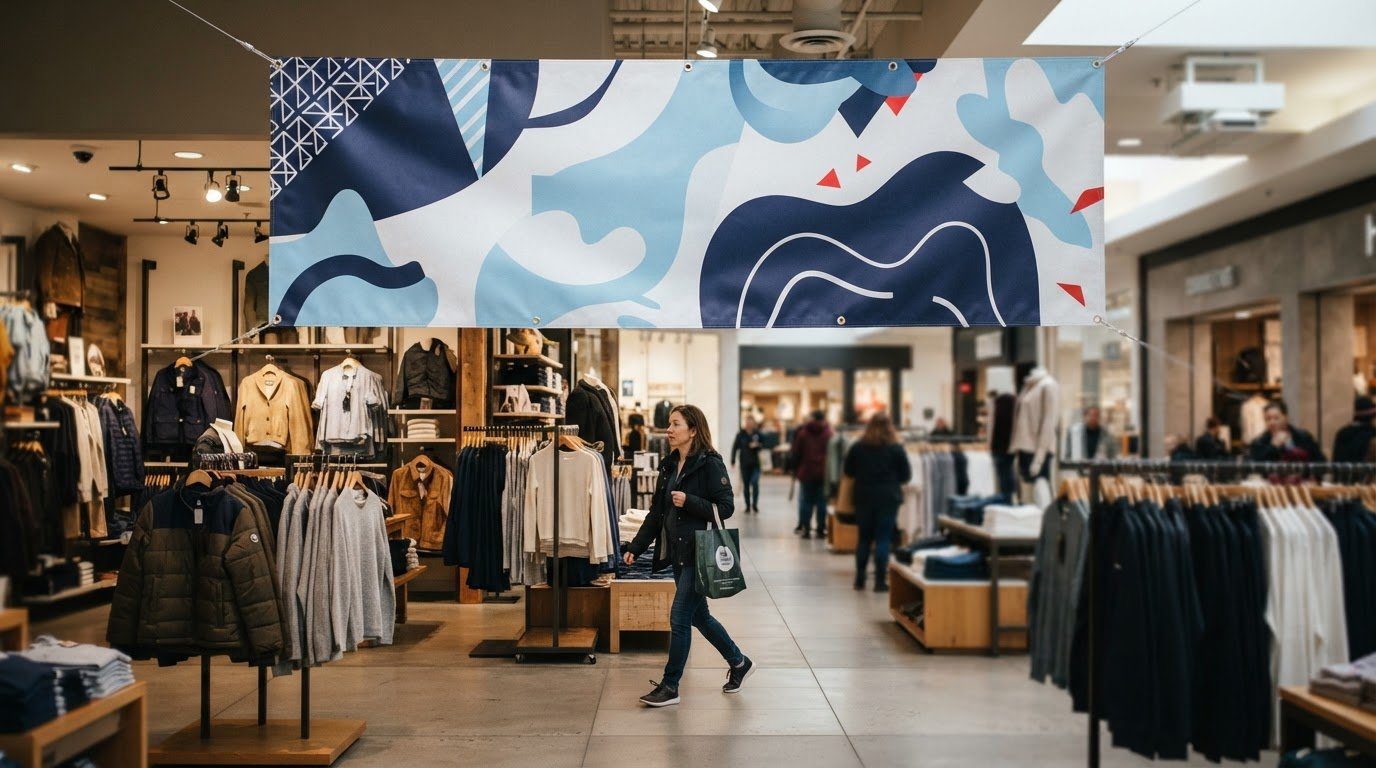
A banner can do more than announce a sale: it can help shoppers notice promotions and find their way around a store. For small displays, a 2’x4’ banner is a suggested size; 4’x8’ banners suit storefronts, while sale banners are commonly sized between 3×8 and 4×10 feet. Choosing custom banners for retail stores starts with matching the size and placement to the message.
It’s easy to focus on the artwork, but the material and display matter just as much. A banner needs to suit its setting, whether it hangs above a retail aisle, sits in a window or faces outdoor conditions.
This guide covers banner materials, practical design choices and outdoor vinyl’s expected durability. You’ll also learn how hanging banners can improve store visibility: they use ceiling or high-wall space, stay above displays and can be changed for new promotions or seasonal sales.
With a clear message, suitable dimensions and the right display, a retail banner can help your store communicate at a glance.
Key Takeaways
- Match banner size to its location, from compact displays to storefronts and large promotions.
- A standard 13 oz vinyl banner can last outdoors for 3 to 5 years with proper installation; mesh allows airflow in windy settings.
- Choose vinyl, mesh or fabric based on where the banner will be displayed and how it will be used.
- Plan the message, finish and mounting method together so the banner is easy to read and suited to its display location.
- Use hanging banners above shelves and merchandise to make promotions visible while keeping retail floor space clear.
How long does a vinyl sale banner last outdoors?
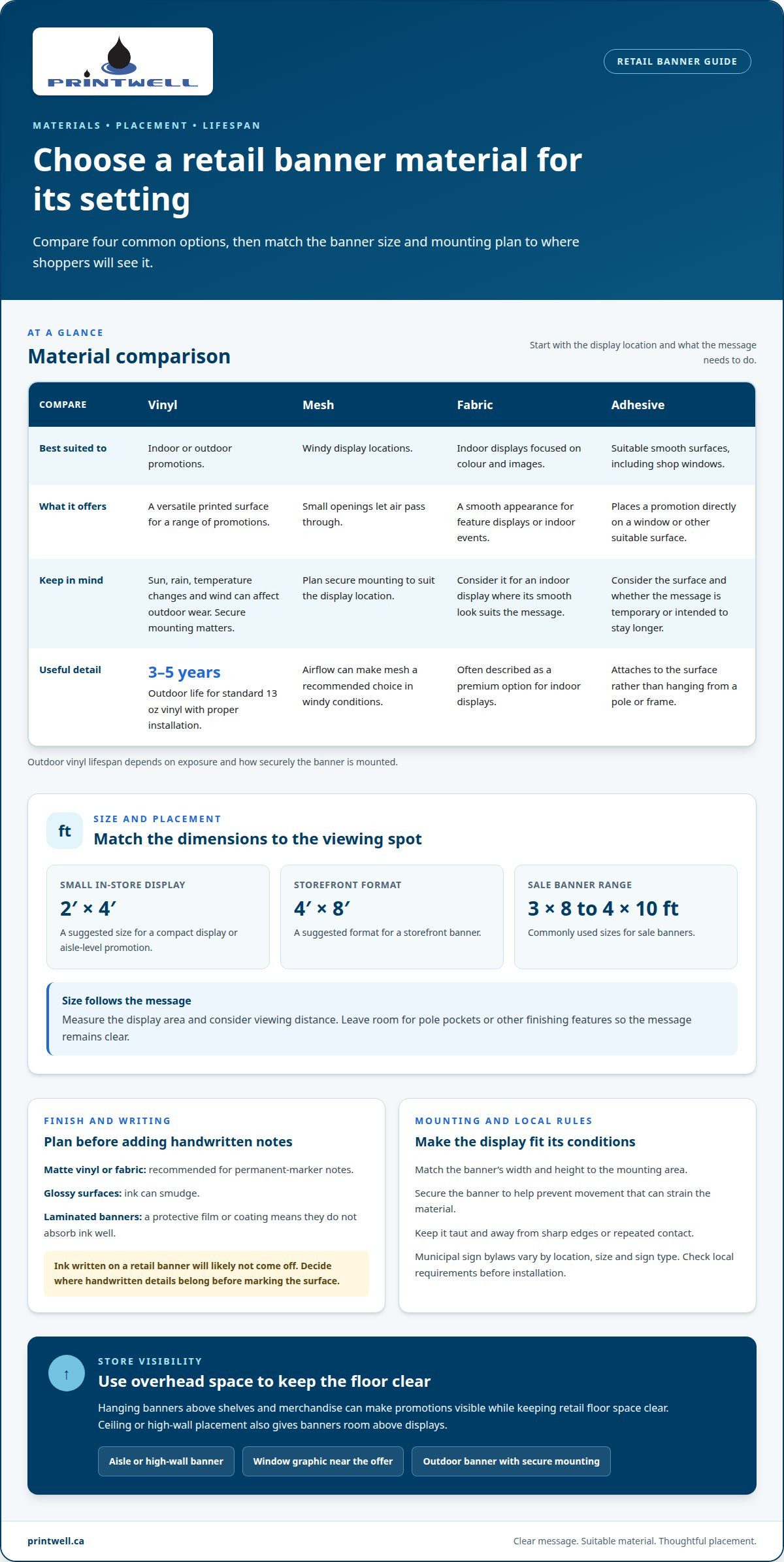
A standard 13 oz vinyl banner can last outdoors for 3 to 5 years with proper installation. Its lifespan depends on exposure and how securely it is mounted. Sun, rain, temperature changes and wind all affect how the material holds up, so a sheltered storefront and an exposed roadside location may present different conditions.
There is no single outdoor retail-signage rule for every Canadian city. Municipal sign bylaws set local requirements, which can depend on the sign’s location, size and type. Check the rules for the municipality where the banner will be displayed before installation.
For storefronts, commonly suggested sizes range from 3×8 feet to 4×10 feet. A 4’x8’ vinyl banner is also a suggested storefront format, while a 2’x4’ banner suits a smaller in-store display. Choose based on the message and the viewing distance: a sale headline needs enough space to remain legible from the street or aisle.
Placement helps determine the format. A window graphic or indoor promotional sign can highlight a limited-time offer close to the point of purchase without covering the entire storefront. A vinyl banner can work indoors or outdoors, but its mounting method and exposure differ. For example, a banner inside a shop faces less weather than one attached to an exterior wall.
Wind needs special consideration outdoors. Mesh banners allow airflow, making them a recommended choice for windy conditions. Solid vinyl can catch more wind, so its position and attachment points matter. Pole pockets are sleeves along a banner’s edge that hold a pole and support mounting. Choose a format suited to the location rather than assuming one material works best everywhere.
Before installation, match the banner’s width and height to the mounting area. Keep the promotional message clear, and leave room for pole pockets or other finishing features. Secure mounting helps prevent movement that can strain the material. Measure the final display space, including available height and nearby fixtures, before planning outdoor delivery and installation.
- Indoor: Use a compact banner or window graphic for aisle-level promotions.
- Storefront: Consider a 4’x8’ format or a commonly used 3×8-to-4×10-foot sale banner.
- Windy outdoor location: Choose mesh for airflow and plan secure mounting.
Each choice suits a different setting. A large outdoor vinyl banner draws attention from passing shoppers, while an indoor sign can highlight a sale near relevant products. Matching the material, size and mounting method to the display helps keep the message visible throughout the promotion.
Vinyl, mesh, adhesive, and fabric banner materials
Choosing materials for custom banners for retail stores starts with the display location and how shoppers will use the message. Canadian retailers can work with local print shops or online printing companies that produce custom banners. Compare the material to the purpose: an indoor feature display has different demands from a banner exposed to outdoor weather.
Vinyl suits a range of indoor and outdoor promotions. A standard 13 oz vinyl banner can last outdoors for 3 to 5 years with proper installation. Mesh has small openings that let air pass through, making it a useful option for windy locations. Consider exposure to wind, rain and sunlight when planning a Canadian outdoor display, then choose a mounting position and support that suit the conditions.
Fabric is often described as a premium option for indoor displays. Its smooth appearance can work well when colour and images are central to the presentation, such as for a boutique feature or indoor event. Vinyl and mesh offer other choices for promotional displays, including outdoor settings where exposure and airflow matter. For custom banners for retail stores, choose material based on where customers will see the message, not appearance alone.
Adhesive graphics attach to suitable surfaces, such as shop windows, rather than hanging from a pole or frame. They can bring a promotion close to the glass and catch the attention of people passing outside. Consider the surface and how long the message needs to stay in place. A temporary seasonal offer may call for a different approach from a window graphic intended for longer use.
Printing and finish influence a banner’s appearance and whether staff can write on it. Matte-finished vinyl or fabric is recommended for permanent-marker notes. Glossy surfaces can cause ink to smudge, while laminated banners, which have a protective film or coating over the printed surface, don’t absorb ink well. Ink written on a retail banner will likely not come off, so decide where handwritten details belong before marking the surface.
To help an outdoor banner handle Canadian weather, choose a material suited to its exposure and mount it securely. Mesh allows airflow, while a sheltered position can reduce direct exposure for other materials. Keep the banner taut and away from sharp edges or repeated contact that could damage it. These placement and handling choices help the banner suit its intended use.
Use this quick comparison when narrowing your options:
- Vinyl: A versatile printed surface for indoor or outdoor promotions.
- Mesh: Allows airflow in a windy display location.
- Fabric: A premium indoor choice for colour and image-led displays.
- Adhesive: Attaches to suitable smooth surfaces, including shop windows.
For a window promotion, consider the glass surface and how the graphic will be removed or replaced. For a hanging display, coordinate the material and finish with its mounting method. Reviewing banner material choices can help connect the display’s purpose with a suitable printed format.
What are some design tips for designing a custom banner?
Start with the banner’s location, then choose a finish that suits the mounting method. Grommets are metal-rimmed holes for fastening a banner with ties or hooks. Pole pockets are sleeves that hold a support pole. Both can help with hanging, but the right option depends on the display structure and whether the banner will be indoors or outdoors.
For a large promotional display, banners measuring 6’x10’ or larger are suggested. A wider design needs a clear layout, not more competing text. Set a single headline, supporting detail and visual focus. For example, make “Seasonal Sale” the main message, then add a short explanation and one image. Keep important words away from the edges, where finishing can take up space.
Choose colours and images for the viewing distance. A shopper passing a storefront needs a simple, high-contrast message; someone standing near an indoor display can take in more detail. Before upload, check that the artwork matches the banner’s finished orientation and dimensions. Some banner order forms accept artwork files up to 1 GB, though accepted file limits depend on the upload system.
Outdoor banners need a finishing method suited to their installation. Grommets provide fastening points around the banner, while pole pockets support hanging from poles. Adhesive tabs and pole pockets are also used for retail and boutique interiors. Hanging a banner typically doesn’t require specialized labour or equipment, but the mounting surface and available supports determine how it can be secured. Position it so it doesn’t rub against sharp edges.
Install and maintain a retail banner by matching its finish to the supports, fastening it evenly and checking for loose attachments or visible wear. For outdoor displays, inspect the mounting after exposure to wind or weather, then clean the material in a way suited to its surface.
Shipping and checkout costs depend on the finished banner, quantity, delivery destination and selected finishing. Compare the final checkout total, including delivery, before placing an order. For a time-sensitive promotion, account for shipping time when planning the display date. The delivery location and chosen shipping method affect arrival timing, so build that into the campaign schedule.
- Grommets: Fasten through the holes with suitable ties or hooks.
- Pole pockets: Slide a support pole through the sleeve for hanging.
- Adhesive tabs: Use for suitable interior mounting surfaces.
Thoughtful artwork, suitable finishing and secure mounting work together. For a storefront sale, make the headline readable from a distance and plan the display supports before submitting the final design.
What is a retail banner?
A retail banner is a printed display that shares a store message in a chosen location. It can announce a seasonal promotion, identify a department or guide shoppers to a service point. For example, a banner above a gift section can draw attention to seasonal products without adding another sign to the shelf.
Placement determines what the banner needs to communicate. A storefront display can introduce an upcoming sale to people outside, while an interior banner can point shoppers toward a department. In a larger retail space, hanging displays can help customers navigate. Start by identifying the shopper’s route, then place the message where it supports that journey.
Height and sightlines matter. A banner behind a tall display may be hidden from shoppers approaching the aisle. Check the view from the entrance and main walking paths before choosing a position. For example, a banner above a checkout area can promote an upcoming event, while a message near the entrance can direct visitors to a seasonal display.
Mounting hardware connects the banner to its support. Grommets are reinforced holes for hooks or ties, while pole pockets are sleeves that hold a support pole. Adhesive tabs can attach suitable displays to interior surfaces. Select hardware based on the installation surface, banner orientation and whether the display hangs from a wall, ceiling or frame.
Before installation, measure the available space and note nearby fixtures, lights and signs. Check that doors can open freely and that the banner won’t cover product information or directional signs. For a ceiling-mounted display, identify the intended support points first. For a wall display, confirm the banner will sit flat and remain visible from the approach shoppers use.
Retail banners can serve different purposes throughout the store. Use a department label to make shopping easier, a product message to focus attention or a seasonal banner to mark a changing display. A banner above new arrivals can distinguish that area from regular merchandise. One clear purpose makes the placement and message easier to plan.
- Store entrance: Welcome visitors or announce a coming promotion.
- Department aisle: Identify a category or help shoppers find products.
- Checkout area: Highlight an event or a relevant add-on.
- Seasonal display: Draw attention to a temporary product arrangement.
Plan installation around the surface and store layout. A freestanding retractable display suits a location where a wall or ceiling mount isn’t practical. A hanging banner uses overhead space, while a wall-mounted one can bring the message closer to eye level. Position it so the message stays clear without obstructing shopping routes or displays.
After mounting, view the banner from the entrance and main aisle. Make sure the message is readable, the hardware holds it evenly and nearby fixtures don’t block it. This final walk-through helps catch placement issues before shoppers encounter the display.
Hanging banners for store visibility
A hanging banner turns ceiling or high-wall space into a visible message without using retail floor space. Its position above eye level can keep it clear of shelves, merchandise and customer traffic. In a busy store, that can help shoppers notice a promotion before displays or other signs compete for attention.
Start by choosing the shopper’s viewpoint. Stand at the entrance, then follow the main route through the store. A banner above a seasonal display can attract attention as shoppers approach; one over a department can help them spot the area from farther away. Place the message where customers can read it before reaching the display.
Keep the artwork suited to the viewing distance. A shopper crossing an open sales floor needs a short headline and clear visual focus, not a paragraph of small print. For example, “Spring Arrivals” can identify a seasonal area, while a concise sale message can draw attention to a featured display. Make the most important words easy to read from the approach path.
Hanging banners come in a variety of sizes and shapes, so choose a format that fits the space rather than filling it by default. Retail storefront sale banners are commonly recommended at sizes between 3×8 feet and 4×10 feet. Inside, the usable area, ceiling height and viewing angle guide the dimensions. Leave room around the banner so its message doesn’t disappear among lights, beams or signs.
Plan the hanging method alongside the location. Pole pockets hold a support pole, while grommets provide holes for ties or hooks. The support points should keep the banner level and steady. Before installation, consider how shoppers move beneath it, whether fixtures block the artwork and whether staff can safely reach the mounting points when it needs changing.
One advantage of hanging displays is flexibility. Retailers can change them for new promotions, upcoming events or seasonal sales without rearranging floor layouts. A simple artwork system helps: keep the store identity consistent, then update the offer and dates for each campaign. Shoppers get a familiar visual cue while the message changes.
- Entrance: Announce a promotion visible as shoppers arrive.
- Over a department: Help customers identify a destination from the main aisle.
- Above a feature display: Connect a seasonal message to the products below.
Hanging banners are relatively inexpensive to produce compared with digital screens, and they don’t require floor space. For stores planning a printed display, explore custom banner options and choose a format that suits the message, viewing distance and mounting location.
Printwell Canada: Custom T-Shirts
Printwell Canada can help retailers extend a promotion beyond the storefront with custom apparel and branded items. Custom T-shirts, embroidered hoodies and custom hats can give staff a coordinated look during a seasonal sale or store event. DTF (direct-to-film) Stickers and Films offer another way to add a branded touch to packaging or customer materials.
These options suit retailers looking for a consistent visual identity across staff clothing and promotional details, alongside store displays. Choose items that fit the event and how your team will use them, keeping the message and colours consistent.
To discuss custom apparel or promotional items for your store, visit Printwell Canada online.
Make your next store message count
Think of your next promotion as a connected experience, not a single display. A banner can introduce an event, while matching details elsewhere in the store carry its message through the customer journey. Plan the artwork around the action you want shoppers to take, then keep the wording and visual style consistent across each touchpoint.
For retailers building a coordinated look, Printwell Canada offers Custom T-Shirts, DTF Stickers and Films, and Embroidered Hoodies. These can support event teams, branded packaging details or staff apparel alongside custom banners for retail stores.
Bring your promotion idea and preferred display direction together, then contact Printwell Canada about your banner. A clear plan is a strong starting point for a store message that feels considered and easy to notice.
Frequently Asked Questions
Can I get a custom sale banner made quickly for a weekend sale?
A weekend deadline depends on production timing, artwork approval and delivery, so plan the banner before sale week. Have the final message, size and artwork ready when you place the order, and leave time to review the proof. If the promotion date is close, an existing in-store sign may be a practical short-term option while the printed banner is prepared.
Can I write on these banners with a permanent marker?
Yes, but choose a matte-finished vinyl or fabric surface for writing. Glossy finishes can cause marker ink to smudge, and laminated surfaces don’t absorb ink well. Treat the writing as permanent: ink added to a retail banner will likely not come off. For a price that changes often, plan a separate replaceable message area instead of writing over important artwork.
What are the care instructions for my banner?
Keep the banner clean and dry between uses, and handle it gently when taking it down. Wipe away dust with a soft, damp cloth, then let the surface dry before storing it. Avoid sharp objects and rough scrubbing that could mark the print. For a seasonal display, store the banner rolled rather than creased, away from damp areas and direct heat.
What types of custom banners work best for retail stores?
The best format depends on the job: a storefront sale, aisle direction or freestanding promotion each calls for a different display. Use a hanging banner where shoppers need a clear overhead cue, and a retractable format where the message needs to stand independently. For a campaign that changes often, choose a display staff can reposition without rearranging nearby merchandise.
What materials and finishes are available for retail store banners?
Common choices include vinyl, mesh, fabric and adhesive graphics, with the setting guiding the selection. Mesh suits exposed spots where airflow matters, while fabric can give an indoor display a refined appearance. Matte finishes are useful if staff will write on the banner. Consider the mounting method too, since grommets or pole pockets affect how the finished piece hangs.
How much do custom retail banners cost in Canada?
There isn’t one price for every banner; the total depends on its finished size, material, finishing, quantity and delivery. Before committing to a promotion, compare the final order total with the display’s intended use and campaign duration. A reusable banner may suit recurring events better than a one-time sale sign.
How do I design and order a custom banner for my store?
Start with the display location, finished dimensions and one clear message. Prepare artwork that fits the layout, then upload it with the order. Printwell Canada provides a proof for approval before production, giving you a chance to review the wording and placement. Use artwork you have permission to reproduce, and don’t submit copyrighted or trademarked images without authorization.
How do fabric, vinyl, mesh, and retractable banners compare?
Fabric suits polished indoor displays, vinyl offers a versatile printed surface, and mesh lets air pass through in exposed locations. A retractable banner is a portable display format with a freestanding base, useful when you need to set up and move a message without hanging it. Choose based on the location, portability needs and intended use.