 A Proud Canadian Company
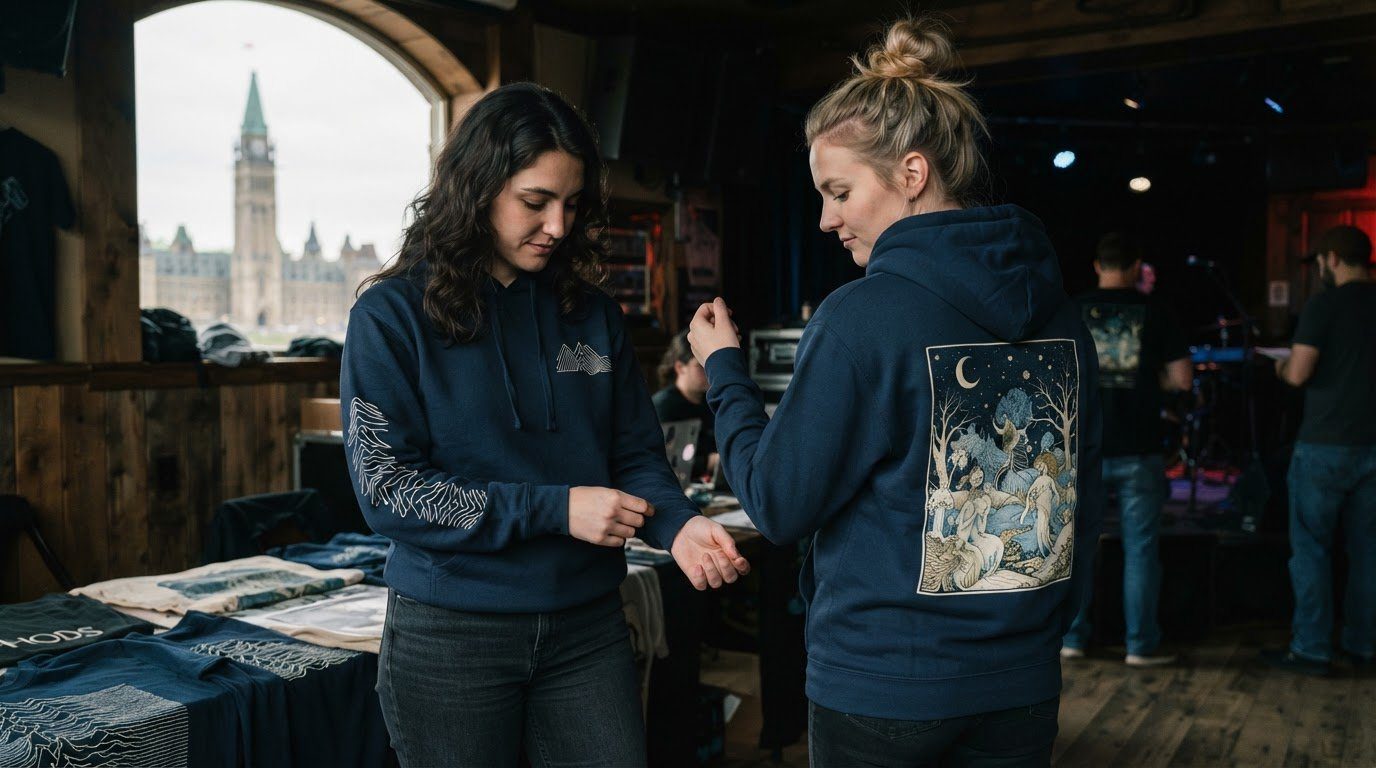
The best band hoodie isn’t always the one with the biggest graphic. Choosing custom printed hoodies for bands means balancing the artwork, garment style and print placement so the finished merch feels right for your music and your fans.
A proof or mock-up lets you review your design on the hoodie before production, but it isn’t a physical sample. Use the proof to check the artwork, placement and layout. If you need to assess the garment’s feel and fit, remember that a digital preview can’t show how it wears.
This guide covers hoodie styles for band merch, artwork choices and front, back, sleeve and hood placements. You’ll also learn what to consider when ordering samples, so you can make a clear, confident decision for your next merch run.
Key Takeaways
- Match the print method to your artwork and order size to balance detail, durability and production setup.
- Plan front, back, sleeve and hood placements together so the design feels balanced when the hoodie is worn.
- Use album artwork and lyrics thoughtfully to create merch that reflects your band’s identity and remains easy to read.
- Explore options such as tie-dye and poncho-style hoodies to give your merch table a distinctive look.
- Learn what to consider when choosing a hoodie sample and how embroidered hoodies can fit into your band’s merch mix.
What product categories are popular for band merch?
Band merch can include hoodies, T-shirts, hats, stickers, posters, tote bags and mugs. Choose items that suit the audience and setting, such as warm hoodies for an outdoor show or compact stickers for a merch table. For custom printed hoodies for bands, match the garment and print method to the artwork, order size and intended use.
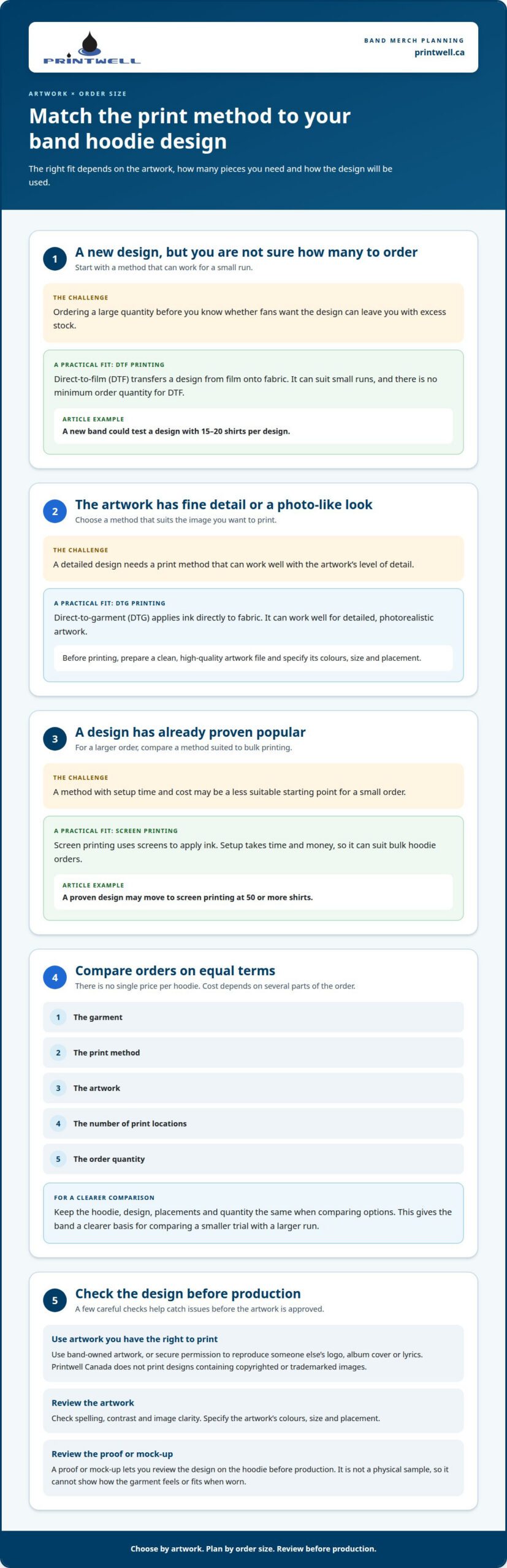
Direct-to-film (DTF) printing transfers a design from film onto fabric and can suit small runs. There’s no minimum order quantity for DTF, making it an option for testing a new design. Direct-to-garment (DTG) printing applies ink directly to fabric and can work well for detailed, photorealistic artwork. Screen printing uses screens to apply ink; setup takes time and money, so it can suit bulk hoodie orders.
There’s no single price per hoodie for Canadian band merchandise. Cost depends on the garment, print method, artwork, number of print locations and order quantity. To compare options, keep the hoodie, design, placements and quantity the same. That gives the band a clearer basis for comparing a smaller trial with a larger run.
For a new design, DTF can support a small test run before the band commits to more pieces. One example for a new band is 15-20 shirts per design, while a proven design may move to screen printing at 50 or more shirts. Before printing, prepare a clean, high-quality artwork file and specify its colours, size and placement.
Use band-owned artwork, or secure permission to reproduce someone else’s logo, album cover or lyrics. Printwell Canada does not print designs containing copyrighted or trademarked images. A band name and original symbol can form a distinctive design without relying on borrowed images. For instance, pair a simple logo with a short tour detail. Review spelling, contrast and image clarity before approving the final artwork.
For custom apparel, plan around the tour date and allow time for production and local pickup in Ottawa. Printwell Canada’s DTF printing and embroidery are performed in-store in Ottawa, Ontario. Before production, you receive a proof or mock-up for approval. Delivery or local collection details depend on the order, so include these logistics when planning your budget.
Eco-conscious hoodie options depend on the garment materials and how much merch the band expects to sell. Check garment details for recycled or organically grown fibres, and order with demand in mind to avoid excess stock. A consistent visual identity can also connect hoodies with T-shirts, hats and stickers. Custom printed hoodies for bands can anchor that range, while other items give fans different ways to support the music.
Front, back, sleeve, hood, and zipper placement
Placement changes how band artwork reads on a hoodie. A small chest logo gives the front a simple, familiar look. A larger centre-front image makes the artwork the main feature. Consider how the design sits when the hoodie is zipped, open or layered. For example, a band name across the chest may be harder to read when a zipper divides it. A single-side chest mark avoids that split and leaves room for other details.
The back gives tour artwork, album imagery, or a list of performance locations more space. A large design there can work well with a subdued front, such as a small band logo over the chest. This creates a clear visual order: the front identifies the band, while the back carries the fuller story. For a tour hoodie, keep the band name prominent and arrange supporting details so they remain easy to scan. Avoid crowding the back with competing images and text.
Sleeves can carry a short detail that supports the main design. A band name, simple symbol or tour year can sit along one sleeve without competing with a large back image. Hood placement needs a different kind of check. A graphic that looks centred on a flat hoodie may shift or fold when someone wears the hood. Review the artwork with the hood both down and worn, especially if it includes lettering.
Zipper placement needs careful planning because the opening interrupts the print area. A design crossing the zipper is riskier than artwork placed on one side or separated across the front panels. Even a small shift between the halves can make a word or image look uneven. For a clean result, keep essential text and faces clear of the zipper. Large embroidery can also feel stiff against the body, so a smaller chest detail may be more comfortable.
Plan the hoodie as one complete piece, not as separate print locations. Sketch the front, back, sleeves and hood together, then check that the logo size and visual weight feel balanced. For example, pair a bold back graphic with a restrained chest mark and a small sleeve symbol. Keep lettering readable at its intended placement, and leave visual space around each element. This layout review helps the band compare options before approving the final artwork.
Album-cover and lyric hoodie designs
An album cover gives a hoodie an immediate connection to a specific release, but use only artwork the band owns or has permission to reproduce. Instead of enlarging the whole square image, choose its strongest original element, such as a portrait, symbol or landscape. For example, a band could place a moon illustration on the front and reserve the album title for the back. Decide which detail fans should notice first, then build the layout around it.
Artwork made for a square cover may need rearranging to fit a hoodie. Check the image’s crop, proportions and focal point before placing it. A face near the edge, for instance, could be cut off when the artwork is resized. A central object may work better on the chest, while background details could extend across the back. Keep important features clear of seams, pockets and openings, where fabric breaks can interrupt the image.
Colour choices also shape the finished look. A pale illustration on a light-coloured hoodie can lose contrast, while dark lettering may disappear on a dark garment. Compare the artwork against the hoodie colour before finalizing the design. For example, a black-and-white image can suit a contrasting garment, while a colourful illustration may need a quieter background. Preserve the colours that define the album, but simplify less important shades if they make the composition feel crowded.
Lyrics can make a more personal design, especially when a short line carries the song’s mood. Use lyrics only when the band has the rights or permission to reproduce them. Choose text that remains readable at its planned size and placement. A compact phrase beside a small symbol can feel intentional; a full verse may overwhelm the front. Use typography that matches the band’s sound, then balance the wording with the artwork.
Album titles, release dates and track names can add context without turning the hoodie into a crowded poster. Select only details that help fans identify the release. For example, place the album title beneath a front graphic and use the back for a short track listing. Check spelling, punctuation and line breaks in the final layout. A deliberate order of information helps fans read the design from its main image to its smaller details.
Before printing, review the artwork on a hoodie mock-up, meaning a visual preview of the design on the garment. Look at the full front and back, then inspect how the image reads at a glance. Confirm that letters aren’t obscured by folds and that key details remain visible at the chosen size. If the design includes a large embroidered centre image, remember that dense embroidery can feel stiff against the body.
Keep the original artwork file and a clearly labelled final version together. That makes it easier to identify the approved design if the band orders more merch later. A useful final review covers the image, wording, garment colour and placement as one complete design. For instance, a limited release hoodie can pair a simplified album symbol with the title, creating a wearable reminder of that record without reproducing every detail from its cover.
Alternative hoodie styles
A less familiar hoodie style can help a band’s merch stand out beside standard pullovers. Tie-dye brings built-in colour variation, while a poncho-style hoodie offers a more distinctive silhouette. Each changes how the band’s artwork and name appear, so choose the garment and design together. For example, a restrained logo may suit a strongly patterned hoodie better than a detailed image competing with its colours.
For tie-dye, coordinate the artwork colour with the garment’s dye pattern. The design needs enough contrast to remain visible across shifting colours. A simple, bold band symbol can be easier to read than fine details over a busy pattern. Review the artwork against the actual colour combination, not just a plain digital preview. This helps the band choose a design that feels intentional rather than visually crowded.
Poncho-style hoodies can work as limited merch items when the band wants a special piece for a release or tour. Their distinctive shape can make them feel different from everyday band apparel. Keep the graphic aligned with the garment’s overall look: a small emblem or concise tour detail may complement its shape without overwhelming it. Presenting the style as a limited item can also make it feel special to fans.
Zip-up and pullover hoodies create different design opportunities. A zip-up divides the front, so a single graphic crossing the opening may look interrupted. A pullover offers an uninterrupted front area, while its pocket can affect where a lower graphic sits. Decide which garment shape suits the concept before preparing artwork. For example, a small chest mark may work across either style, while a broad front illustration needs more careful planning on a zip-up.
Think about how each style fits the band’s visual identity. A dark, minimal design may pair naturally with a plain hoodie, while bright artwork can make a tie-dye option feel cohesive. For a tour collection, use one shared logo or colour theme across standard and alternative garments. That connection helps fans recognize the range, even when each hoodie has a different pattern or shape.
Before choosing a less common style, consider the audience, event and role of the item. A distinctive garment can suit a limited release, while a familiar pullover may be easier to wear regularly. Compare the proposed artwork on each option, then check readability, colour contrast and overall balance. A simple design review can reveal whether the garment supports the band’s identity or competes with it. Keep the final selection focused, with each piece offering a clear reason to join the merch range.
Custom hoodies and sweatshirts for bands
Choose a hoodie or sweatshirt by weighing the garment, artwork and print method together. The right combination makes band merch comfortable to wear and clear from a distance.
Hoodie and Sweatshirt Options
Pullovers provide an uninterrupted front, while zip-up hoodies divide the print area. Sweatshirts offer another option when a band wants a different silhouette. Compare how each garment’s shape, seams and pockets affect artwork placement. For instance, a wide front graphic may suit a pullover better than a zip-up, where the zipper breaks the image.
Canadian Band Hoodie Printers
Canadian companies that print band hoodies can use different methods, so match the process to the design and order. Screen printing can suit designs with no more than three colours and larger runs. Compare the same artwork, garment type, print locations and order quantity when reviewing options. A clear brief helps keep those details consistent.
Garment choice affects how a design feels and looks. A heavyweight fleece hoodie gives a substantial feel, while the fit and colour influence how fans wear the piece. Band and tour hoodies are offered in sizes from small through to 3XL in the described range. Consider the audience and keep size options clear when planning a merch run.
Set the design’s purpose before choosing a print method. A simple band name or logo can work with a limited-colour design. A detailed, photorealistic image may call for a different approach. Direct-to-garment printing applies ink directly to fabric and can suit detailed images and smaller orders. Screen printing uses screens to apply ink, with setup that makes larger runs more practical.
Order quantity also shapes the decision. DTF printing transfers a design from film onto fabric and has no minimum order quantity. It can help a band test a new design in a small run. If fans respond well, the band can consider screen printing for a larger repeat order. Keep the approved artwork and garment choices consistent when planning that next run.
Before approving production, bring together the final artwork, garment choice, print method, colour plan and size range. Review the design on the chosen garment, not only as a flat image. Printwell provides a proof or mock-up for approval before printing, helping you spot issues with contrast, seams or placement. For a coordinated merch range, carry one visual element, such as the band logo, across hoodies and other apparel.
Plan your band’s custom apparel order with the garment, artwork and print method in mind.
Printwell Canada: Embroidered Hoodies
Printwell Canada offers embroidered hoodies for bands looking for a stitched logo or simple design. Embroidery adds texture and suits smaller details, such as a chest emblem; large centre designs can feel stiff against the body. For colourful artwork or larger graphics, consider custom T-shirts or DTF stickers and films as complementary merch options.
Choose embroidered hoodies when a clean, tactile band mark fits your design. For a merch range, pairing hoodies with printed apparel can give fans more ways to show their support. Bring your band’s design and apparel plans to Printwell Canada to discuss your merch.
Turn your band’s artwork into merch fans can wear
A well-planned run of custom printed hoodies for bands starts with a clear idea of what the merch should say about your music. Choose the artwork and garment together, then shape the rest of your merch around that visual identity. A small logo can carry across embroidered hoodies, custom T-shirts and DTF stickers and films, giving fans a few ways to connect with the band.
Printwell Canada offers embroidered hoodies, custom T-shirts and DTF stickers and films for band merchandise. Whether you’re preparing for a release, building a merch table or refreshing your apparel, bring your design direction and garment plans to Printwell. A thoughtful starting point can help turn a band’s visual style into pieces fans will be glad to wear.
Contact Printwell Canada about band hoodies and take the next step towards merch that feels true to your sound.
Frequently Asked Questions
Can I order samples?
Printwell provides a proof or mock-up for approval before printing. It’s a design preview, not a physical hoodie sample, and helps you review the artwork’s position and appearance before production. A physical sample is different: it lets you assess the garment itself, including its feel and fit. Keep those decisions separate when planning band merch, since approving artwork doesn’t show how a hoodie feels when worn.
What are the best websites for custom merch?
For an Ottawa-based band, Printwell Canada offers embroidered hoodies, custom T-shirts and DTF stickers and films. DTF printing and embroidery are performed in-store in Ottawa, Ontario, and products can be shipped across Canada. If you’re assembling a merch range, matching your hoodie artwork with related items can help create a consistent look.
Where do bands get their merch?
Bands typically arrange merchandise through custom apparel printers and sell it at shows, online or through their own channels. For an Ottawa band, Printwell Canada provides apparel printing and embroidery, along with DTF stickers and films. Think about where fans will buy the items before choosing quantities and product types. A show-focused setup might include wearable merch and compact items that are easy to display at a table.
What are the custom band hoodie printing methods: screen printing, DTG, and embroidery?
Screen printing applies ink through a prepared screen and can suit bulk orders with designs of up to three colours. Direct-to-garment (DTG) printing applies ink directly to fabric and suits detailed, photorealistic artwork or smaller orders. Embroidery stitches a design into the garment, creating a raised, textured finish that can work well for a band logo. Printwell Canada offers embroidery; choose a method that suits your artwork and run size.
What are the best hoodie styles and fabrics for band merchandise?
The best choice depends on how fans will wear the merch. A heavyweight fleece gives a hoodie a substantial feel, while a sweatshirt may suit fans who prefer a different look. For outdoor shows or cooler venues, consider how the garment will layer over other clothing. A band choosing a style for regular wear should prioritize a comfortable fit and a design that works with the garment, not just the album artwork.
copyright and licensing rules for printing band logos and artwork
Use artwork owned by the band, or secure permission to reproduce someone else’s logo, album cover or lyrics.