 A Proud Canadian Company
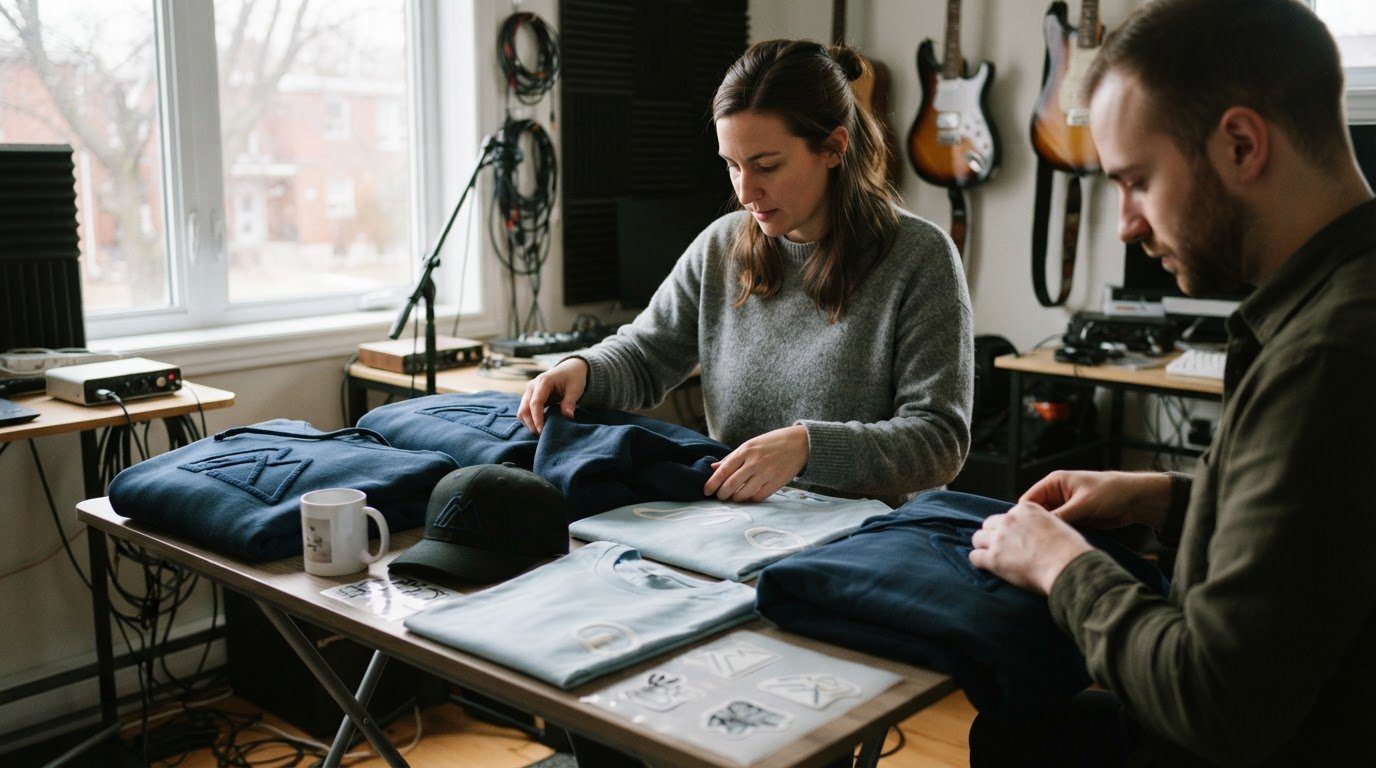
There isn’t one universal minimum order for custom merchandise in Canada. The minimum depends on the product and printing method, so custom merch for content creators in Canada can suit both small test runs and larger orders. Print-on-demand can also let creators sell without holding inventory or paying production costs upfront.
It makes sense to want a clear answer before choosing what to sell. An order minimum affects how much stock you need, which products fit your audience and how easily you can test a new design.
This guide explains what shapes order minimums and compares printing methods, apparel and other merchandise, including mugs, posters, stickers, hats and accessories. You’ll learn how to match products and production methods to your plans as a Canadian creator, whether you’re testing an idea or preparing merchandise for a wider audience.
Key Takeaways
- There isn’t one minimum order for every custom product. The quantity depends on the item and print method, while print-on-demand can let you sell without holding inventory or paying production costs upfront.
- Match merchandise to your audience and creative goals. Apparel, hats, tote bags, mugs, posters and stickers each offer different ways to share your designs.
- Compare print methods by considering how the design will look and feel on each product, as well as the quantities you plan to order.
- Plan your store, fulfilment (preparing and shipping orders), sizing information and return policies together to make buying clearer for customers and managing orders easier for you.
- According to the Canada Revenue Agency, businesses generally need to register for a Goods and Services Tax/Harmonized Sales Tax (GST/HST) number and collect these taxes on many goods and services once they earn more than C$30,000 in a 12-month period.
Is there a minimum order for custom merchandise?
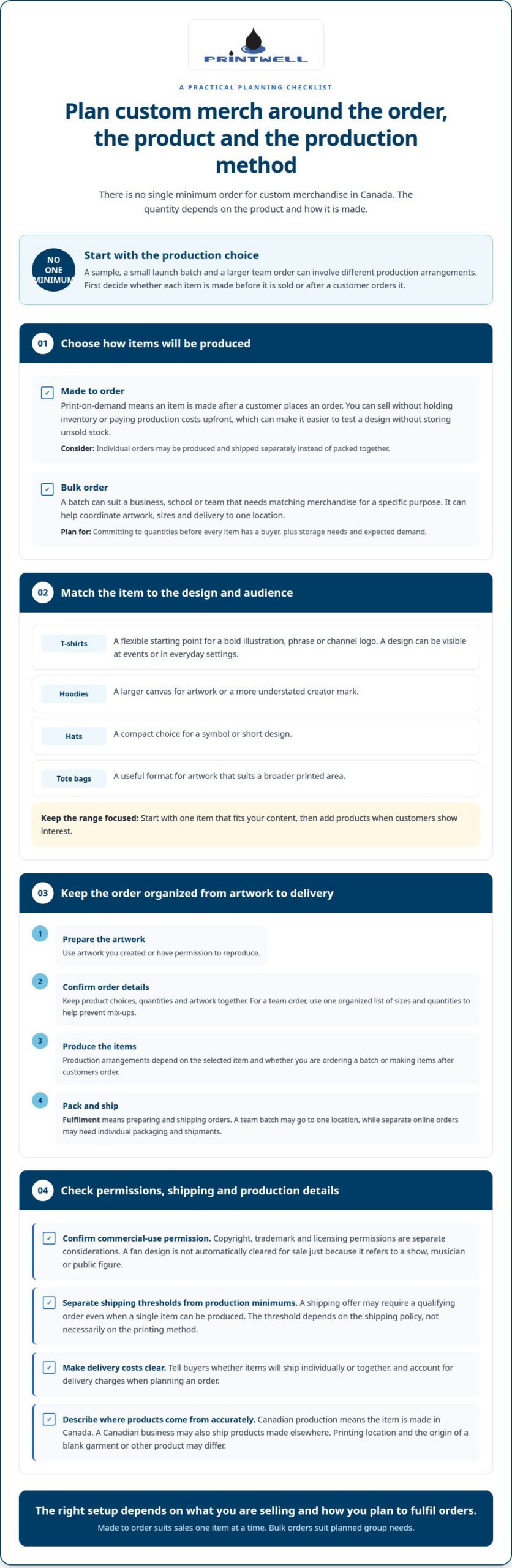
There isn’t one minimum order for every custom merchandise product in Canada. The quantity depends on the product and how it’s made. A sample, a small launch batch and a larger team order can involve different production arrangements. For creators, the key question is whether each item is printed before it’s sold or only after a customer places an order. Start planning custom merch for content creators in Canada with that decision.
Use artwork you created or have permission to reproduce. Copyright, trademark and licensing permissions are separate considerations for commercial designs. A fan design isn’t automatically cleared for sale just because it refers to a show, musician or public figure. Before offering it, make sure you have permission for commercial use of the relevant artwork, names or logos.
With pay-as-you-go, print-on-demand production, an item is made after a customer orders it. This lets creators sell without holding inventory or paying production costs upfront. For example, a creator can list a shirt and have each one produced as orders arrive, instead of buying a batch in advance. This can make it easier to test a design without storing unsold stock. The trade-off is that individual orders may be produced and shipped separately rather than packed together.
Shipping terms are separate from production minimums. A shipping offer may have a qualifying order threshold even when a single item can be produced. That threshold depends on the shipping policy, not necessarily on the printing method. When planning custom merch for content creators in Canada, account for delivery charges and whether items will ship individually or together. Clear shipping details help buyers understand the full order before checkout.
Bulk orders can suit businesses, schools and teams that need matching merchandise for a specific purpose. A school club might order shirts for an event, while a small business may need consistent designs for staff. Ordering a batch can help coordinate artwork, sizes and delivery to one location. It also means committing to quantities before every item has a buyer, so consider expected demand and storage needs.
Order processing usually follows a practical sequence: prepare the artwork, confirm the order details, produce the items, then pack and ship them. For a team order, one organized list of sizes and quantities can help prevent mix-ups. For separate online orders, each customer’s item may need its own packaging and shipment. Keeping artwork, product choices and quantities together makes it easier to track the order from production through delivery.
In short, made-to-order production suits sales one item at a time, while bulk orders work for planned group needs. The product, production method and shipping terms determine which approach makes sense for your launch.
T-shirts, hoodies, hats, tote bags, and other product categories
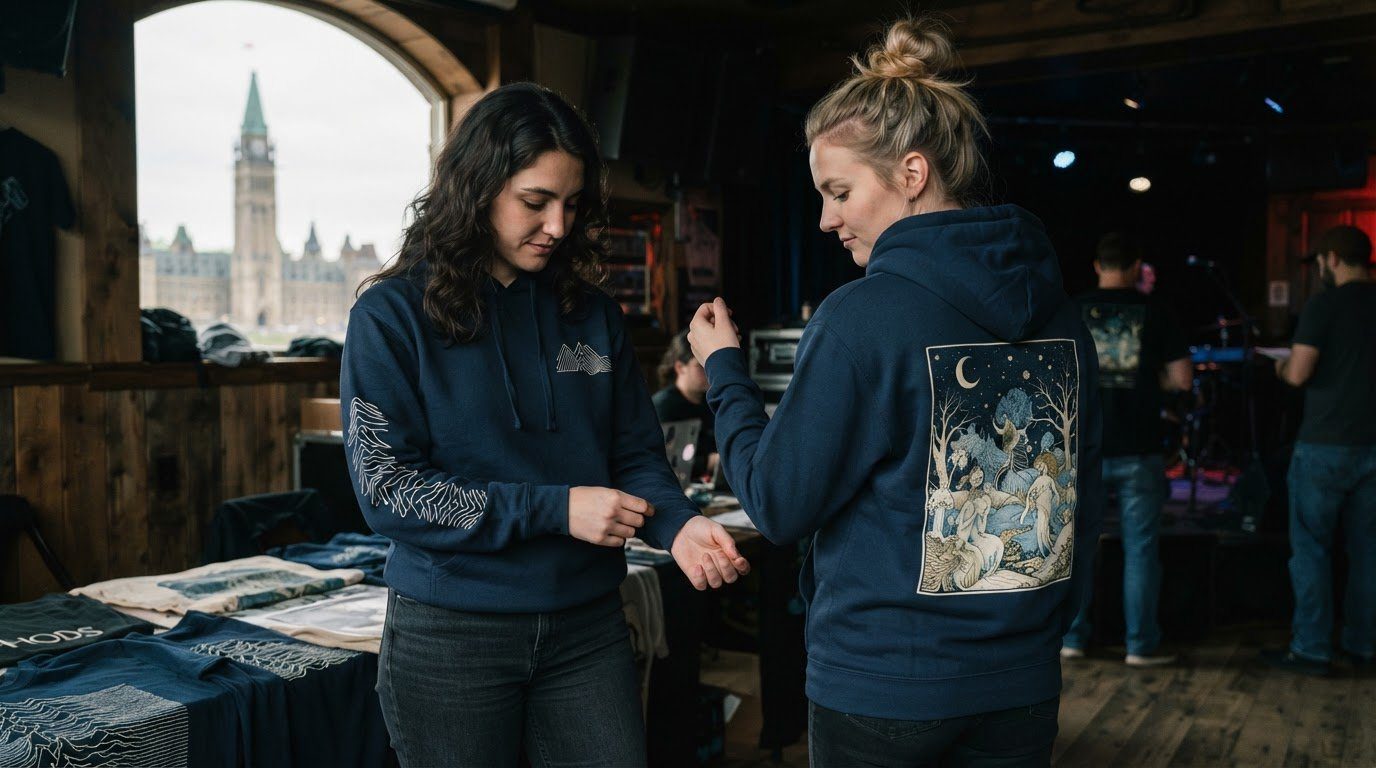
A creator’s product mix works best when each item suits the audience and design. A gaming channel might lead with a graphic T-shirt, while a cooking creator could choose a custom tote bag. Hoodies provide more room for artwork, while hats offer a smaller, focused space for a logo. Start with one item that fits your content, then add products when customers show interest.
Consider how followers might use each product. A T-shirt can make a design visible at events or in everyday settings. A tote bag can suit viewers who want a practical item tied to a creator’s identity. Hats and hoodies offer different ways to wear the same artwork. Choose products connected to your videos, community and visual style, rather than adding items just to lengthen your catalogue.
- T-shirts: A flexible starting point for a bold illustration, phrase or channel logo.
- Hoodies: A larger canvas for artwork or a more understated creator mark.
- Hats: A compact choice for a symbol or short design.
- Tote bags: A useful format for artwork that suits a broader printed area.
Canadian production and shipping are separate details. “Canadian production” means the item is made in Canada, while a Canadian business may also ship products produced elsewhere. For creators serving Canadian followers, the production location and shipping origin can affect delivery expectations. State shipping details clearly in your store, and avoid promising a delivery date unless the order terms support it.
In-house Canadian production means the work is handled within a Canadian production operation rather than sent to an outside supplier. This can give creators a clearer picture of where an order is made and packed. It doesn’t automatically mean every material or component is Canadian-made. Be specific: distinguish where printing happens from where the blank garment or other product comes from.
Set product prices based on the full cost of each order, not just the blank item. Account for printing, packaging, fulfilment and shipping before choosing a retail price. Promotions can introduce a new design or reward a bundle, but a discount still needs to cover the costs attached to each order. For example, pair a T-shirt launch with a limited-time offer, then review sales before adding more products.
For a focused apparel launch, custom T-shirts can give your artwork a clear, wearable format. A considered range, accurate product details and transparent shipping information help Canadian customers decide what suits them.
Apparel, mugs, posters, stickers, hats, and accessories
Different products give a creator’s artwork different roles. Apparel makes a design wearable, while a poster gives it space to be displayed. Stickers can carry a small illustration or channel mark, and mugs put a design on an everyday object. Choose products that connect naturally to your content instead of building a catalogue around every available item.
For apparel, consider how a design will look on a T-shirt, hoodie or hat. A detailed illustration may need more room than a compact logo. A short phrase can work across several formats, but its placement and scale should suit each item. Treat every product image as a separate layout, rather than assuming one artwork file will look equally clear everywhere.
Mugs offer a defined format for a logo, character or short message. Custom ceramic mugs are offered in 11-ounce, 15-ounce and 20-ounce sizes. A creator can use those options to offer different capacities while keeping the same core design. Make the selected size clear in the product description so customers know what they’re choosing.
- Apparel: Match the layout to the garment and keep key details easy to see.
- Mugs: State the available capacity clearly, including the 11-ounce, 15-ounce and 20-ounce options.
- Posters: Give the artwork room to make an impact as a display piece.
- Stickers: Keep the main image simple enough to recognize at a glance.
- Hats and accessories: Use a focused mark that suits a smaller display area.
Inventory is another practical consideration. Ordering products in advance means planning storage and deciding how much stock to hold. Made-to-order fulfilment can reduce the need to keep finished items on hand, while set inventory can support planned launches or events. Consider your audience, the design’s purpose and how you’ll fulfil orders before expanding your product range.
A useful first step is to select one design and adapt it for two formats, such as a poster and a sticker. This lets you compare how the artwork works as a display piece and a compact item. Keep product names, images and descriptions consistent across your store, then use customer interest to guide what you add next.
Setting up a merch store on YouTube, Shopify, or Etsy
Start with one sales route and one product range. YouTube can direct viewers to a store link in a channel or video description. Shopify gives creators a standalone online storefront, while Etsy provides a marketplace listing format. The right setup depends on where your audience already shops and how you’ll manage production, payment and delivery.
Before building listings, prepare the basics: a store name, product photos, artwork, descriptions and shipping details. Use a clear title, such as “creator logo T-shirt,” then describe the design and garment plainly. List colours and sizes only when they match the actual product. Explain how orders are produced and shipped so buyers know what happens after checkout.
On Shopify, creators can organize products into collections, such as apparel, stickers or event items. Set up product pages, checkout and shipping information, then connect a fulfilment process for preparing and shipping orders. On Etsy, create listings with descriptive titles, images and delivery details. Keep product names and design descriptions consistent across platforms to make your creator brand easy to recognize.
To connect a store with YouTube, place its link where viewers can find it, such as in channel details or relevant video descriptions. A video about a new design can link directly to that product page. If your store uses a platform’s built-in shopping feature, follow its current account and integration requirements. Otherwise, a clear link still gives viewers a route to your shop.
Print-on-demand can help creators start without holding inventory or paying production costs upfront. In this model, a product is made after a customer orders it. The creator prepares listings and artwork, while orders move through production and fulfilment, meaning preparing and shipping orders. This avoids storing finished stock, but creators still need clear product, shipping and customer-service details in their stores.
Canadian sellers should also account for sales tax. According to the Canada Revenue Agency, businesses generally need to register for a Goods and Services Tax/Harmonized Sales Tax (GST/HST) number and begin collecting this tax on sales once they earn more than C$30,000 in a 12-month period. Store settings should reflect the seller’s tax obligations and the locations where customers place orders.
Before sharing your store, test the customer journey. Open a product page as a buyer, review the description, confirm the listed options and follow the checkout steps. Then test the YouTube link from a channel page or video description. A smooth route from content to product page helps followers find the right item without confusion.
Managing returns, refunds, and product quality
Set a written returns and refunds policy before listing merchandise on YouTube, Shopify or Etsy. Explain how customers can report an incorrect item, printing defect or sizing concern. State the steps for submitting a request, the information needed and the available resolution. For example, a policy can ask customers to include their order number and a clear photo of a damaged print. Make the policy easy to find before checkout.
Sizing details can prevent avoidable disappointment. Use the size chart for the specific garment, and explain how customers can compare its measurements with clothing they already own. Avoid relying on labels such as “small” alone, since fit can differ between products. Include a plain-language note on how to measure, and show the chart beside the size options. For a hoodie listing, describe available sizes alongside the garment measurements.
Distinguish a change-of-mind request from a product problem in your policy. A customer who ordered the wrong size has a different concern from someone who received a shirt with a misprinted design. Explain how each situation is handled, including whether a return, replacement or refund may be available under your stated terms. Apply the same process consistently, and keep order records so you can follow each case from the first message to resolution.
Check quality at several points before and after a launch:
- Review the artwork: Confirm that the intended design, spelling and colours appear in the approved file.
- Inspect a sample: Look at print placement, clarity and finish on the actual product before promoting it.
- Check the listing: Make sure photos, size information and product details match what customers will receive.
- Record an issue: Keep the order details and customer’s description together while resolving a complaint.
A sample can reveal details that a screen preview misses. For example, a design may look balanced on a digital mock-up but feel too large on a shirt. Review the physical item under good lighting, check that text is readable and compare the result with the artwork. If you update the design or product, review the new version before promoting it.
When a customer reports a problem, respond with a clear next step. Confirm the order details, understand the issue and explain the available resolution under your policy. Keep your tone courteous, even when the concern involves an incorrect size or damaged parcel. A consistent process helps creators protect customer trust and keep records of recurring issues.
Planning a launch? Prepare your custom print project with clear artwork and product details before promoting it.
Printwell Canada
Printwell Canada helps creators turn approved artwork into merchandise for their audiences. When you’re ready to move from choosing products to preparing an order, Custom T-Shirts, Embroidered Hoodies, Custom Hats, and DTF Stickers and Films offer several ways to share a creator identity. DTF means Direct-to-Film, a printing method that transfers a printed design from film onto a product.
Choose the items that fit your launch, then organize the artwork and product details for your order. A focused selection can make a new merchandise project manageable, whether you’re preparing apparel or adding stickers for followers. For your custom merchandise plans, contact Printwell Canada.
Give your merch idea a clear next step
Your first merchandise release can turn a creator’s visual identity into something followers can enjoy beyond a screen. Choose a design that represents your content, then decide which format best suits how your audience connects with it. A focused launch gives you room to learn what resonates before planning your next release.
For custom merch for content creators in Canada, Printwell Canada produces Custom T-Shirts, DTF Stickers and Films, and Embroidered Hoodies. Bring your artwork and product direction together, then build a release connected to your community and creative work. The choices you make now can guide future designs, product selections and store updates.
Have a merchandise idea taking shape? Contact Printwell Canada to discuss your custom printing project. Take the next step at your own pace, and let your creativity lead the way.
Frequently Asked Questions
Which Canadian print-on-demand companies offer custom merch for content creators?
Printwell Canada is based in Ottawa, Ontario, and provides local service within the Ottawa area. Its offerings include Custom T-Shirts, DTF Stickers and Films, and Embroidered Hoodies. Print-on-demand generally means an item is produced after a customer places an order, but a custom printer and an automated online fulfilment platform, an online service that handles order production and shipping, aren’t necessarily the same service. Choose the setup that fits your store workflow, product range and order handling.
What custom merchandise products are popular with Canadian content creators?
What are the setup, product, printing, and shipping costs for creator merch in Canada?
Costs depend on the item, order quantity and artwork complexity. Product and printing costs are separate considerations, while shipping depends on the delivery arrangements. To estimate your total, account for the product, customization, setup fee, packaging, shipping and any store transaction charges. Include every expense attached to fulfilling a sale before setting a retail price.
How long does custom creator merch take to produce and ship within Canada?
Production and shipping are separate parts of an order’s timeline. Printwell Canada lists normal production time for neck gaiters as 1 working day, and car magnet lead time as 2-3 days. Those product-specific times don’t establish a timeline for every merchandise item or include transit time. For a creator launch, leave room between approving artwork, production, delivery and the date you plan to announce the merchandise.
What are the minimum order quantities for custom merch printing in Canada?
Minimum quantities depend on the product and printer, so one rule doesn’t apply to every custom item. Printwell Canada states “No Minimum” for neck gaiters, A-Frame Signs and car magnets. That applies to those products, not automatically to every merchandise category. For a creator testing a design, a product with no minimum can avoid committing to a larger batch before gauging audience interest.
How do Canadian creators price merchandise and calculate profit margins?
Calculate profit by subtracting the costs connected to each sale from the amount the customer pays. Include the product, printing, setup, packaging, shipping contributions and store transaction charges. For example, if a launch includes a shirt and a sticker, calculate the cost of each item and any combined shipping before choosing a bundle price. Review the result after refunds or promotional discounts, since both affect what remains from sales.