 A Proud Canadian Company
A branded T-shirt is just the start. For a small business in Canada, custom apparel can make your team easy to recognize and give customers a practical reminder of your brand.
Choosing custom apparel for a small business in Canada involves more than selecting a garment and adding a logo. Consider who will wear it, where they’ll use it, how the design will look on the fabric, and what suits your budget and event. Thoughtful choices help branded items feel useful, cohesive, and worth keeping.
This guide covers practical ways to customize clothing, choose promotional products, and plan apparel for events and giveaways. You’ll also find options beyond T-shirts, including hats, jackets, bags, and totes, and learn how to match each item to its purpose. Planning the design, sizes, and quantities helps your branded pieces look polished and work for your business.
Key Takeaways
- Start with who will wear the apparel and where, then shape the design around your brand and its purpose.
- Plan event apparel and giveaways to suit the audience, occasion, and practical needs of the people receiving them.
- Look beyond T-shirts: hats, toques, jackets, bags, and totes can offer useful ways to carry your branding.
- Compare printing and decoration methods by the look you want, the garment, and the design details.
- Explore options such as custom T-shirts, embroidered hoodies, direct-to-film (DTF) stickers and films, which transfer a design from film onto an item, and business cards to bring branded materials together.
Designing custom apparel in three steps
A clear design process brings your brand, garment, and intended use together. These steps help keep the artwork and order details aligned.
- Set the purpose. Decide who will wear the apparel and where they’ll use it. A sports team may need visible pieces for regular wear, while staff shirts can identify employees at a community event. Choose the main message first, such as a business name, team identity, or short slogan. Planning custom apparel for small businesses in Canada starts with this practical purpose.
- Choose the garment and decoration. Match the item to its setting, comfort needs, and design. Embroidery, which stitches a design directly onto fabric, can suit a logo on a jacket or hoodie. Printed artwork offers another look for shirts. Consider colour contrast, placement, and how much detail the selected area can show.
- Organize quantities and delivery. List sizes and quantities before production planning. Some orders allow customers to mix sizes toward a product minimum; one market example uses a 12-item minimum. Treat this as an example, not a universal rule. Include the delivery destination and event date in your plan.
Artwork Review and Design Mockups
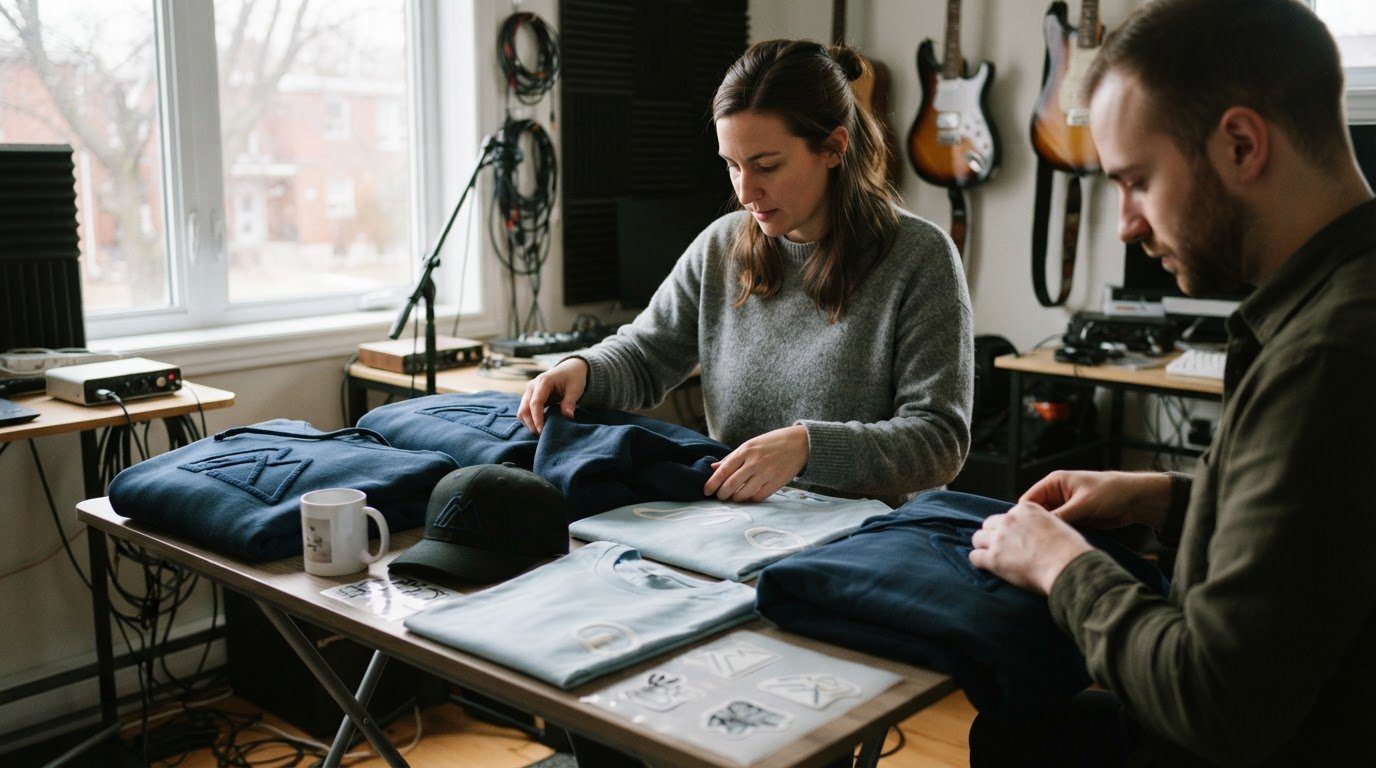
Review whether the logo, text, or image is clear on the selected garment. A mockup previews how the artwork may look on the item. Check its size, position, spelling, and contrast. A small chest logo, for example, needs different proportions from a large back design.
Use the preview to catch layout issues before approval. Check that important details remain readable and the design sits where intended. For custom apparel for a small business in Canada, the proof gives everyone a shared reference for the final layout.
Customization and Design Assistance
Customization can include garment choice, colour, artwork placement, and decoration method. Design assistance helps organize these choices into a usable layout. Bring the core brand elements together, then decide which details matter most. A sports team might prioritize its name and emblem over extra text.
Make sure the artwork suits the item’s purpose. A promotional piece intended for regular use benefits from a clear, uncluttered design. Specify the colour, placement, and intended audience to keep the artwork focused.
If payment follows design approval, treat approval as the checkpoint before payment and production. Review the proof alongside the garment, sizes, and quantity to make sure the approved design matches the order.
Plan shipping with the order details. Provide the destination and event date when arranging delivery, especially if items need to reach a sports venue or separate business locations. This connects delivery planning to the project schedule.
Branded apparel for events and giveaways
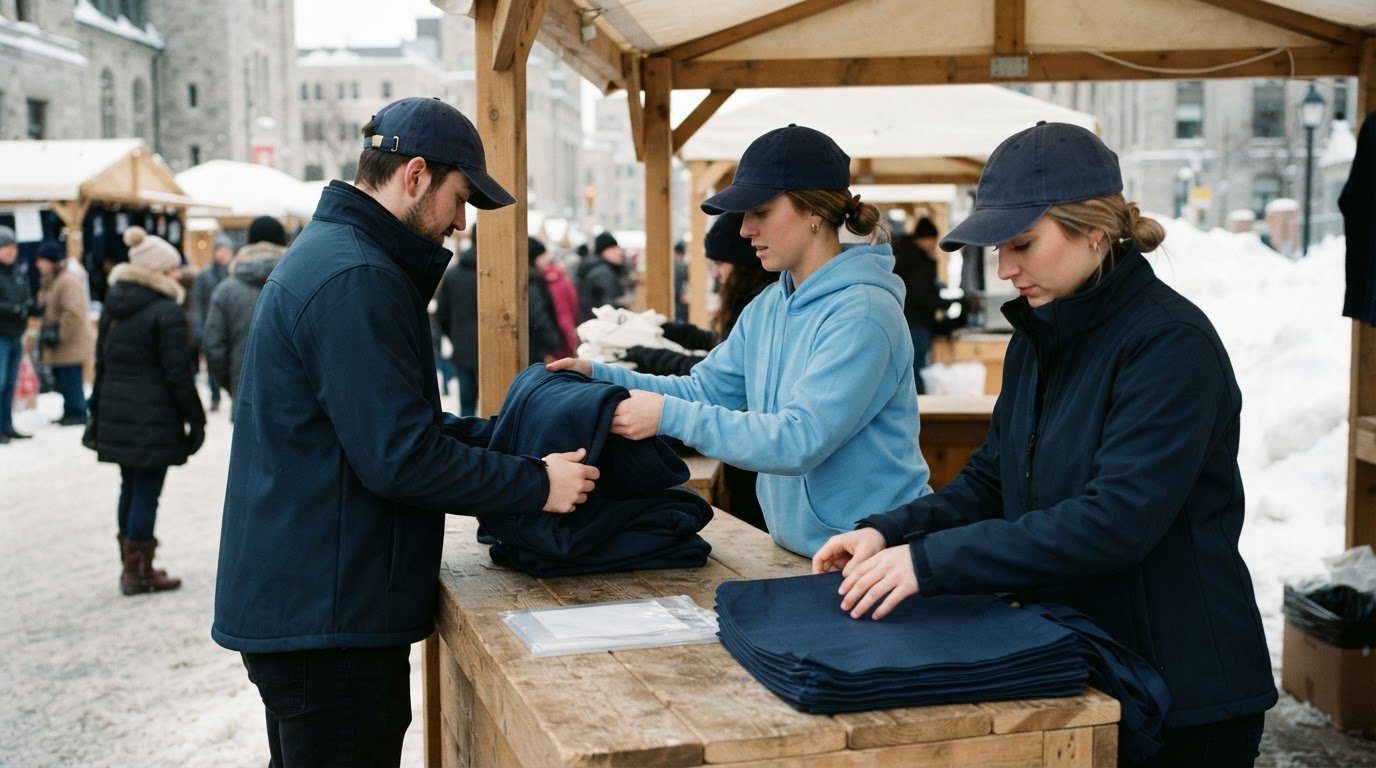
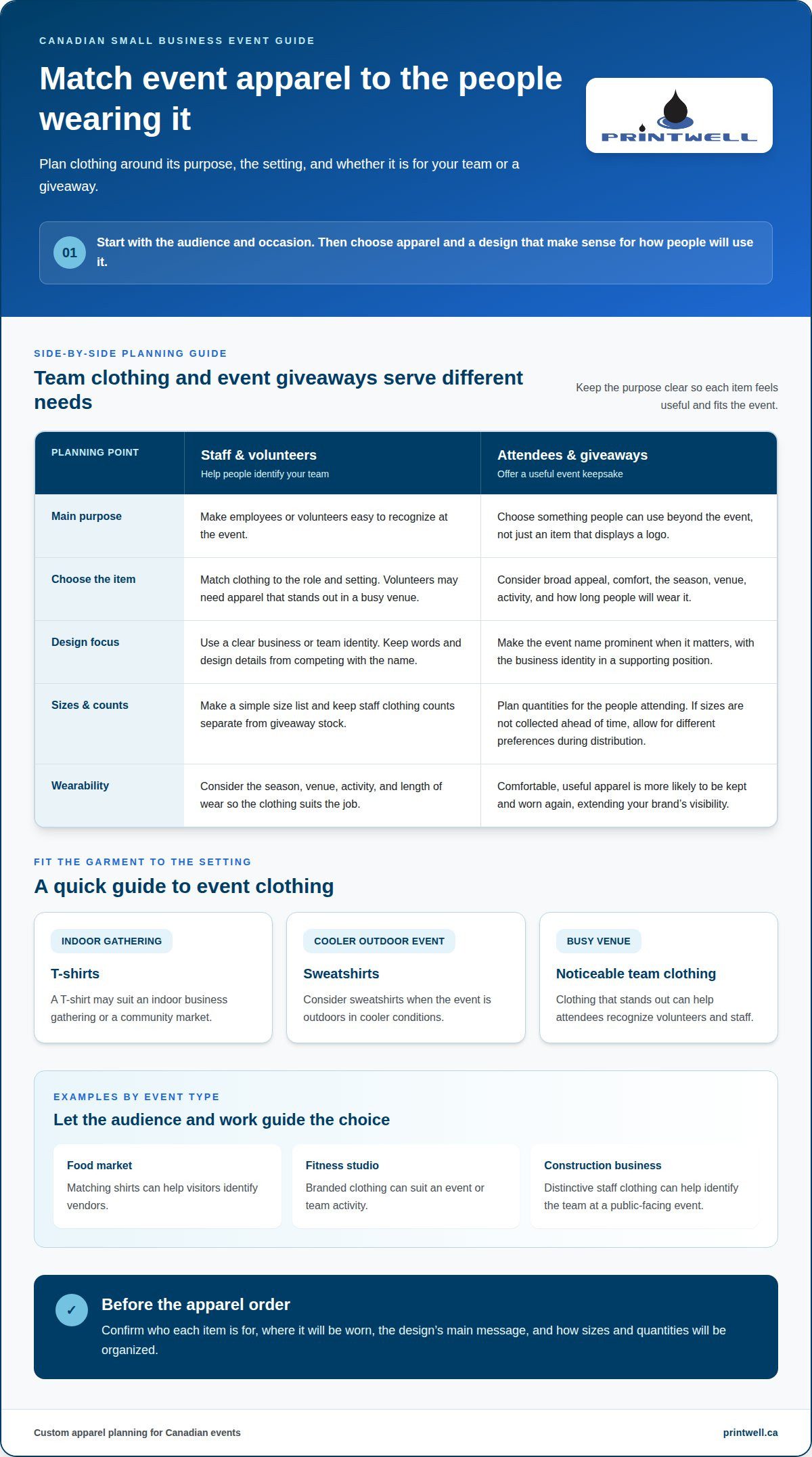
For a Canadian business, event apparel can identify staff, welcome participants, or give attendees a useful keepsake. Match each item to the event: a community market may suit branded T-shirts, while volunteers may need clothing that stands out in a busy venue. A giveaway should be useful beyond the event, not just display a logo.
Plan quantities for the people attending and the role each person has. Staff, performers, volunteers, and guests may need different garments or designs. A simple size list helps organize clothing orders, while separate counts keep staff apparel apart from giveaway stock. If sizes aren’t collected in advance, plan distribution to accommodate different preferences.
Comfort matters because people are more likely to wear clothing that suits the event and setting. A T-shirt may work well for an indoor business gathering; sweatshirts are another option for cooler outdoor events. Consider the season, venue, activity, and length of wear. Useful, well-made apparel is more likely to be kept and worn again, extending your brand’s visibility.
Branded apparel for business industries
Different industries use branded clothing for different reasons. Matching shirts can help visitors identify vendors at a food market. A fitness studio might use branded clothing for an event or team activity, while a construction business could distinguish staff at a public-facing event. Choose garments and designs that suit the work, audience, and setting.
A team name and emblem can give sports apparel a consistent look. A local retailer may prefer a small business logo suited to everyday wear. In either case, keep the message clear: too many words or design elements can compete with the brand name and make clothing harder to read.
Branding options and custom labels
Branding can combine a logo, business name, short message, or event date. Choose details that matter to the audience. An event shirt, for example, might feature the event name prominently, with the business identity in a supporting position. Consistent colours and placement help different items feel like part of one campaign.
A custom label is a garment tag with identifying details, such as a brand name. It differs from a logo printed or stitched on the outside. Decide whether a label serves your purpose or whether an exterior design is enough. Keep the text brief so the brand stays easy to recognize.
Before ordering, connect the garment, branding, and distribution plan. A branded T-shirt for a public giveaway needs broad appeal; staff clothing should make team members easy to identify. Explore branded apparel options as you plan items for your next Canadian event.
Custom hats, toques, jackets, bags, and totes
T-shirts are familiar, but they’re only one option for branded clothing. Hats, toques, jackets, hoodies, bags, and totes suit different seasons, roles, and audiences. Start with how people will use each item. A shop team may need practical uniforms, while a community event may call for an easy-to-carry giveaway.
Custom hats display your brand without requiring a full outfit. A business name or simple emblem can help identify staff at an outdoor market or sports event. Keep the design focused, since a small area limits how much text stays clear. Choose colours that work with the logo and the clothing people will wear with the hat.
Toques can suit outdoor work, winter events, or a Canadian sports team. Because they’re seasonal, consider whether your audience will wear them beyond one occasion. A clear logo helps keep the look recognizable without crowding the available space. Match the design to your organization’s colours.
Jackets can serve as outer layers for staff working outdoors or moving between locations. Embroidery, which stitches a design into fabric, gives a jacket logo a textured finish. For uniforms, plan consistent placement and design across the team. A simple chest logo can identify staff while keeping the overall look tidy.
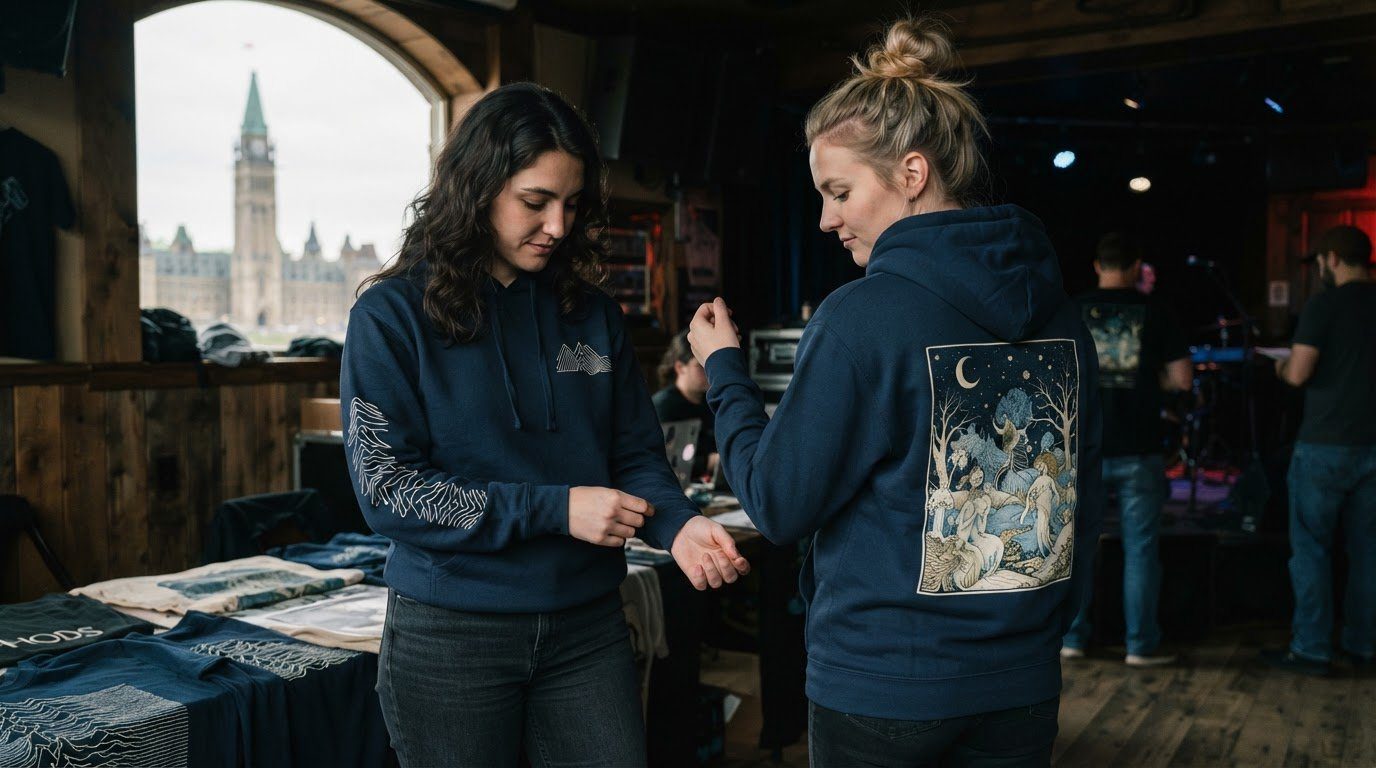
Hoodies suit team gatherings, casual workplaces, and cooler events. They can carry the same identity as uniforms in a less formal style. Decide whether to emphasize the business name, team emblem, or event message. One strong visual element is often easier to recognize than several competing details.
Bags and totes give customers a practical way to carry purchases, event materials, or everyday belongings. A tote can work as a market giveaway, while a branded bag may accompany a retail purchase. Keep the artwork legible at the chosen size and consider how it looks when the bag is carried or set down.
Choose a decoration method that suits the item and artwork. Screen printing presses ink through a fine mesh onto fabric. It can suit bold apparel designs, while embroidery creates stitched detail. The garment, design, and order requirements all affect the choice. Plan quantities around actual use rather than ordering extras without a clear purpose.
Start by listing each audience and use. Match a toque to outdoor winter wear, a jacket to staff identification, or a tote to event materials. Then align the item’s colour, branding, and decoration method. This gives a small business a clear purpose for each piece in its range of apparel and accessories.
Best custom apparel printing companies for small businesses in Canada
The right fit depends on your order, not a universal ranking. An Ottawa café ordering staff shirts has different needs from a local sports club preparing team apparel. Compare garment options, decoration methods, artwork approval, order requirements, and delivery arrangements. Match those details to your project, audience, and schedule.
Start with the product. If you need matching shirts and jackets, choose a provider that handles both garments and your preferred decoration. An Ottawa business ordering branded hats may need a different finish from one choosing printed T-shirts. Make sure the design can be produced on the selected item, rather than relying on an example featuring another garment.
Next, consider how artwork moves through the order. A clear process includes artwork submission, a visual proof, and approval before production. An Ottawa bakery, for example, can review its logo placement on a shirt before approving the design. This helps catch spelling, colour, and layout issues before production begins.
Order requirements matter for small teams. Check how quantities, size mixes, and repeat orders are handled. An Ottawa shop ordering staff garments may value flexibility, while an event organizer may need consistent sizing and coordinated delivery. Clear order terms help you plan without adding garments your team won’t use.
- Garment range: Check whether the selection fits your item, such as shirts, hats, or hoodies.
- Decoration options: Match printing or embroidery to your artwork and garment.
- Order process: Look for clear artwork review, approval, and payment steps.
- Delivery planning: Consider the Ottawa delivery address and when your team needs the items.
Delivery details matter for Ottawa businesses. Include the destination and required arrival date in your planning, especially when apparel is for a market, team event, or staff start date. Shipping arrangements affect the order schedule, so plan production and delivery together.
Compare options using the same project details: garment type, design, size breakdown, quantity, and delivery destination. Review what the quote includes and how artwork approval works. This is more useful than comparing headline prices alone, since garment choices and decoration needs can differ.
Finally, consider communication and consistency. If you expect repeat orders, find out how an approved design can guide future batches. An Ottawa business may add staff shirts as its team changes, while a local sports club may need apparel for new members. Choose a process that suits the current order and your next planned project.
Custom apparel printing methods in Canada: screen printing vs DTG vs embroidery
The decoration method shapes how a logo looks on a garment. Screen printing, direct-to-garment printing, and embroidery suit different artwork and apparel. Compare the design’s detail, placement, garment, and order size before choosing. A simple team logo and a detailed illustration may call for different approaches.
Screen printing uses a prepared screen to apply ink to fabric. Each artwork colour may require its own screen, so colour count can affect setup. This method can suit bold graphics and repeated designs, such as matching staff shirts. Consider fine detail and colour transitions when preparing the artwork.
Direct-to-garment (DTG) printing applies ink directly to clothing with a specialized printer. It can reproduce detailed, multi-colour artwork without a separate screen for each colour. A small shop ordering shirts with a multi-colour illustration might consider DTG. The garment and artwork still affect the finished appearance.
Embroidery creates a design with stitched thread rather than printed ink. It can give a hoodie, hat, or jacket logo a raised, textured appearance. Keep text and shapes clear at the chosen size, since small details may be difficult to stitch. A simple emblem often translates more cleanly than fine lettering.
Consider the garment before choosing a method. A large shirt graphic may suit printing, while a compact chest logo may work well as embroidery. Fabric, decoration area, and placement all matter. A design that looks balanced on a flat proof may need adjustments for a sleeve, pocket, or curved surface.
- Choose screen printing for bold artwork repeated across a coordinated order.
- Consider DTG for detailed, multi-colour artwork on garments suited to direct printing.
- Select embroidery for a stitched logo or emblem on a suitable apparel area.
Order size also affects the practical choice. Screen setup and artwork preparation can matter more for repeated designs. DTG avoids separate colour screens, while embroidery requires artwork prepared for stitching. Compare the full job, including design complexity, garment, and quantity, rather than judging by method names alone.
Before approval, compare the design at its intended size and placement. Check whether text remains readable, colours are distinct, and the logo suits the garment. For example, a small business name on a hat may need a simpler layout than a large shirt graphic. Explore custom apparel options to plan a design and decoration method that fit your project.
Printwell Canada: Business Cards
Printwell Canada offers business cards to help small businesses share contact details in person. They complement branded apparel at a market, networking event, or customer meeting. Using the same logo and colours on cards and clothing helps keep your business identity consistent.
For team apparel, Printwell Canada offers custom T-shirts and embroidered hoodies. DTF means Direct-to-Film, a method that transfers a design from film onto an item. DTF stickers and films offer another way to display artwork. Choose what suits your next project, whether you’re preparing staff clothing or event materials.
Contact Printwell Canada to discuss business cards or branded apparel for your business.
Put your brand into motion
A thoughtful approach to custom apparel for a small business in Canada starts with a clear question: what do you want people to remember about your brand? A consistent visual identity can carry from team clothing to materials shared with customers. Keep the message recognizable, whether people see it at an event or take it back to work. If you are also looking to reinforce your team’s culture and values across your workspace, American Luxury Gifts provides motivational and inspirational wall art prints that can complement branded items with an uplifting environment.
Printwell Canada offers Custom T-Shirts, DTF Stickers and Films, and Embroidered Hoodies for businesses creating branded materials. Choose the item that suits your next project, then bring your artwork and purpose together in a practical plan.
Ready to take that step? Contact Printwell Canada to discuss your custom printing needs. A clear idea can be the start of a polished, memorable brand presence.
Frequently Asked Questions
What file formats can I use for my designs?
Printwell accepts AI, EPS, CDR, SVG, PDF, PSD, TIFF, JPG/JPEG, PNG, GIF, BMP, DOC, PPT, and DST files. Vector files use lines and shapes to create artwork that can be resized without becoming blurry. A minimum image resolution of 300 dpi is recommended; dpi means dots per inch, a measure of image detail. You receive a proof, a preview of the design, to approve before printing.
What are the minimum order quantities for custom apparel suppliers in Canada?
There isn’t one minimum quantity that applies to every Canadian apparel supplier or garment. Some orders allow size mixes toward a product minimum; one market example uses a 12-item minimum. Treat that as an example, not a universal requirement. Base your quantity on the item’s order terms and the sizes your staff or event participants will actually need.
How do I choose undecorated apparel blanks and compare quality, sizing, and fabric?
Apparel blanks are undecorated garments that have not yet been printed or embroidered. Compare the garment’s fabric, fit, and construction with its intended use. Staff shirts worn during active shifts, for example, may need a different feel from a hoodie for casual events. Review each garment’s size chart rather than assuming sizes match across styles. Consider how the fabric suits the decoration, since printing and embroidery can look different on different materials.
What are the steps to order custom branded apparel for a small business in Canada?
Choose the garment, prepare your artwork, and organize sizes and quantities. Submit the design, then review and approve the proof, a preview of the finished layout, before printing. Direct-to-Film (DTF) printing transfers a design from film onto an item. Printwell completes DTF printing and embroidery in Ottawa and ships across Canada. Before submitting artwork, make sure you have permission to use any protected images or logos.
How long do custom apparel production and shipping take across Canada?
Branded apparel is expected to arrive within 10–14 business days after final artwork approval. This is the planned delivery window, so allow time for your order to reach its destination after production. Printwell completes DTF and embroidery work in Ottawa and ships across Canada. Include your delivery location and event date in your planning, especially for a launch, event, or staff start date.