 A Proud Canadian Company
Can one hot wash undo the care that went into a custom DTF shirt? Heat, friction and harsh chemicals can contribute to print wear, so it’s understandable to have questions about water temperature, detergent and dryer settings. A gentle, consistent routine can help protect the design and keep the shirt comfortable to wear.
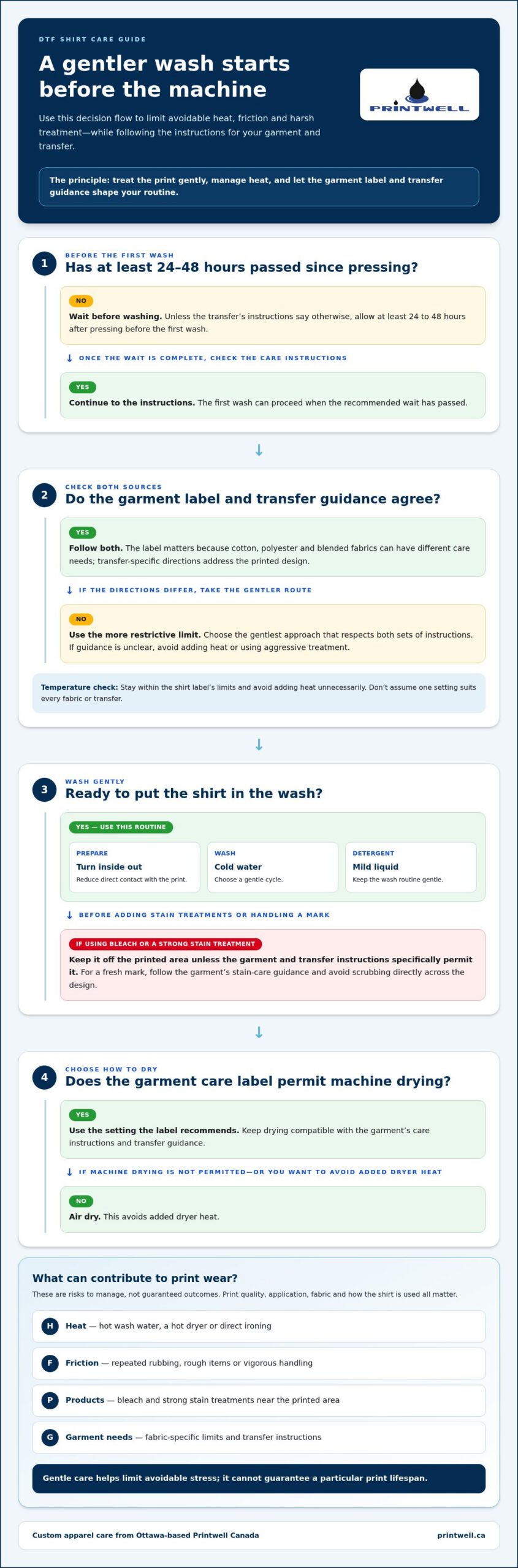
These washing instructions for DTF shirts give you a practical starting point. Unless the transfer’s instructions say otherwise, wait at least 24 to 48 hours after pressing before the first wash. Then turn the shirt inside out and wash it in cold water on a gentle cycle with mild liquid detergent. Air drying avoids added dryer heat; if the care label permits machine drying, use the setting it recommends.
You’ll also learn which products and habits can contribute to cracking or peeling, how to iron without pressing directly on the design, and what to do when a shirt needs extra care. DTF transfers and garments can vary, so follow the garment’s care label and the transfer’s application guidance if they differ from general advice.
Key Takeaways
- Understand how a DTF design is heat-applied to fabric and why its surface needs thoughtful care.
- Learn how heat, rubbing, harsh chemicals and rough handling may contribute to print wear over time.
- Use these washing instructions for DTF shirts to build a simple laundry routine that helps protect the design.
- Keep drying and ironing choices compatible with the garment’s care label and transfer application guidance.
- Discover how thoughtful everyday care helps you enjoy custom apparel from Ottawa-based Printwell Canada.
Washing Instructions for DTF Shirts: What Makes Print Care Different?
Routine laundry can feel risky when a favourite shirt has a printed design. Will a normal wash dull the colour, or could heat and rubbing lift an edge? Understanding how the design is applied makes the right washing instructions for DTF shirts easier to follow. The basics are straightforward: treat the print gently, manage heat, and let the garment’s care label and transfer-specific guidance shape your routine.
A DTF print is printed onto a special film, then transferred onto fabric using heat and pressure. This differs from dye woven into the fibres or ink printed directly onto fabric. For a clear overview of the method, see Direct-to-film printing (DTF). Once applied, the transfer sits on the garment’s surface, where it can be exposed to the rubbing and pulling that happen during wear and washing.
That doesn’t mean a DTF shirt needs complicated treatment. It means care should be deliberate. Repeated friction, excessive heat, harsh laundry products and rough handling may contribute to visible wear, such as cracking, peeling or a change in appearance. These are risks, not guaranteed outcomes: print quality, application, fabric and how the shirt is used all matter. No single wash-count promise can account for every garment and care routine.
How a DTF print sits on a shirt
Think of the design as a bonded transfer on the fabric, not as colour woven through the fibres. Because the design sits on the surface, turning the shirt inside out and avoiding abrasive treatment can reduce direct contact with the print. It also explains why care should focus on limiting friction and heat, rather than treating the design exactly like an unprinted shirt.
Why the shirt’s care label still matters
The print is only one part of the garment. Cotton, polyester and blended fabrics can have different care needs, so the shirt label remains essential. The fabric may call for a cooler wash or lower drying temperature than general transfer advice suggests. Follow the more restrictive limit, and use transfer-specific instructions to guide care where they address the printed design.
If the label and transfer guidance appear to conflict, don’t simply choose the more convenient or higher-heat option. Use the gentlest approach that respects both sets of instructions. For example, if one recommends a lower temperature, use that lower limit. If the guidance is unclear, avoid adding heat or using aggressive treatment. Product-specific directions take priority over broad online tips because they relate to the particular garment and transfer.
These principles are the foundation for the steps ahead. Gentle washing and controlled heat help limit avoidable wear, while checking both the garment label and transfer guidance keeps care suited to the shirt you own.
What Can Affect DTF Shirt Durability in the Wash?
A DTF print’s appearance can change over time, but no single wash count can predict how long every design will look its best. Results depend on how the transfer was applied, the fabric, how often the shirt is worn and the care it receives. Practical washing instructions for DTF shirts are guidance, not a guarantee: they help reduce avoidable stress without promising a particular lifespan.
Heat, repeated friction, harsh laundry products, rough handling and fabric-specific care needs can all influence how a DTF print looks over time.
Heat, friction, and laundry products
A heat-applied design may be stressed by hot wash water, a hot dryer or direct ironing. Repeated rubbing can also wear on the print, especially if a shirt is washed with rough items or handled aggressively when wet. These factors may contribute to changes such as cracking or peeling, but damage isn’t certain after one wash.
Use caution with bleach and strong stain treatments. They can be harsh on printed areas, so avoid applying them to the design unless the garment and transfer instructions specifically permit it. A product’s effect can depend on its ingredients, concentration and contact time. Treat these products as risks to manage rather than assuming every use will damage every print.
For a fresh mark, avoid scrubbing directly across the design. Follow the garment’s stain-care guidance and treat the fabric gently. This limits unnecessary abrasion while you address the spot.
Fabric type and transfer-specific instructions
The shirt’s composition affects which wash and drying methods are suitable. Cotton, polyester and blended fabrics can have different temperature limits and may respond differently to heat, so don’t assume one setting suits every DTF shirt. Check the care label before laundering, then follow any transfer-specific directions provided for that design. If instructions differ, choose the more restrictive care limit rather than taking a chance with higher heat or stronger treatment.
Transfer construction and application are part of the picture, too. The DTF gang sheet printing guide offers background on transfers and how they’re prepared for use. It can help explain why care depends not only on the design itself, but also on its application and the garment carrying it.
Before choosing a wash or drying method, consider these factors:
- Temperature: Stay within the shirt label’s limits and avoid adding heat unnecessarily.
- Contact: Keep harsh products and vigorous rubbing away from the printed area unless instructions allow them.
- Fabric: Match the method to the garment, not just to the transfer.
Thoughtful care helps protect the look of a custom design. If you’re planning a shirt of your own, explore custom T-shirt printing from Printwell Canada, an Ottawa-based custom printing company.
How to Wash a DTF Shirt: A Simple Step-by-Step Routine
A consistent routine makes laundry day easier and helps limit unnecessary stress on a DTF design. Before choosing a setting, check the shirt’s care label and any instructions supplied with the specific transfer. If they call for gentler treatment than the steps below, follow those directions. The washing instructions for DTF shirts here are a practical starting point, not a replacement for product-specific care guidance.
Before the first wash
Check both the garment label and the transfer application guidance before washing a newly printed shirt. The recommended wait after pressing can depend on the specific transfer and how it was applied. As a general guideline, wait at least 24 to 48 hours before the first wash, unless the transfer’s instructions say otherwise. If you don’t have transfer-specific guidance, follow the garment’s care directions and avoid washing a freshly pressed shirt.
Wash settings that are gentler on the print
Prepare the shirt to reduce direct contact with the design. Turn it inside out, choose a gentle cycle, and use cool or cold water if the care label permits. Wash it with similar colours, and use a mild detergent. Avoid bleach and harsh stain treatments on the printed area unless the garment or transfer instructions explicitly allow them.
- Read the care directions. Check the label and transfer-specific guidance first. Note any limits on water temperature, cycle type or laundry products, and use the more restrictive directions if they differ.
- Prepare the shirt. Empty the pockets, fasten any closures and turn the garment inside out. This places the design on the inside, helping reduce rubbing against other items and the washer drum.
- Sort the load. Wash with similar colours to help avoid colour transfer. Keep the shirt away from items with rough surfaces or hardware that could repeatedly scrape the print.
- Select a gentle wash. Choose a gentle or delicate cycle and cool or cold water when the label allows. A less aggressive setting can reduce mechanical stress compared with a vigorous cycle.
- Add mild detergent. Use a mild liquid detergent according to its directions. Skip bleach, fabric softener and strong stain products unless the specific garment and transfer instructions permit them.
- Remove the shirt carefully. Take it out promptly when the cycle ends. Don’t twist or wring the printed area. Handle the shirt gently and move on to a drying method that suits its care label.
For a small mark, resist the urge to scrub hard across the design before washing. Follow the garment’s stain-care directions and treat the surrounding fabric gently. Aggressive rubbing adds friction without guaranteeing that the mark will come out.
Keep the routine simple: check instructions, reduce direct rubbing and avoid stronger settings or products unless the garment guidance allows them. Those small choices make it easier to care for the shirt without treating every DTF print as though it has identical requirements.
How to Dry, Iron, and Store DTF Shirts Without Unnecessary Wear
Washing is only part of caring for a printed shirt. Drying and ironing introduce more heat, so choose methods that suit both the garment and the transfer. The care label takes priority over generic advice: if it sets a specific drying or ironing limit, follow it rather than assuming every DTF shirt can be treated the same way.
Drying a DTF shirt
Air drying is a cautious option when the care label permits it. Hang the shirt or lay it flat, arranging the printed area so it isn’t stretched or pressed against a rough surface. This avoids adding dryer heat, but air drying still needs to be compatible with the garment’s instructions.
If the label allows machine drying, use its recommended settings and avoid unnecessary high heat. Don’t rely on a general “low heat” rule if the garment label says something different. Fabric composition affects how a shirt should be dried, and the care label is the best guide for that specific garment.
Ironing, storing, and responding to print wear
Keep the iron off the printed design. If ironing is permitted, turn the shirt inside out and press the reverse side, following the label’s temperature guidance. If you can’t avoid the design area, don’t place the iron directly on it. A protective cloth may help, but only use a method that fits the garment and transfer instructions.
Store the shirt clean and completely dry. Fold it so the design isn’t sharply creased, or hang it if that works for the garment. Careful storage can reduce pressure on the print and help prevent unnecessary creasing between wears.
If you notice cracking, lifting or fading, stop vigorous washing and avoid pulling at the affected area. Check the garment label and any specific transfer care instructions before trying another treatment. A visible change doesn’t always have the same cause, and attempting to press or repair the print without guidance could add stress. There’s no guaranteed fix, so handle the shirt gently and keep subsequent care within the stated limits.
- Before drying: Check whether the label permits air drying or machine drying.
- Before ironing: Confirm the garment’s temperature guidance and keep direct heat away from the print.
- Before storing: Make sure the shirt is dry and avoid a sharp fold across the design.
These steps complement the washing instructions for DTF shirts covered earlier: gentle handling matters after the wash, too. For a custom shirt designed around your needs, explore custom T-shirt printing from Printwell Canada.
Keep Custom DTF Shirts Looking Their Best with Printwell Canada
A custom shirt carries a design chosen for a reason, whether it’s for a team, business, event or personal wardrobe. Thoughtful care helps maintain its appearance through regular wear, but there isn’t one routine that suits every fabric and transfer. Keep the garment’s care label handy, follow transfer-specific directions and use the gentlest compatible approach. That’s the practical finish to the washing instructions for DTF shirts covered in this guide.
Care advice that starts with the garment
Keep the care label attached if possible, or save a clear photo of its instructions so you can refer to them later. If a transfer came with its own care guidance, keep that information with the garment’s details as well. It can be especially useful for unusual fabrics or application requirements that general laundry advice won’t address.
When instructions differ, use the more restrictive setting and avoid improvising with extra heat, aggressive washing or strong products. A quick check before laundry day can prevent guesswork. Keep the routine simple:
- Turn inside out to reduce direct rubbing on the design.
- Wash gently using a mild approach that fits the garment label.
- Manage heat during washing, drying and ironing according to the garment and transfer guidance.
These steps won’t guarantee a particular result, since application, fabric, wear and care all play a role. They do give you a considered way to limit avoidable stress and maintain the look of the apparel you’ve chosen.
Custom T-shirts from an Ottawa printing company
Printwell Canada is an Ottawa-based custom printing company offering custom T-shirts. Thoughtful garment care is a natural part of enjoying custom apparel: the design gets regular wear, and the shirt stays ready for the next outing, workday or event. Clear guidance and a consistent routine make caring for a printed shirt feel manageable, not like a special laundry project.
Customers can order online, visit the showroom at St. Laurent Shopping Centre in Ottawa, or choose nationwide shipping. Whether you’re planning shirts for a group or creating a design for yourself, start with the garment’s care needs in mind and keep its instructions accessible after it arrives.
For your next custom apparel project, explore custom T-shirts from Printwell Canada.
Make Custom Apparel Part of Your Everyday
A custom shirt can mark a team milestone, bring people together at an event or add a personal touch to an everyday outfit. Making garment care part of how you use and store it helps keep the design ready for those moments. Keep the care label easy to find, and treat the washing instructions for DTF shirts as a starting point that works alongside the guidance for your specific garment and transfer.
Planning a new design? Think about where the shirt will be worn and how it fits into daily life. That context can help you create custom apparel you’ll be glad to reach for again, whether it’s for a group or for yourself.
Printwell Canada is based in Ottawa, Ontario, with online ordering, a showroom at St. Laurent Shopping Centre and nationwide shipping. Explore custom T-shirts from Printwell Canada and take the next step towards apparel made personal to you.
Choose a design that means something, then enjoy wearing it with confidence.
Frequently Asked Questions
How long should I wait before washing a newly printed DTF shirt?
As a general guideline, wait at least 24 to 48 hours after pressing before the first wash, unless the instructions for your specific transfer say otherwise. If the shirt came with care directions, use those as your guide, since transfer materials and application requirements can vary. Don’t wash a freshly pressed shirt just because it feels dry.
Can I use stain remover on a DTF shirt?
Only use stain remover on or near the design if the garment and transfer instructions allow it. Products vary, and a strong treatment may affect the printed area or fabric. For a small food or drink mark, check the label first and avoid vigorous scrubbing across the design. If the directions don’t clearly permit stain remover on the print, use a mild wash routine rather than experimenting with a harsh product.
Can a DTF shirt be dry-cleaned?
Generally, no. Dry-cleaning solvents may affect the adhesive that holds a DTF transfer to the garment. If a shirt’s care label says dry-clean only, don’t assume the printed design can tolerate that process. Check the transfer-specific instructions before choosing a cleaning method. Follow the product’s specific care guidance rather than risking the print with a method that may not suit it.
Should I soak a DTF shirt before washing it?
Avoid a long soak unless the shirt’s care directions specifically recommend one. Extended exposure to water or cleaning products isn’t necessary for routine washing and may leave you tempted to rub a stain aggressively afterwards. For a localized mark, follow the garment’s stain-care directions and keep treatment gentle around the design. If the shirt needs extra attention, check its label and transfer guidance before trying a soaking product.
Can I wash a DTF shirt by hand?
Yes, hand washing can be an option if the care label permits it. Use a clean basin, cool water and mild detergent, then move the shirt gently through the water instead of scrubbing the print. Rinse without twisting or wringing the design. Hand washing isn’t automatically gentler if you rub hard, so keep your movements light and follow the transfer’s care instructions.
Why does a DTF shirt need different care from a blank shirt?
A DTF shirt has a transferred design bonded to its surface, so care needs to account for both the print and the fabric. A blank shirt doesn’t have that added printed layer. For example, Ottawa event organizers ordering shirts for outdoor activities should consider the garment’s fabric care directions as well as the transfer guidance, since the suitable laundry approach depends on the finished shirt, not just its design.