 A Proud Canadian Company
You pull your favourite custom hoodie from the dryer only to find the intricate logo has “bubbled,” the fabric is puckered, and a few loose threads are already unravelling. It is a disheartening sight for anyone who values quality craftsmanship. We understand that custom apparel is an investment in your brand, your team, or a special memory. Learning how to care for embroidered clothing is the best way to protect that investment and ensure your garments remain vibrant, durable, and professional.
Maintaining the 3D structure of embroidery requires a bit more intentionality than your standard laundry routine. Most people assume a regular wash cycle is enough, but specialized thread work needs a gentler touch to stay crisp. In this guide, we will walk you through the essential steps to preserve your apparel, covering everything from gentle washing cycles to safe ironing practices. You will gain the confidence to handle your custom pieces with the same pride we took in creating them, ensuring every stitch stays exactly where it belongs for years to come.
Key Takeaways
- Protect your investment by mastering the “Inside-Out” rule to shield delicate threads from abrasive friction during the wash cycle.
- Prevent thread distortion and fabric shrinkage by avoiding high-heat dryers in favour of the gentle, gold-standard method of air drying.
- Learn the expert secrets of how to care for embroidered clothing to resolve common issues like fabric puckering and minor snags with ease.
- Maintain a sharp, professional, and polished corporate image by using pressing techniques that protect the vibrant colour and shape of your logos.
- Realize how starting with premium threads and high-quality stabilizers simplifies your maintenance routine and extends the life of your custom apparel.
Understanding the Craft: Why Embroidery Requires Specialized Care
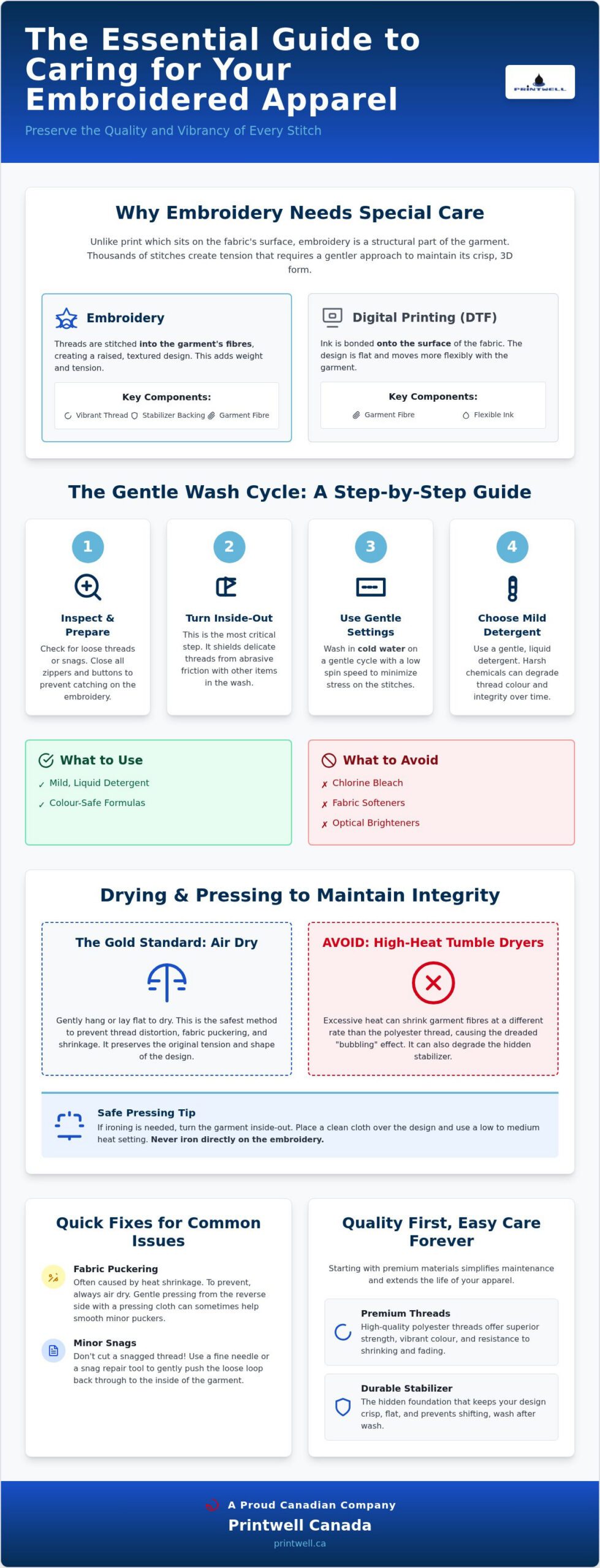
Embroidery is more than just a decoration; it’s a physical transformation of the garment. When you begin Understanding Embroidery, you realize that thousands of individual stitches are pulling on the fabric fibres simultaneously. This creates a unique set of challenges for maintenance. If you want to master how to care for embroidered clothing, you must first respect the tension that holds the design together. Every design is a combination of three critical elements:
- Thread: Usually high-quality polyester, chosen for its vibrant sheen and structural strength.
- Stabilizer: The hidden backing material that maintains the design’s shape and prevents shifting.
- Garment Fibre: The base canvas that must support the weight and pull of the stitches.
Thread vs. Ink: A Structural Comparison
While digital methods like DTF gang sheet printing Canada bond ink to the surface of the fabric, embroidery sits inside it. This structural difference is why care routines vary so significantly. Ink might crack if stretched too far, but embroidery threads can shrink independently of the shirt. This leads to that dreaded bubbling effect around the logo. High-density designs, which pack more stitches into a smaller area, are particularly prone to this distortion. They require a more delicate approach to washing to keep the tension balanced and the logo flat.
The Role of Stabilizers in Your Apparel
If you turn your shirt inside out, you will likely see a patch of material behind the design. This is the stabilizer. It’s the foundation of every high-quality project. Its job is to keep the fabric from shifting while the needles work. For many of our projects, we use cut-away stabilizers that remain for the life of the garment. Over time, excessive moisture or high heat can degrade this backing, causing the design to sag or lose its crisp edges. You can recognize quality work by the feel; it should be firm, smooth, and integrated into the garment.
The type of garment also dictates your care strategy. A heavy-duty hoodie can withstand more agitation than a lightweight polo. Thick fleece provides a sturdy anchor for dense thread work, while thinner cotton fibres might pucker more easily if the tension is disrupted. Learning how to care for embroidered clothing starts with recognizing these differences. It’s about preserving the art, the brand, and the fabric all at once. We take pride in our craftsmanship, and following these steps ensures that pride carries through every wash.
The Step-by-Step Washing Guide for Embroidered Apparel
Washing your custom pieces is the most frequent stressor they will face. To master how to care for embroidered clothing, you must develop a routine that prioritizes protection over speed. Before the garment even touches water, perform a quick pre-wash inspection. Look for loose threads, check for snags, and ensure all zippers are closed to prevent metal teeth from catching on the embroidery. Once inspected, turn the garment inside out. This simple step is the most critical defence against thread abrasion, pilling, and direct friction during the agitation cycle.
Water temperature is equally vital for longevity. In Canadian households, cold water is the gold standard for preserving custom apparel. High temperatures can cause polyester threads to lose their tension or, worse, cause the garment fibre to shrink at a different rate than the design. When selecting a detergent, reach for a mild, liquid option. Avoid bleach, fabric softeners, and optical brighteners at all costs. These chemicals can weaken thread integrity, strip away the vibrant colour, and dull the natural sheen of the embroidery. For technical details on chemical reactions and professional standards, you can consult Madeira’s Washing Instructions to see why specialized care matters.
Machine Washing vs. Hand Washing
While hand washing provides the most control, modern machines are perfectly safe if used correctly. For items like heavy-weight embroidered hoodies, a gentle machine cycle is often more efficient at removing deep-seated dirt while maintaining the garment’s shape. Always set your machine to a low spin speed to minimize the centrifugal force pulling on the stitches. For smaller or more delicate items like custom hats, place them in a mesh laundry bag. This creates a physical barrier that prevents the design from rubbing against the drum or other garments in the load.
Dealing with Colour Bleeding
Even with professional-grade threads, testing for colour fastness is a wise precaution before the first wash. Dampen a white cloth and gently press it against the embroidery; if no colour transfers, you are safe to proceed. If you are washing a high-contrast design, such as red thread on a white shirt, consider using a “colour catcher” sheet. These sheets act like a magnet for loose dyes in the water, preventing them from settling into the fabric. If you realize the thread has bled after a wash, do not let the garment dry. Re-wash it immediately in cold water to lift the stray pigment before it sets into the fibres. This proactive approach is a cornerstone of how to care for embroidered clothing and keeping your wardrobe looking brand new.
Drying and Pressing: Maintaining Design Integrity
Once the wash cycle finishes, the temptation to toss your damp gear into a high-heat dryer is strong. You must resist it. High heat is the primary culprit behind thread distortion, permanent puckering, and a loss of lustre. When mastering how to care for embroidered clothing, you quickly learn that air drying is the gold standard for preserving custom embroidery. This gentle method allows the fibres to settle naturally, keeps the thread tension consistent, and protects the vibrant colours from fading prematurely. It is a simple commitment that yields long-term results for your wardrobe.
For heavier items like embroidered hoodies, the weight of the water creates extra stress on the stitches. If you hang a heavy, wet garment on a thin wire hanger, you risk “shoulder nipples” and a stretched-out neckline that ruins the fit. Instead, lay the garment flat on a drying rack or a fresh towel to support the weight of the fabric. If you have chosen to hand-wash your items, following professional techniques for gently pressing out excess water will help you remove it without wringing or twisting the design. Avoiding that physical strain ensures the stabilizer stays flat and the logo remains crisp.
The Art of Ironing Embroidered Clothes
Ironing requires a careful approach to avoid crushing the very detail that makes embroidery special. You should never apply a hot iron directly to the embroidery threads. Direct heat can melt polyester fibres, flatten the 3D texture, and leave a permanent, unsightly shine on the fabric. Use a pressing cloth, a thin piece of cotton, or a clean white towel as a protective barrier. By ironing from the reverse side, you press the fabric around the stitches and help the design “pop” forward. This creates a professional, polished appearance that makes the garment look brand new after every wash.
Steamers vs. Irons: Which is Safer?
A handheld steamer is often the safer, more efficient choice for removing wrinkles near a logo. It provides gentle heat that relaxes the fabric fibres without the physical pressure and high temperatures of an iron. However, you must be careful not to over-saturate the stabilizer backing with too much steam. Excess moisture can soften the foundation of the design, causing it to sag or shift over time. Realize that heat can also reactivate adhesives used in certain backings, so keep the steamer at a safe distance and keep it moving. This methodical approach ensures your apparel stays smooth, the logo stays sharp, and the structural integrity remains intact.
Troubleshooting Common Issues: Puckering and Fraying
Even with a disciplined routine, daily wear can eventually take a toll on your favourite pieces. Understanding how to care for embroidered clothing involves more than just washing; it requires knowing how to react when things go wrong. Puckering is perhaps the most common grievance. It happens when the garment fabric and the embroidery thread react differently to moisture, heat, or tension. If you notice a snag or a loose thread, resist the urge to grab your scissors immediately. Cutting a thread can compromise the structural integrity of the entire logo. Instead, use a fine needle or a snag-repair tool to gently pull the loop through to the underside of the fabric where it won’t be visible or prone to further catching.
Stain removal on thread also requires a specialized touch. Harsh chemicals can strip the lustre from polyester fibres or cause the colour to migrate into the surrounding garment. A mixture of mild dish soap and cool water, applied with a soft-bristled toothbrush, is usually enough to lift surface grime. For those who find the interior stabilizer “itchy” against the skin, there is a simple fix. You can iron a soft, fusible tricot mesh over the back of the design. This creates a permanent, smooth barrier that protects your skin without affecting the exterior appearance of the embroidery.
How to Reverse Fabric Puckering
If your design has developed a “bubbled” look, you can often restore flatness using the “Wet and Stretch” method. Dampen the embroidered area with cool water, gently stretch the fabric away from the design in all directions, and pin it flat onto a clean towel until it dries completely. You can also use a handheld steamer to relax the fibres around the stitches. While some puckering is a natural result of poor care, persistent bubbling in a brand-new garment often points to improper stabilizer choice or incorrect thread tension during the manufacturing process.
Canadian Maintenance: Hard Water and Winter Storage
Many Canadian households, particularly those relying on well water or specific municipal systems, deal with high mineral content. These minerals, like calcium and magnesium, can settle into the thread fibres over time, making your vibrant logos look dull, grey, or stiff. A final rinse with a small splash of white vinegar can help dissolve these deposits and restore the original sheen. When the seasons change, proper storage is vital. Ensure your embroidered hoodies and winter hats are completely dry before packing them away. Use breathable cotton bags instead of plastic bins to prevent moisture entrapment, which can lead to mildew or permanent thread degradation. If you want to invest in garments that are built to withstand these conditions from day one, order your custom apparel from Printwell today.
Investing in Quality: How Premium Embroidery Simplifies Care
The secret to effortless maintenance starts long before the first wash. When you choose a provider that prioritizes craftsmanship, the question of how to care for embroidered clothing becomes much simpler to answer. High-quality embroidery relies on a foundation of professional-grade threads, precise digitizing, and the right stabilizers. These elements work together to ensure that your design remains flat, vibrant, and securely attached to the fabric. At Printwell, we take pride in using materials that are built to last, reducing the risk of the common failures that plague cheaper alternatives.
Expert digitizing is particularly crucial for the longevity of custom promotional products Canada. If a design is digitized with too many stitches in a small area, it creates a heavy, rigid patch that is more likely to pucker or tear the fabric. By optimizing the stitch path and density, we create a flexible design that moves with the garment. This thoughtful approach results in a professional appearance that survives the rigours of daily wear and industrial laundering, making it the ideal choice for corporate fleets and school uniforms.
Choosing the Right Garment for Your Design
Durability is a partnership between the thread and the canvas. We often recommend matching thread weight to the fabric thickness to maintain a balanced tension. For example, a heavy fleece requires a different digitizing strategy than a lightweight pique polo. We frequently suggest polyester thread for high-use items because it is bleach-resistant, colourfast, and incredibly strong. Consulting with our team ensures your design is optimized for its specific purpose, whether it’s for a one-time event or a permanent addition to a professional wardrobe.
Ordering with Longevity in Mind
Investing in premium items through bulk ordering is a strategic move for any organization. While “fast fashion” alternatives might seem cost-effective initially, they often fail after just a few cycles, leading to more frequent replacements and a higher total cost. When you provide your team or customers with high-quality gear, you are giving them a product they will actually want to keep. We encourage you to share these care tips with your staff to ensure your brand remains crisp and visible for years. Ready to build a wardrobe that lasts? Explore premium custom embroidery options at Printwell Canada and experience the difference that expert craftsmanship makes.
Preserving Your Custom Apparel for the Long Haul
Your custom embroidered pieces represent more than just fabric; they are a statement of quality and pride. By mastering how to care for embroidered clothing, you ensure that every stitch remains crisp, every colour stays vibrant, and every logo maintains its structural integrity. Success in maintenance relies on three simple pillars: protecting the threads during the wash, avoiding high-heat distortion, and starting with a foundation of superior craftsmanship.
We take the guesswork out of durability by utilizing expert digitizing techniques that reduce puckering and using premium, colour-fast threads in every project. Whether you are outfitting a local sports team or managing a corporate fleet for a national brand, we provide the reliability and professional finish you deserve. With national shipping across Canada, high-quality results are accessible to every province. Our commitment to excellence ensures your investment looks as good in a year as it does on the day it arrives.
Create your own durable custom embroidery with Printwell Canada and realize how professional standards make long-term maintenance a breeze. We are ready, capable, and eager to help you build a wardrobe that stands the test of time.
Frequently Asked Questions
Can I put embroidered clothing in the washing machine?
Yes, you can use a washing machine if you select the gentle cycle and turn the garment inside out. This protects the delicate thread work from the abrasive drum and other items in the load. Using a mesh laundry bag is a smart way to add another layer of protection. Always select cold water to prevent the fabric from shrinking around the stitches, which is a core part of how to care for embroidered clothing effectively.
How do I stop my embroidery from puckering after washing?
Puckering usually happens when the garment shrinks faster than the thread. To stop this, avoid high-heat dryers and always air dry your apparel. If puckering has already occurred, try the “Wet and Stretch” method. Dampen the area, gently pull the fabric taut, and pin it flat to dry. Maintaining consistent tension is the secret to keeping your custom logos looking sharp and professional over the long term.
Is it safe to iron over an embroidered logo?
No, you should never place a hot iron directly on the embroidery. The high heat can melt polyester threads or leave a permanent, unsightly shine on the design. Instead, iron the garment from the reverse side or use a clean pressing cloth as a protective barrier. This protects the 3D texture of the stitches while removing wrinkles from the surrounding fabric without risking any heat damage to the thread fibres.
What should I do if a thread starts to come loose?
Do not pull or cut a loose thread, as this can cause the entire design to unravel. Instead, use a fine needle to pull the stray loop through to the inside of the garment. Once on the reverse side, you can carefully knot it or use a tiny drop of clear fabric glue to secure it. This simple fix preserves the structural integrity of your custom logo and prevents further damage during the next wash.
Can I use bleach on white shirts with coloured embroidery?
Avoid using chlorine bleach even on white garments. Bleach can strip the colour from the embroidery threads and weaken the fibres over time. If you need to brighten a white shirt, use an oxygen-based whitener or a mild detergent. These alternatives are much safer for the thread and won’t cause the vibrant colours to fade or migrate into the white fabric fibres, keeping the design crisp and clear.
Should I dry clean my embroidered hoodies?
Dry cleaning is generally unnecessary for custom hoodies and can actually be too harsh for some stabilizers. Most embroidered items are best served by a gentle machine wash in cold water followed by air drying. If the garment’s care label specifically mandates dry cleaning, ensure the cleaner is experienced with delicate thread work. For most daily wear, consistent home care is the superior choice for maintaining the garment’s comfort and appearance.
How do I remove a stain that is directly on the embroidery thread?
Spot treat the area using a mixture of mild dish soap and cool water. Gently work the solution into the thread with a soft-bristled toothbrush to lift the stain without damaging the fibres. Avoid aggressive scrubbing, which can lead to fraying. This targeted approach is a key technique in how to care for embroidered clothing without relying on damaging industrial chemicals or high-heat treatments that could ruin the design.
Why do some embroidered designs feel scratchy on the inside?
The scratchy sensation is often caused by the stabilizer backing or the thread ends. This is common in high-density designs that require more support to stay flat. You can solve this by ironing a soft, fusible tricot mesh over the back of the embroidery. This creates a permanent, smooth barrier that protects your skin while maintaining the professional appearance and durability of the exterior design for your team or brand.