 A Proud Canadian Company

A gift can carry your logo and still feel personal. The corporate gifting trends in Canada for 2026 point to a more thoughtful approach: choose gifts around the recipient, the occasion and how the item will be used, then keep branding in balance.
Holiday gifting takes planning, especially when you’re choosing for employees, clients or both. A useful gift can show appreciation, while a generic one may feel like just another promotional item. The difference often comes down to fit and context, not cost.
This guide explores ways to personalize holiday gifts with names, messages and subtle branding, and how curated gift sets and employee welcome kits can bring useful items together with a clear purpose. You’ll also learn which 2026 trends are worth considering, which approaches can miss the mark, and how to make each gesture feel considered rather than routine.
Key Takeaways
- Choose gifts to suit the relationship, occasion and recipient, rather than relying on price or a one-size-fits-all option.
- Add a personal touch with a thoughtful message or subtle branding that keeps appreciation at the centre.
- Build curated gift sets and welcome kits around a clear purpose, such as helping someone feel part of the team.
- Consider useful, durable and sustainable choices, and avoid merchandise recipients are unlikely to keep or use.
- Plan holiday gifting early so there’s time to select, personalize and prepare gifts with care.
What are the biggest corporate holiday gifting trends to avoid in 2026?
A common misstep is choosing a gift before considering the recipient, relationship and occasion. A premium item may suit a long-standing client, while a practical welcome gift may better support a new employee. Start with the purpose: recognize a contribution, thank a client or welcome someone to the team. Then set a budget that fits and apply it consistently to recipients in similar roles. A costly gift isn’t automatically more thoughtful.
Useful gifts can outlast the latest trend. Before selecting a novelty item, consider how the recipient might use it at work or at home. A durable notebook or a comfortable layer for a team event may be more relevant than a short-lived desk gadget. For clients, connect the gift to the relationship and reason for giving. A digital greeting can add a personal message, but shouldn’t replace a meaningful gift when the occasion calls for one.
There isn’t one best Canadian corporate gifting vendor or platform for every organization. Choose based on your needs: product selection, personalization, ordering, packaging and delivery across the provinces. For example, a team sending gifts to employees in several locations may value centralized ordering and clear delivery tracking more than a narrow range of premium products.
For tax purposes, keep employee and client gifts distinct in your records. The Canada Revenue Agency (CRA), Canada’s federal tax authority, may treat gifts differently depending on their type and circumstances. Record the recipient, gift type, business purpose and purchase details. Don’t assume a physical gift, gift card and cash gift receive the same tax treatment. Clear records help your accounting team review each purchase.
Goods and services tax/harmonized sales tax (GST/HST) is the sales tax that may apply to purchases in Canada. Its application to a corporate gift depends on the purchase and the business’s circumstances. Keep receipts showing the amount paid and any tax charged, then record the recipient and business purpose. For example, document employee gifts separately from client appreciation purchases to simplify accounting review.
For gifting across Canadian provinces, organize delivery details before placing orders. Prepare a recipient list with complete addresses, gift selections and any message for each person. Group orders by destination, choose suitable packaging and allow time for production and delivery. For a team spread from Ontario to British Columbia, a shared tracking sheet can flag missing addresses and show which shipments still need attention.
Sustainability works best as a practical consideration, not just a label. Consider recycled paper, recycled fabric or bamboo stationery, then assess whether recipients will use the item. Employee recognition can also be more specific than a year-end gift: mark a work anniversary, promotion or completed project with a message naming the contribution. For a larger gesture, consider whether a substantial gift fits the relationship. A securities donation means giving investments, such as shares, to a charity instead of giving cash or a physical gift. Explain why the gesture suits the occasion.
How can companies make holiday gifting more personalized?
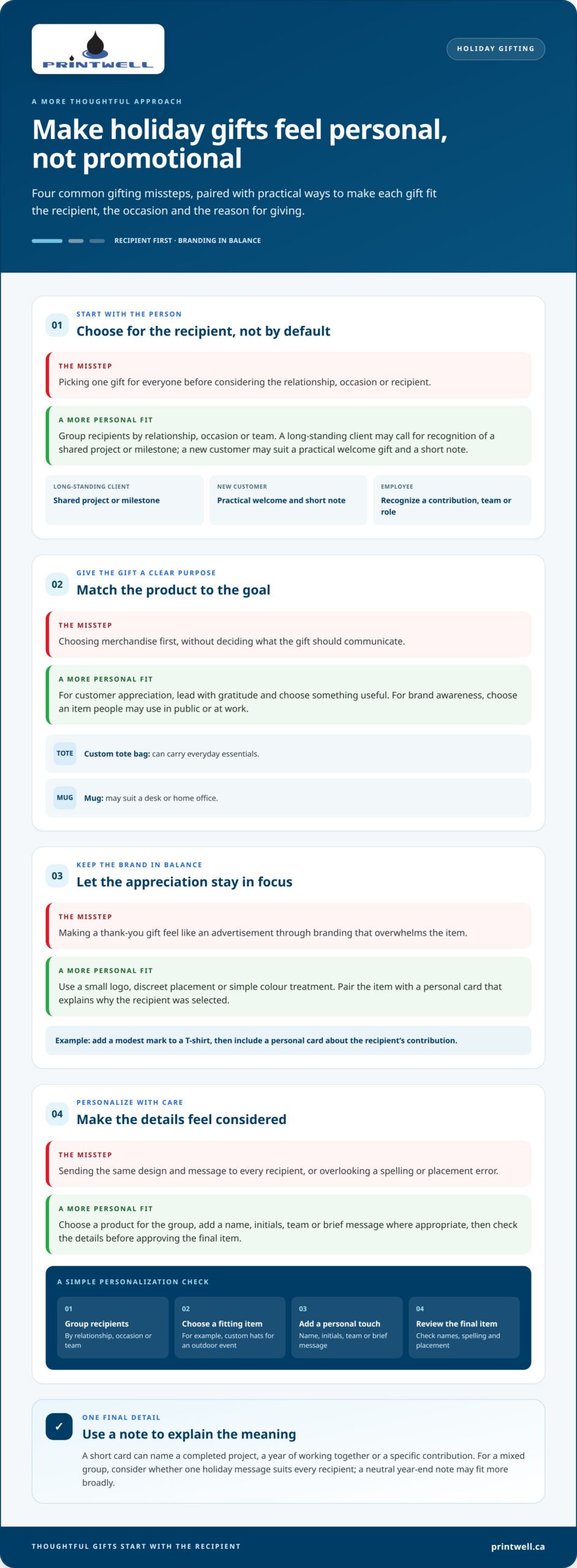
Start with the recipient, not the logo. For a long-standing client, recognize a shared project or milestone; for a new customer, offer a practical welcome gift and a short note. For employees, connect the message to a contribution, team or role. These small choices show that a gift reflects a real relationship, rather than a broad marketing plan.
Set a clear brand goal before choosing merchandise. If the aim is customer appreciation, lead with gratitude and choose a useful product. If it’s brand awareness, select something people may use in public or at work. A custom tote bag can carry everyday essentials, while a mug may suit a desk or home office. Each choice gives the brand a different kind of visibility, so match it to the intended audience.
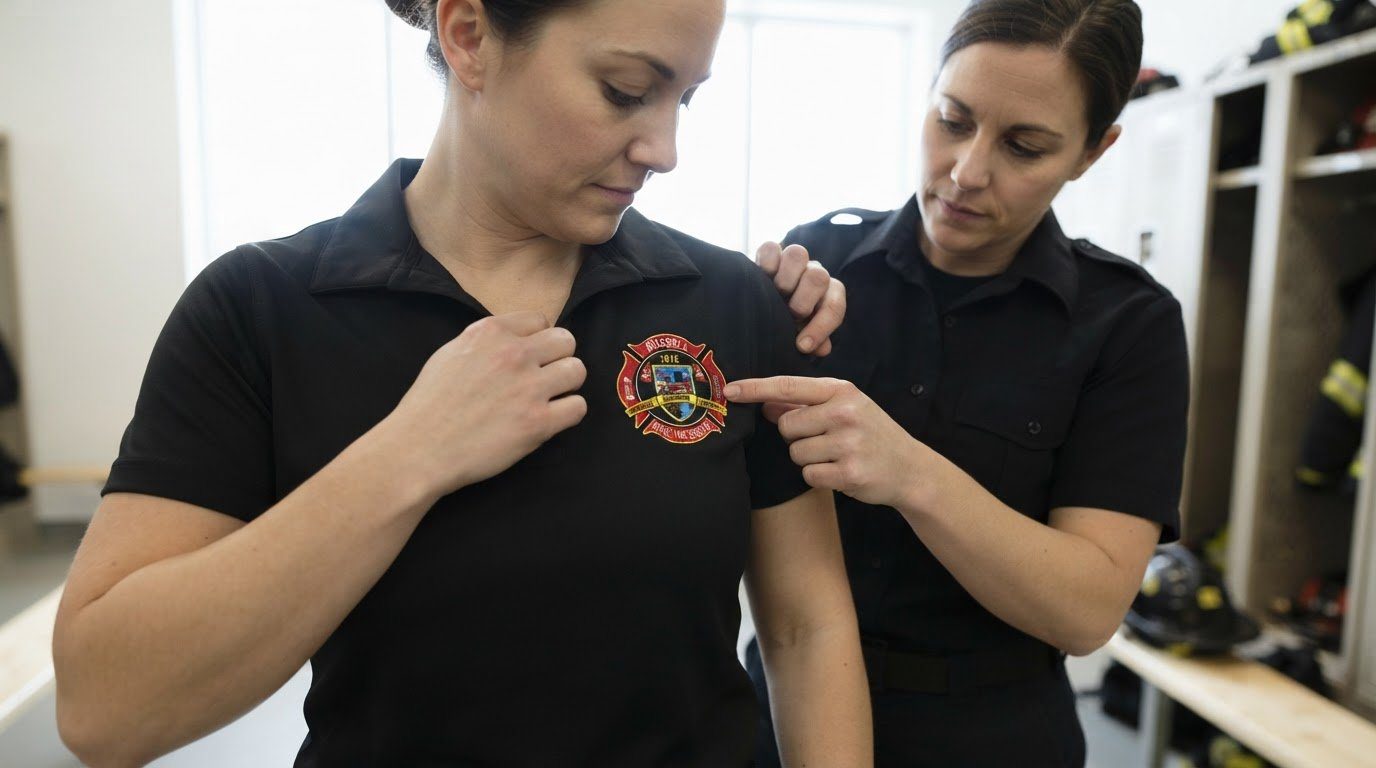
Keep branding noticeable but not overwhelming. A small logo, discreet placement or simple colour treatment can identify the sender without turning a thank-you gift into an advertisement. For example, a team could add a modest mark to a T-shirt and include a personal card explaining why the recipient was selected. That balance leaves room for the recipient’s own style.
Use a simple personalization process:
- Group recipients by relationship, occasion or team, rather than sending one design to everyone.
- Choose a product that fits the group, such as custom hats for an outdoor event or T-shirts for a staff gathering.
- Add the recipient’s name, initials, team or a brief message where appropriate.
- Review spelling, names and placement before approving the final item.
For clients, make the reason for the gift clear. A short note can mention a completed project, a year of working together or a specific contribution. If the gift supports a campaign, explain the connection in plain language. A useful item paired with a relevant message feels considered; the latest trend alone can’t provide that context.
For global teams or customers, don’t assume one holiday message suits every recipient. Consider location, language, workplace norms and whether the occasion is shared. A neutral year-end message may work for a mixed group, while a note tied to a specific celebration can be reserved for recipients who observe it. Social posts can extend the campaign, but get permission before sharing a recipient’s name or image.
Packaging can add a personal touch without taking over. Include a printed card with the recipient’s name and a direct explanation of the gift’s purpose. For a coordinated holiday look, use consistent colours and a restrained design across the card and merchandise. To put that approach into practice, explore custom branded apparel and gifts suited to a thoughtful appreciation campaign.
Corporate gifting market growth
Corporate gifting is becoming a planned business activity, not only a December task. In 2026, companies can use gifts to recognize employees, welcome new hires, thank clients and mark project milestones. That wider role changes the planning question. Instead of asking what to send at year-end, teams can decide which relationships deserve recognition throughout the year. A project-completion gift, for example, can connect appreciation directly to shared work.
Technology can make gift programs easier to coordinate across offices and remote teams. A digital message can accompany a physical gift, giving the recipient context beyond the packaging. A company with staff in several provinces might organize recipient details, gift choices and delivery updates in one system. This can reduce missed messages and help maintain a consistent standard of care across locations.
Recipients’ expectations also shape how companies approach gifting. A generic item with a large logo may not feel meaningful, even if it’s premium. A useful gift tied to a clear occasion can communicate more. For example, a new employee’s welcome package can reflect the tools or routines used by their team. A client thank-you can recognize a project milestone rather than repeat a standard holiday gesture.
Growth creates a strategy challenge: more gifting occasions can mean more choices to manage. Set a purpose for each program before selecting items. Decide whether the goal is employee recognition, client appreciation or event participation, then match the format to that goal. An appreciation card may suit a personal milestone, while a coordinated group gift may work better for a team event.
For Canadian organizations, delivery planning is part of the experience. A company sending gifts from Halifax to Vancouver needs accurate recipient details, suitable packaging and a clear order-tracking process. Regional distribution can also affect how teams coordinate timelines and messages. A shared calendar of occasions, such as service anniversaries and new-hire start dates, helps prevent every gift from becoming a last-minute holiday order.
A growing market also calls for closer attention to usefulness and waste. A durable item recipients keep serves a different purpose than a short-lived novelty. For example, a reusable notebook for a planning session may support ongoing work, while an unneeded desk accessory may be set aside. Consider materials, practical use and the recipient’s setting together. That makes sustainability a selection factor, not just a campaign label.
Assess each gifting program after delivery. Track which gifts were accepted, where shipments arrived successfully and which occasions prompted personal thanks. Use those observations to adjust future selections and messages. If a digital campaign gets attention but the physical gift goes unused, revise the product choice. If a milestone gift earns a direct response, keep the occasion-specific approach.
Curated gift sets and employee welcome kits
A curated set brings several items together around one clear purpose. For a new employee, it can introduce team routines and help organize the first week. For a remote colleague, a home-office set can support everyday work. The strongest combinations feel connected, not like leftover merchandise placed in one box.
Begin with the recipient’s situation, then choose items that serve it. A welcome kit might include a team guide, a notebook for meeting notes and a small item tied to workplace culture. A wellness set could pair a reusable water bottle with a calming activity. The products should work together, while a brief card explains the reason for each choice.
Traditional welcome packages often rely on a branded item and a generic greeting. A more considered kit adds useful context: who the employee can contact, how the team works and what to expect during the first days. For example, a note from the manager can explain why a particular item was chosen. That personal detail gives the package a purpose beyond displaying the company logo.
Curated sets can also make recognition easier to tailor. A project team might receive a shared set connected to its work, while an individual milestone calls for a personal selection. Avoid assuming every employee wants the same products. A short preference form can gather practical details, such as dietary restrictions or preferred clothing sizes, without requesting unrelated personal information.
Consider privacy, cultural sensitivity and accessibility before packing begins. Collect only the recipient details needed for delivery and personalization, and limit access to the people organizing the gifts. Offer neutral options for varied cultural practices, and consider allergies, sensory preferences, mobility needs and readable print when selecting items and messages.
Make the package easy to receive and use. Choose packaging that protects the contents without creating unnecessary waste, and include clear instructions for any item that needs assembly. For employees across Canada, confirm each address and organize shipments by destination. A kit that arrives intact and is simple to open reflects care as clearly as the items inside.
Before ordering, match each component to the kit’s purpose. Remove anything that doesn’t support the recipient or occasion. Then review the set as a complete experience: the contents, message, packaging and delivery should feel consistent. After the campaign, note which items were used, which messages drew replies and where delivery issues occurred. Those observations help refine future kits.
The most important measure of a welcome kit isn’t how many items it contains. It’s whether the recipient understands why those items were chosen and can use them. A thoughtful set can turn a routine delivery into a practical introduction, a warm welcome and a clear first connection with the team.
What are the top corporate gifting trends in Canada for 2026?
In 2026, corporate gifting is shifting towards more intentional choices. The focus is on gifts that support people, reflect shared values and mean something beyond the moment they arrive. For Canadian organizations, that can mean choosing a practical team gift that connects to a shared purpose, instead of selecting merchandise simply because it carries a logo.
Lahlouh describes three trends for 2026: nostalgia-driven merchandise, wellness-forward kits and design-first packaging. Nostalgia can bring familiar styles or references into a gift, while a wellness kit might support a calming break or healthy routine. Design-first packaging makes presentation part of the experience. Each approach works best when it suits the recipient, rather than following a trend without a clear reason.
Sustainability should guide product selection, not serve as a label. Consider whether recipients are likely to keep and use an item, then weigh its materials and durability. Recycled fabric, recycled paper or bamboo stationery can work when they fit the gift’s purpose. A reusable item that becomes part of someone’s routine can be more thoughtful than a disposable novelty chosen for its environmental appearance alone.
To apply these trends, define the campaign goal first. Decide whether the gift is meant to welcome employees, thank clients or mark a shared achievement. Then match its style, contents and packaging to that goal. For example, a wellness kit for staff should feel calm and useful, while a client gift can reflect the work or relationship being recognized. This keeps the latest idea from overshadowing the gesture.
For a polished, wearable touch in a Canadian holiday campaign, create custom branded apparel that fits the recipient and occasion. A thoughtful design, useful item and clear message can make the gift feel personal while keeping the brand present.
Printwell Canada
Printwell Canada helps businesses turn thoughtful gifting ideas into custom printed and embroidered items. For employee recognition, client appreciation or welcome kits, coordinated apparel and branded pieces can connect a gift to its purpose. Options include Custom T-Shirts, Embroidered Hoodies, Custom Hats, and Direct-to-Film (DTF) stickers and films. DTF stickers are printed designs that can be applied to items, while DTF film is the material used to transfer those designs.
These items can support a shared team identity or add a personal touch to a curated set. Choose pieces that suit the recipients and occasion, and keep the branding considered and useful. A custom item works best when it feels like part of the gift, not the whole message.
For custom items for your next corporate gifting program, contact Printwell Canada.
Make your next gift a thoughtful beginning
Make your next gifting campaign a repeatable practice, not just a seasonal task. Assign someone to coordinate recipient details, messages and approvals so every gift has a clear purpose. After delivery, record how recipients respond and use those observations to shape future choices. Over time, this builds a more considered approach to employee and client relationships.
The corporate gifting trends in Canada for 2026 offer ideas, but your own recipients should guide the final decision. Start with one upcoming occasion, decide what you want the gesture to communicate, then select an item and message that work together. A focused plan is easier to carry through with care than a collection of last-minute decisions.
For a custom touch on your next corporate gift, contact Printwell Canada about corporate gifts. A little planning can turn a simple gesture into a meaningful connection.
Frequently Asked Questions
What Makes a Corporate Gift Memorable?
A memorable corporate gift feels relevant and makes clear why it was chosen. Add a brief message referring to a shared moment, such as a product launch or helpful introduction. Choose an item that fits the recipient’s routine, not just the company’s visual identity. A practical object paired with a sincere note gives the recipient a reason to remember the gesture and keep the gift.
What should companies consider when choosing corporate holiday gifts in 2026?
Consider the occasion, recipient preferences, delivery locations and the message the gift should convey. For a Canadian team with recipients in different provinces, plan packaging and delivery for each destination. Keep options suitable for varied needs and cultural practices. Before ordering, review the recipient list, spelling on personalized items and any message inserts. These practical details help prevent a thoughtful campaign from feeling impersonal or creating avoidable delivery problems.
How much do Canadian companies budget per employee for corporate gifts in 2026?
There’s no single budget that fits every Canadian organization. Set an allowance based on the total campaign budget, number of recipients, gift type, customization, packaging and delivery. For example, a company welcoming new staff throughout the year may set aside a separate allocation from its holiday appreciation program. Decide how the budget will be applied across comparable roles or occasions, then track purchases consistently for future planning.
Which sustainable and locally made corporate gifts are popular in Canada?
Useful choices can include items from Canadian makers, such as locally made pantry goods, stationery or reusable products. Popularity varies by audience, so assess an item’s origin, materials and likely use before choosing it. For a regional client event, a locally made product can connect the gift to its setting. Include a short note identifying the maker or explaining the selection so recipients understand the thought behind it.
How is personalization and employee choice shaping corporate gifting in 2026?
Personalization can reflect someone’s role, interests or preferred style, while employee choice lets recipients select from suitable options. A company might offer a choice of apparel colours or a few gift categories, then add a team-specific message. Keep choices comparable in value and easy to understand. Collect only the details needed to fulfil the selection, and explain how those details will be used for the gifting program.
What corporate gifts are popular for clients versus employees in Canada?
How do Canadian corporate gifting costs compare by gift type and budget?
Costs vary with the item, quantity, customization, packaging and delivery requirements. A simple printed item and a multi-piece curated set involve different decisions, even before shipping. To compare options fairly, calculate the full campaign cost using the same factors for each gift type. Then weigh usefulness and fit alongside cost. This helps teams avoid choosing an item based only on its base price or presentation.
How are AI, digital gift cards, and experiential gifts changing corporate gifting in Canada?
Artificial intelligence (AI) tools can help draft message options, but a person should review every note for accuracy and warmth. Digital gift cards offer speed and flexibility, though they may feel less personal without a message explaining the gesture. Experiential gifts, such as an event or activity, can suit recipients who prefer shared experiences. Consider access, scheduling and personal preferences before choosing an experience for a team or client.