 A Proud Canadian Company
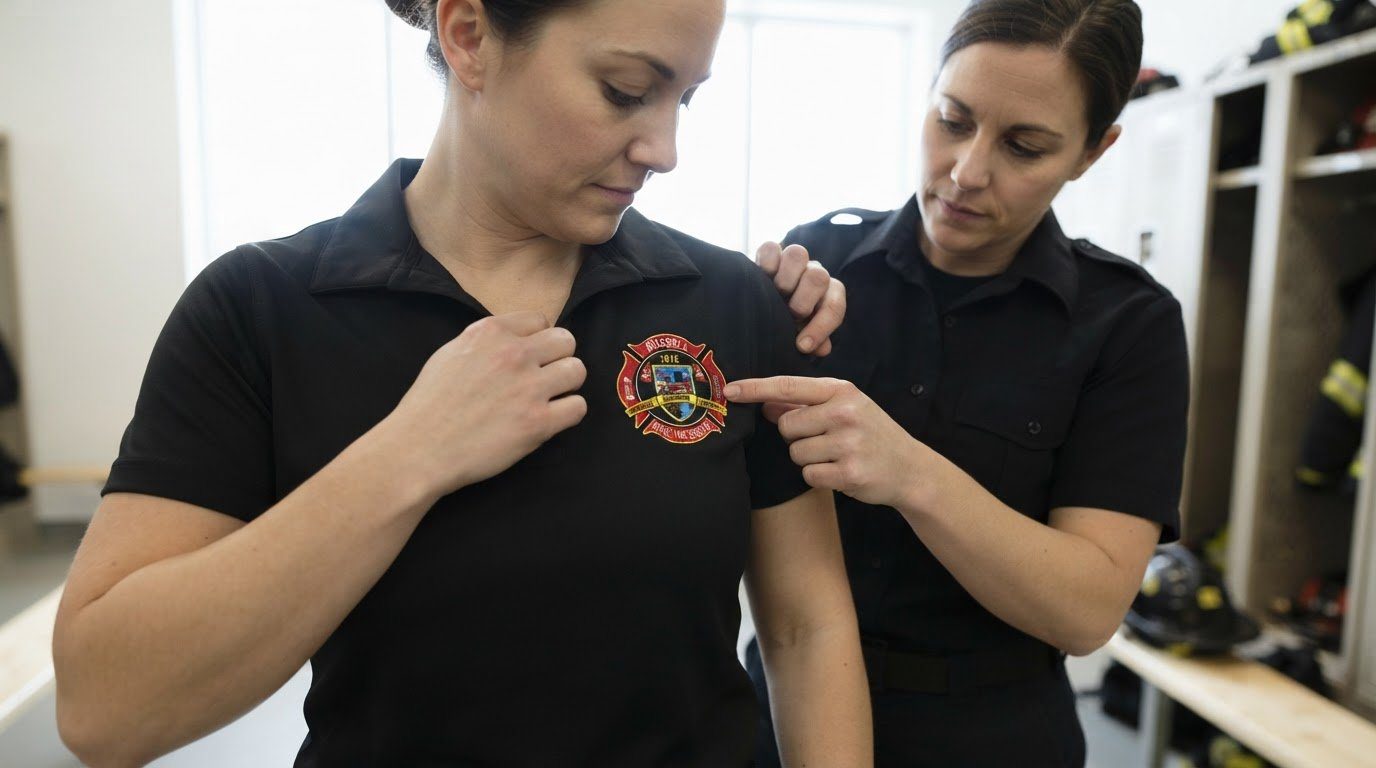
The thread that gives a logo a crisp finish can also affect whether it suits protective workwear. With fire retardant workwear embroidery, there isn’t one standard cost: the quote depends on thread selection, design size and detail, stitch requirements, and garment handling. Standard polyester embroidery thread melts at approximately 250°C, making material choice more than a colour decision.
When planning embroidered branding, appearance and durability matter, but so does the garment’s protective purpose. Consider the thread and embroidery alongside the garment’s certification and care instructions.
This article explains how thread choices can affect embroidery costs, why adding a logo raises questions about garment certification, and how to care for embroidered workwear. It also covers design details that influence the finished look, so you can plan clear branding while keeping the garment’s intended use in view.
Key Takeaways
- Understand how thread type, design detail and garment handling can shape an embroidery quote, without relying on a one-size-fits-all price.
- Learn why adding a logo may affect how a protective garment’s certification applies to the finished item.
- See how following the garment maker’s washing instructions can help preserve its flame-resistant properties.
- Compare standard and flame-resistant thread choices, and learn why the embroidery materials matter.
- Find out how Canadian standards relate to protective workwear and what role they play when planning embroidered garments.
Flame-resistant thread colours and embroidery costs
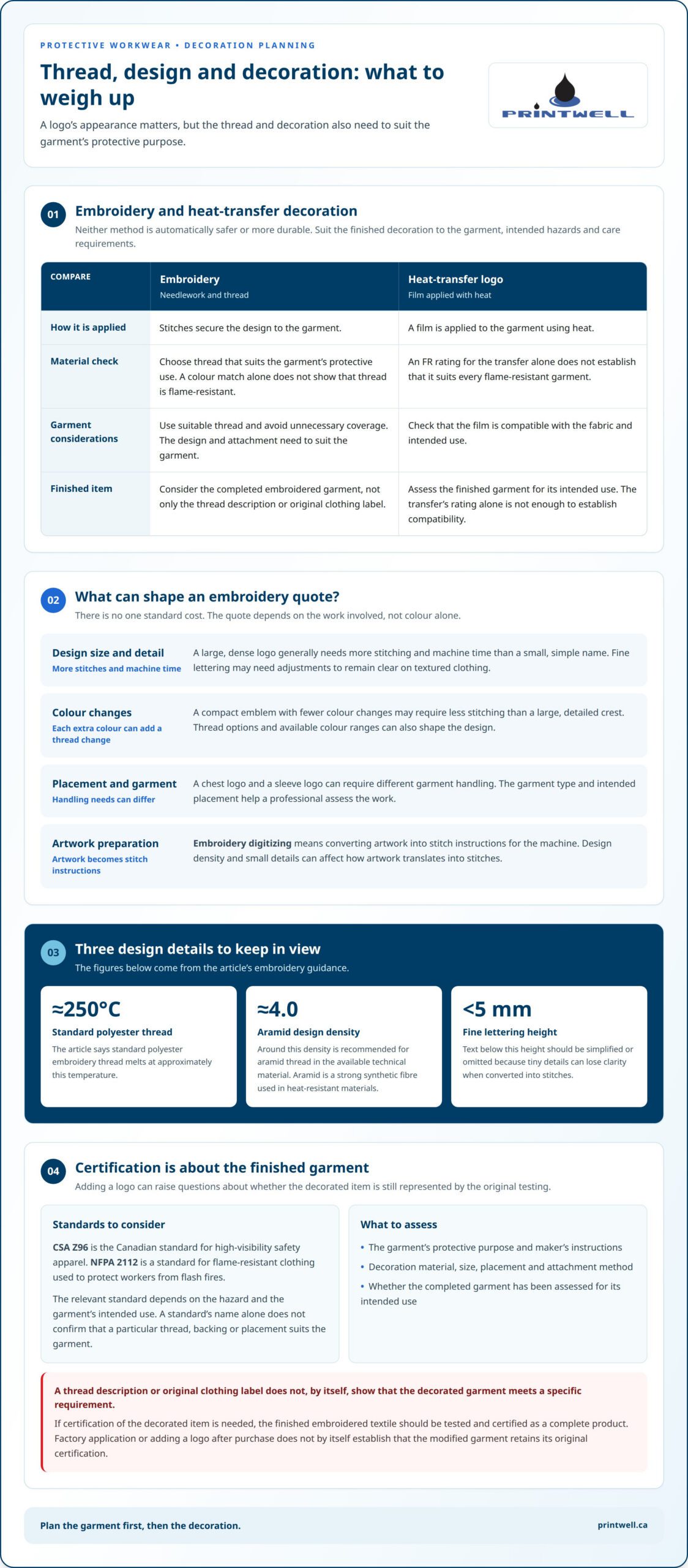
Embroidery secures a design with stitches; a flame-resistant (FR)-rated heat-transfer logo uses a film applied with heat. Neither method is automatically safer or more durable. The finished decoration must suit the garment, its intended hazards, and its care requirements.
Thread colour shapes a logo’s appearance and the design options for a protective garment. For example, a high-contrast name or emblem may be easier to read on a dark jacket than a similar shade. The thread must also suit the garment’s protective use. A colour match alone does not show that thread is flame-resistant, so assess material suitability before choosing a shade.
Embroidery costs depend on the work involved, not colour alone. A large, dense logo generally requires more stitching and machine time than a small, simple name. Each extra colour may require a thread change, while fine lettering may need adjustments to stay clear on textured clothing. Placement matters too: a chest logo and a sleeve logo can require different garment handling.
Artwork preparation is another cost factor. Embroidery digitizing means converting artwork into stitch instructions for the machine. For aramid thread, a design density around 4.0 is recommended in the available technical material. Aramid is a type of strong synthetic fibre used in heat-resistant materials. Fine text under 5 mm high should be simplified or omitted, since tiny details can lose clarity when translated into stitches.
To plan a logo, start with the garment and its protective purpose, then choose the placement, colours, and a readable design size. A compact emblem with fewer colour changes may require less stitching than a large, detailed crest. These choices can reduce complexity, but the thread and decoration must still suit the garment. Thread options and colour ranges can also shape the final design.
Heat-transfer decoration avoids stitching through the fabric, while embroidery uses needlework and thread. An FR rating for a transfer alone does not establish that it suits every FR garment; compatibility with the fabric and intended use matters. Embroidery also requires suitable thread and a design that avoids unnecessary coverage. For either method, the maker’s instructions and an assessment of the completed garment are important to its safety and wear.
For a useful quote, provide the logo artwork, garment type, intended placement, colour choices, and order quantity. These details help a professional assess stitch complexity, setup, and handling needs. For example, a one-colour chest mark differs from a multicolour back design. Clear choices make it easier to balance legibility, appearance, and the garment’s protective purpose.
Limits of garment certification after embroidery
A garment’s certification applies to a tested product, so adding a logo can raise questions about whether the finished item is still represented by that testing. Key considerations include the garment standard, decoration materials, placement, and assessment of the completed textile.
Applicable Canadian Standards
CSA Z96, the Canadian standard for high-visibility safety apparel, and NFPA 2112, a standard for flame-resistant clothing used to protect workers from flash fires, are standards to consider when reviewing protective clothing, but they don’t automatically establish that an embroidered garment meets a particular requirement. The relevant standard depends on the hazard and the garment’s intended use. Treat the garment label and manufacturer’s instructions as the starting point, then assess whether the decorated item has been tested for its intended protective purpose.
For example, a logo on high-visibility clothing raises different design questions from a logo on clothing intended for flame or heat hazards. A standard’s name alone does not show whether a particular thread, backing, or placement suits the garment. If certification of the decorated item is needed, the finished embroidered textile should be tested and certified as a complete product.
Logo, Patch, and Application Rules
In Canada, assess company logos and patches against the garment’s applicable standard, intended hazard, and manufacturer’s instructions. Keep the number and surface area of logos, name tags, and other emblems limited on flame-resistant (FR) clothing. A large patch or dense embroidered design can change the finished textile, so its suitability cannot be inferred from the undecorated garment alone.
Embroidery can be added after purchase, but that timing does not establish that the modified garment retains its original certification. Factory application also does not prove that the finished item meets a specific requirement unless the decorated product has been assessed accordingly. The practical distinction is whether the completed garment, not just the base fabric, has been evaluated for its intended use.
Before decoration, identify the garment’s protective purpose and the standard specified by its maker. Then assess the logo’s material, size, placement, and attachment method as part of the finished design. For instance, a small name mark and a broad company emblem cover different amounts of surface. Keep branding restrained and retain the product information for care and inspection.
When an organization needs documented confidence in a finished design, testing and certification should cover the embroidered textile product as a whole. The assessment should account for the actual garment and decoration, rather than relying only on a thread description or the original clothing label. This gives the purchaser a clearer basis for deciding whether the branded garment suits its intended work.
Care and washing instructions
Follow the garment manufacturer’s washing instructions to help retain its original flame-resistant characteristics. This applies to both the fabric and embroidered area. For example, clean a work shirt with a chest logo according to the same garment-specific directions as the undecorated item. Do not treat a familiar household laundry routine as a substitute for the maker’s instructions.
Bleach can destroy the special properties of treated flame-resistant clothing. Avoid adding it to a wash load containing treated flame-resistant (FR) workwear. A stained sleeve may tempt you to use a stronger product, but follow the garment’s care instructions for stain treatment. A clean appearance does not show whether the fabric’s protective properties have been affected.
Residue matters too. Detergent or mineral deposits that build up in or on FR fabric can compromise its effectiveness. Use the detergent and washing method specified by the garment maker, and follow its rinsing directions. For example, if a shirt feels stiff after repeated washes, residue may be one factor to consider; do not assume the embroidery caused the change.
Careful handling helps keep the decoration intact during cleaning. Read the garment label before washing and follow its instructions for detergent, cycle, drying, and any restrictions. Do not choose a temperature or cleaning product based on assumptions about the thread. If an embroidered jacket and a work shirt have different care labels, treat them as separate garments with separate instructions.
After cleaning, inspect the garment and embroidered area for visible damage, loose stitches, or changes in the fabric around the design. These signs do not measure flame resistance, but they can indicate that the garment needs attention. Do not ignore a damaged seam or torn section just because the logo still looks neat.
Prompt repairs matter for damaged FR clothing. Use FR fabric patches and FR thread rather than ordinary materials that may not suit the garment’s protective purpose. For instance, assess a tear near an embroidered name as both fabric damage and a matter of decoration placement. The repair should preserve the garment’s intended construction without adding unsuitable materials.
Keep care instructions available for anyone laundering the garment, including a household member or workplace laundry team. This helps prevent bleach use, unsuitable cleaning, and residue buildup. If a group has several garment types, organize care according to each maker’s label instead of applying one routine to every item. Consistent handling supports the garment’s appearance and intended protection.
Differences between standard and FR embroidery threads and backing
Standard embroidery thread is designed for ordinary clothing, while flame-resistant (FR) thread is chosen for garments intended to resist heat or flame. Untreated polyester and nylon ignite easily at 250 to 350 degrees Celsius and melt readily. That difference matters on protective clothing: the decorative thread and the garment need to be considered together.
Aramid is one thread option used for FR embroidery. A brochure lists needle sizes 60/8-75/11 for one thread option. These numbers describe the needle’s size, which can depend on the material. The embroiderer also considers the fabric, design, and stitch pattern. A logo on a light shirt may behave differently from the same design on a heavier work jacket.
Backing is material placed behind embroidery to support the fabric and stitches. Its composition matters on FR clothing, since ordinary backing may not share the garment’s protective properties. It can also add another material layer to the decorated area. A professional should account for backing alongside the garment and thread, rather than treating it as an invisible production detail.
Needlework creates holes in the garment. The number and arrangement of stitches can affect the finished fabric, while a dense logo adds more stitching and thread than a simple outline. These details alone do not establish a specific level of protection. When protective performance needs to be established, assess the finished embroidered fabric as a complete product.
Choosing FR thread alone does not settle whether an embroidered garment remains suitable for its intended hazard. The thread, backing, garment fabric, logo size, placement, and stitch coverage all form part of the finished design. For example, a small name mark and a broad chest emblem require different amounts of stitching and backing. Limiting unnecessary decoration keeps the design focused.
A professional planning fire-resistant workwear embroidery can use a few practical checks:
- Identify the garment: note its intended use and the maker’s care and product instructions.
- Review materials: consider the thread and backing together with the garment fabric.
- Assess the design: consider placement, stitch coverage, and whether fine details are needed.
- Evaluate the finished item: use testing and certification of the decorated fabric when required.
These checks distinguish ordinary decoration from work intended for protective clothing. They also show why a thread label alone cannot describe the finished item. A neat logo is only one part of the result; the fabric, needle holes, backing, and stitch pattern matter too.
What Canadian standards apply to embroidered FR workwear, including CSA Z96 and NFPA 2112?
CSA Z96, the Canadian standard for high-visibility safety apparel, and NFPA 2112, a standard for flame-resistant clothing that protects against short-duration fire exposure, are standards to consider when reviewing protective clothing. Their names alone don’t establish that an embroidered garment meets a requirement. The right assessment depends on the hazard, the garment’s purpose, and evidence about the finished item.
Start with the hazard the clothing is meant to address. IEC 61482-2 covers protective clothing against thermal hazards from an electric arc, a specific risk that differs from other heat or flame exposures. An arc rating describes performance for that hazard. For example, HRC means Hazard Risk Category, and PPE means personal protective equipment. HRC 1 / PPE 1 has an arc rating of 4 cal/cm², while HRC 2 / PPE 2 has an arc rating of 8 cal/cm². Cal/cm² means calories per square centimetre, a unit of arc-energy exposure. These values don’t establish suitability for every worksite hazard.
CSA Z96 and NFPA 2112 should be read in the context of the garment’s documentation and intended use. A standard number on a label is not, by itself, proof that the completed embroidered item was assessed. The practical question is whether the standard applies to the hazard and whether evidence relates to the decorated garment, not just the original clothing.
For embroidered FR workwear, consider the garment, decoration, and test basis together. A logo adds thread and needle holes; a patch adds another material. Those changes are reasons to assess the finished textile as a whole when certification is needed. A thread described as flame-resistant doesn’t independently show that a jacket or shirt meets CSA Z96, NFPA 2112, or another standard.
A useful review can follow three steps:
- Identify the hazard: distinguish an electric-arc risk from other heat or flame exposure.
- Read the garment information: record the named standard and the intended protective use.
- Review the finished design: consider thread, backing, placement, and coverage alongside available testing or certification.
Keep documentation connected to the actual item. If a work team orders the same logo on different garment types, such as a shirt and jacket, each finished design may need its own assessment. The garment style, fabric, and embroidery can differ, so documentation for one item should not automatically be treated as evidence for another.
For apparel branding outside specialized protective requirements, explore embroidered jacket options. For protective garments, use the applicable garment documentation and finished-product assessment to guide the decision.
Printwell Canada
Printwell Canada helps turn branding ideas into finished apparel, including embroidered hoodies and custom hats. For flame-resistant workwear, let the garment’s intended protection and certification guide decoration choices. The earlier guidance on thread, placement, and care can help you plan the project and identify the details that matter.
For non-protective branded apparel, Printwell Canada offers custom T-shirts and direct-to-film (DTF) stickers and films, printed designs for decorating apparel. For protective garments, use the maker’s instructions and any relevant assessment of the finished product to guide your decisions. This keeps everyday apparel branding separate from decisions about certified protective clothing.
Contact Printwell Canada to discuss your apparel branding project.
Plan the next step with the garment in mind
Treat fire-retardant workwear embroidery as part of a broader workwear decision, not simply as a way to add a logo. The garment’s purpose should shape the branding plan from the start. This keeps the project focused on how the clothing will be used and what the finished look needs to achieve.
For protective clothing, let the garment’s documentation and intended use define the project’s limits. For other apparel, focus on the design, placement, and message you want the finished piece to convey. A clear brief gives a professional a practical starting point while keeping the garment’s purpose in view.
Printwell Canada can help with apparel branding projects. Contact Printwell Canada to discuss your apparel plans and take the next step with care and confidence.
Frequently Asked Questions
What embroidery materials and thread are safe for fire-retardant workwear?
Use thread and backing suited to the garment’s protective purpose, rather than assuming standard embroidery materials are appropriate. Aramid thread is one option used for FR embroidery; standard polyester thread melts at approximately 250°C. The material, stitch density, needle holes, and backing all affect the finished decoration. For example, a large, dense logo adds more stitched area than a small name, so the full design needs consideration.
Does embroidery affect FR clothing arc rating or flame resistance?
Embroidery can change the finished textile, so do not assume the original garment’s rating also applies to its decorated form. Arc ratings relate to protection against electric-arc hazards, not every flame or heat exposure. Thread, backing, placement, and logo coverage are relevant details. For a uniform order, useful evidence is an assessment of the completed garment for its intended hazard.
How do professionals embroider FR workwear without compromising garment certification?
Professionals plan around the garment’s intended use and product documentation, then consider thread, backing, stitch coverage, and logo placement together. They can limit decoration and avoid treating a thread label as proof of the finished garment’s performance. If certification of the decorated textile is needed, test and certify the finished product as a whole. For example, a small name mark differs from a broad chest emblem.
What is the typical cost of custom embroidery on FR workwear in Canada?
There is no single typical price for every Canadian FR embroidery job. A quote depends on garment type, order quantity, artwork complexity, stitch coverage, colour changes, and garment-handling needs. A simple name on one garment involves different work from a detailed, multicolour team logo. Provide the garment details, design, placement, and quantity to establish the project scope.
Where can businesses in Canada order embroidered FR workwear?
Canadian businesses can order apparel embroidery from a provider able to work with the garment and its intended use. Printwell Canada offers embroidered jackets and safety gear and is based in Ottawa, Ontario. For FR clothing, distinguish the embroidery order from proof that the finished garment meets a protective standard. The garment’s documentation and any assessment of the completed item remain important to that decision.
How should embroidered FR workwear be washed and maintained?
Follow the garment maker’s washing instructions, and avoid bleach on treated FR clothing because it can destroy special properties. Detergent or mineral residue buildup can also compromise effectiveness. For example, read a protective jacket’s care label rather than applying a familiar laundry routine. If the garment needs repair, use FR fabric patches and FR thread, and follow its product instructions.