
 A Proud Canadian Company
What if the softest shirt in your closet is actually the worst choice for your brand’s longevity? Finding the best material for printed t-shirts is about more than just a soft touch; it’s about ensuring your custom designs don’t peel, warp, or shrink after a few cycles in the laundry. You want a garment that stays vibrant, maintains its shape, and feels comfortable whether it’s worn alone in July or layered during a Canadian winter. We know that your professional reputation is on the line, and you deserve a finished product that reflects your pride, craftsmanship, and attention to detail.
This 2026 buyer’s guide provides the clarity you need to make an informed investment while putting quality at the centre of your brand identity. We’ll help you navigate new textile reporting rules and the growing demand for durable, circular fashion. You’ll discover how different fibres interact with modern Direct-to-Film (DTF) printing to create crisp, high-quality results that last. We’ll compare the breathability of organic cotton, the strength of recycled polyester, and the reliable performance of tri-blends. By the end, you’ll have the expert knowledge to select fabrics that guarantee wearer satisfaction and professional-grade durability for every project.
Key Takeaways
- Understand how fibre structure determines ink adhesion and garment feel, helping you identify the best material for printed t-shirts that won’t warp or fade.
- Compare the practical benefits of 100% cotton, performance polyester, and modern blends to ensure your custom apparel provides the right balance of comfort and durability.
- Explore how Direct-to-Film (DTF) technology delivers consistent, professional-grade results across various fabric types, making it the ideal choice for complex, multi-material orders.
- Learn to select garment weights that suit the Canadian climate, focusing on layering versatility and avoiding the static electricity issues common with synthetics in dry winters.
- Use our expert 3-point quality checklist to verify fabric integrity before placing a bulk order, ensuring your final product meets high professional standards.
The Science of the Shirt: Why Material Choice Matters
Finding the best material for printed t-shirts begins with understanding the physics of the fabric itself. Every fibre, whether natural or synthetic, interacts differently with heat, pressure, and ink. Natural fibres like cotton possess a porous structure that drinks in ink, while synthetic fibres like polyester are essentially specialized plastics that require a surface-level bond. This interaction dictates the longevity of your design. A well-chosen fabric ensures your logo remains vibrant, resists cracking, and survives the rigours of a Canadian laundry cycle. Since the History of the T-Shirt began, the focus has shifted from simple undergarments to complex canvases where durability, comfort, and visual appeal must coexist perfectly.
Industry professionals often discuss “the hand” of a garment, which refers to how the fabric and the print feel against the skin. A heavy, plastic-like print on a thin shirt creates an uncomfortable “shield” effect that prevents breathability. Conversely, a high-quality print on a premium fabric feels integrated and soft. For Canadian businesses, this tactile quality directly impacts cost-per-wear. A shirt that feels great and looks professional will be worn hundreds of times, providing ongoing brand visibility and high wearer satisfaction. Whether you’re producing high-volume promotional giveaways or premium retail streetwear, your material choice determines if the shirt becomes a wardrobe staple or a disposable rag.
Understanding Fabric Weight and GSM
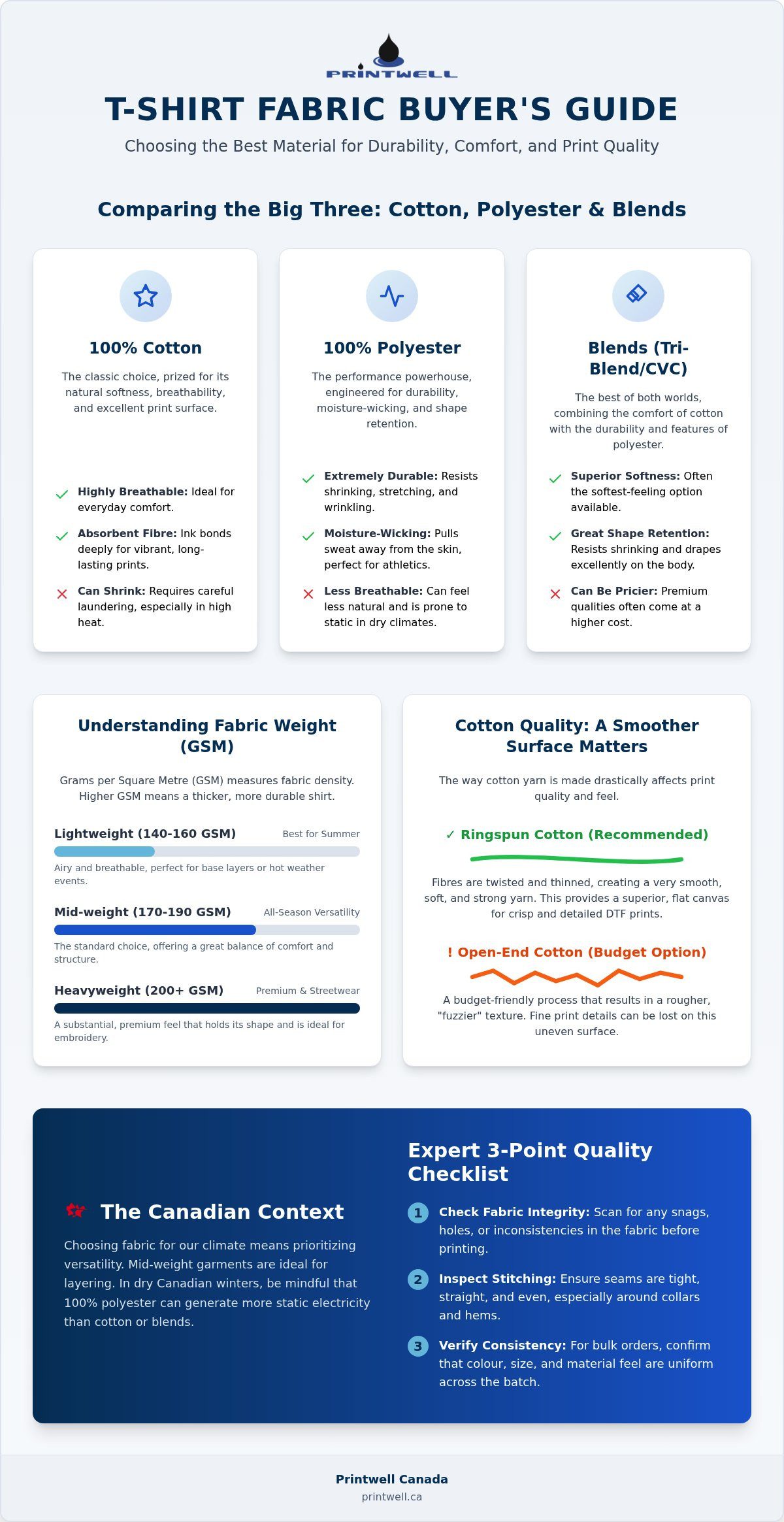
Grams per Square Metre (GSM) measures the density of the knit, which defines the thickness and “heaviness” of the shirt. Lightweight fabrics (140-160 GSM) are airy and breathable, making them excellent for summer festivals or as base layers. Mid-weight options (170-190 GSM) offer a versatile balance for year-round use in our climate. Heavyweight garments (200+ GSM) provide a substantial, premium feel that is currently trending in streetwear. Choosing a higher GSM results in a garment that holds its shape better, hides undergarments effectively, and provides a sturdy foundation for high-density embroidery or detailed DTF transfers.
Ringspun vs. Open-End Cotton
The manufacturing process of the cotton itself is a critical factor in print quality. Open-end cotton is budget-friendly but has a rougher, “fuzzier” texture that can interfere with fine details. Ringspun cotton undergoes a process that thins, twists, and softens the strands, resulting in a significantly smoother surface. This smoothness is vital when searching for the best material for printed t-shirts because it allows DTF films and inks to bond more securely. Selecting ringspun cotton provides a superior canvas, ensures more vibrant colours, and offers a soft-to-the-touch finish that customers and employees will actually want to wear.
Comparing the Big Three: Cotton, Polyester, and Blends
Choosing the best material for printed t-shirts requires a close look at how different fibres perform in the real world. Cotton, polyester, and their various blends each offer distinct advantages for specific Canadian use cases. Whether you’re outfitting a construction crew or launching a boutique brand, the fabric you select dictates the garment’s lifespan and the wearer’s comfort. It’s about finding the right tool for the job.
100% cotton remains the industry favourite for a reason. It’s reliable, breathable, and vibrant. Because cotton is a natural fibre, it’s highly absorbent, allowing inks to sink deep into the fabric for a long-lasting bond. It’s also at the heart of the sustainable fashion movement. In 2026, the Canadian sustainable fashion market reached a valuation of US$3.8 billion, driven largely by the demand for organic cotton and transparent supply chains. While cotton feels amazing, it does require careful laundering to avoid the shrinkage that often occurs in high-heat dryers.
100% polyester is the go-to for performance and durability. It’s a synthetic powerhouse that resists shrinking, stretching, and wrinkling. While early versions felt plastic-like, modern performance polyesters are remarkably soft and essential for moisture-wicking during humid summers. For those looking for a deep dive into technical fabric specs, this guide to t-shirt fabrics offers a great breakdown of how synthetics compare to naturals. Since the Federal Plastics Registry now requires reporting on plastic-based textiles, choosing recycled polyester is becoming a strategic move for eco-conscious Canadian businesses.
The Versatility of CVC and Tri-Blends
Blended fabrics are the workhorses of the custom apparel industry. Chief Value Cotton (CVC) is a top choice for high-volume orders because it balances the affordability of polyester with the natural comfort of cotton. Tri-blends, which add rayon to the mix, provide a unique, vintage look and a soft drape that fits the body perfectly. These blends are less prone to the warping or shrinkage that can plague pure cotton garments after multiple trips through the wash. They’re built to last, easy to maintain, and consistently comfortable.
Performance Polyester in Professional Settings
Synthetics are the logical choice for corporate wellness programs and outdoor work crews. They offer the utility needed for active environments where moisture management is key. Although 100% synthetic fabrics can occasionally face static issues during our dry winter months, their durability remains unmatched. If you’re ready to start your project, exploring a curated selection of custom t-shirts can help you find the right balance for your team. Modern printing technology ensures that even these technical fabrics can carry your brand with crisp, professional detail.
Matching Printing Methods to Your Fabric Choice
Finding the best material for printed t-shirts is only half the battle; the other half is selecting a printing method that complements those specific fibres. Historically, 100% cotton was the undisputed champion of the industry because its natural pores allow water-based and plastisol inks to sink deep into the garment. This absorption creates a bond that resists fading and maintains the fabric’s natural breathability. However, as apparel technology has evolved, so have the methods we use to decorate it. For a deeper look into how yarn construction affects these outcomes, this technical guide to t-shirt printing fabrics provides excellent manufacturing insights.
One of the most significant challenges in modern printing is dye migration. This occurs when the heat used to cure a print causes the polyester dyes in a dark garment to turn into gas and bleed into the lighter ink of the design. A bright white logo on a red polyester shirt can quickly turn pink if the wrong techniques are used. Modern artisans prevent this by using low-bleed inks and specialized barriers, ensuring your brand colours remain crisp, accurate, and professional regardless of the base material.
Why DTF is a Game-Changer for Mixed Material Orders
The rise of DTF gang sheet printing Canada has revolutionized how we handle orders involving various fabric types. Unlike older methods that struggle with synthetic fibres, Direct-to-Film technology uses a specialized adhesive powder that bonds the design to the surface of the fabric rather than relying on absorption. This allows for a consistent look across a mix of cotton tees, polyester jerseys, and nylon bags. Modern DTF transfers are rated for 50+ washes without significant cracking or fading on most cotton blends. This versatility provides a streamlined solution for businesses that need high-quality branding on diverse apparel styles.
Selecting Materials for Premium Embroidery
While printing handles fine details, custom embroidery offers a level of prestige and texture that ink cannot match. To achieve a clean result, you must use stable, higher-GSM fabrics. Heavyweight cotton and pique knits serve as the ideal canvas because they can support the weight of thousands of stitches without puckering or sagging. Using a very thin or light-coloured fabric risks “embroidery show-through,” where the backing material or thread tension becomes visible on the outside. Matching your thread weight to the fabric density ensures a crisp, professional finish that stands the test of time.
The Canadian Context: Choosing for Climate and Use Case
Selecting the best material for printed t-shirts in Canada requires a strategy that accounts for our dramatic seasonal shifts. We don’t just design for one climate; we design for humid coastal summers, dry prairie winters, and everything in between. Mid-weight blends, typically sitting around 170 to 180 GSM, offer the most versatility for year-round wear. These fabrics are substantial enough to look professional when worn alone in the spring, yet they remain breathable enough to serve as a comfortable base layer under a heavy parka or hoodie during the colder months.
Our dry winter air introduces a specific technical challenge: static electricity. 100% synthetic fabrics are notorious for building up a charge in low-humidity environments, leading to uncomfortable clinging and unexpected shocks. By choosing a cotton-heavy blend, you help dissipate this charge and improve overall comfort. Additionally, we must consider the impact of UV exposure during our long summer days. Intense sunlight can cause significant fading in natural dyes, whereas high-quality polyester and treated cotton blends tend to offer superior colour retention. This ensures your brand remains vibrant and visible even after a full season of outdoor use.
Materials for Summer Events and Festivals
Outdoor crowds demand maximum breathability and effective moisture management. For summer festivals, light-coloured, ringspun cotton is often the superior choice because it keeps participants cool by allowing air to circulate freely. To elevate the user experience, we recommend prioritizing garments with “tear-away” labels. These simple features prevent neck irritation in high-heat environments, transforming a simple promotional item into a comfortable wardrobe staple that people will continue to wear long after the event ends.
Durability for the Canadian Workforce
Physical labour and trades require a higher standard of garment integrity. For these environments, snag-resistant fabrics are essential to prevent premature wear and tear on the job site. Polyester-heavy blends are particularly effective for corporate uniforms because they maintain their professional shape and deep colour through the frequent, heavy-duty washing cycles that workwear requires. If your team needs to stay safe and visible, it is vital to select fabrics that integrate seamlessly with high-visibility requirements. You can browse a curated selection of rugged and professional custom t-shirts designed specifically to handle the demands of the Canadian workforce.
Final Verdict: How to Order the Perfect Custom T-Shirt
To ensure your final product meets professional standards, use this 3-point quality checklist before committing to a bulk order:
- Weight and Density: Confirm the GSM matches your intended use, aiming for a mid-weight range for year-round Canadian layering.
- Construction Detail: Look for side-seamed garments rather than tubular ones to ensure a more flattering, retail-ready fit that doesn’t twist after washing.
- Surface Texture: Prioritize ringspun cotton over open-end to guarantee a smoother printing surface and a softer hand-feel for the wearer.
We always encourage clients to order physical samples. Feeling the fabric weight and inspecting the print texture firsthand removes the guesswork from your investment. This is where professional printing services become invaluable. They bridge the gap between your digital design and the physical reality of the fabric, ensuring that every colour and detail translates perfectly to the material you’ve selected.
Budgeting for Quality vs. Quantity
Working with a provider that understands the national market offers a distinct advantage. You benefit from specialized knowledge regarding seasonal availability, local shipping logistics, and fabric performance in our climate. Leveraging expert design reviews allows you to ensure your artwork is perfectly matched to your chosen fabric’s texture and weight. Our team is ready, capable, and eager to assist you in making the right choice. Ready to bring your designs to life? Explore our range of premium apparel and start your custom order today.
Elevate Your Brand with Professional Apparel
Selecting the best material for printed t-shirts is the foundation of a successful brand image. By understanding how fibre density interacts with your design and how different weights perform across Canadian seasons, you ensure your apparel is worn with pride rather than discarded. Whether you prioritize the natural breathability of ringspun cotton or the resilient performance of a CVC blend, your choice speaks volumes about your commitment to quality and craftsmanship.
At Printwell Canada, we take personal responsibility for the outcome of every project. As high-resolution DTF and embroidery specialists, we help you bridge the gap between a digital vision and a retail-ready reality. You can rely on our fast turnaround on national shipping and our transparent process with no hidden fees for design reviews. We are ready to help you find the perfect canvas for your next big idea and ensure your team looks their absolute best.
Browse our premium t-shirt collection and start printing today. We look forward to helping your brand make a lasting impression from coast to coast.
Frequently Asked Questions
What is the best t-shirt material for DTF printing?
Direct-to-Film technology is remarkably versatile; however, cotton and high-quality cotton blends are generally considered the best material for printed t-shirts using this method. The specialized adhesive powder bonds effectively to both natural and synthetic fibres, ensuring a durable finish. For the highest level of detail and longevity, we recommend a 60/40 CVC blend. This material provides a smooth surface that allows the transfer to sit flat and resist cracking over time.
Will 100% cotton t-shirts shrink after the first wash?
100% cotton garments will naturally shrink if they are exposed to high heat during the washing or drying cycle. While many professional-grade shirts are pre-shrunk to minimize this effect, a small amount of contraction is still expected. To preserve the fit and the integrity of your custom design, it is best to wash your garments in cold water and tumble dry on a low-heat setting or hang them to dry whenever possible.
Is polyester or cotton better for hot Canadian summers?
What does “GSM” mean when looking at t-shirt materials?
GSM stands for Grams per Square Metre, a standard metric used to measure the weight and density of a fabric. A lower GSM, typically between 140 and 160, indicates a lightweight, airy shirt ideal for summer promotions. A higher GSM of 200 or more signifies a heavyweight, substantial fabric often used for premium streetwear. Understanding this number helps you select the best material for printed t-shirts based on your specific needs for durability and thickness.
Can I use the same design for both embroidery and printing on different fabrics?
You can certainly use the same logo for both methods, but the technical execution differs significantly. While a high-resolution file works for DTF printing, embroidery requires a specialized process called digitization to convert your artwork into a stitch file. We ensure your branding remains consistent across different fabrics by adjusting the design’s complexity to suit the texture of a cotton tee or the thickness of a heavyweight embroidered hoodie or hat.
What is a tri-blend t-shirt and why is it more expensive?
A tri-blend t-shirt is crafted from a mix of three different fibres: cotton, polyester, and rayon. This combination creates a garment that is exceptionally soft, features a unique vintage-heathered look, and drapes beautifully on the body. The inclusion of rayon, a manufactured fibre that mimics the feel of silk, increases the production cost. While more expensive than standard cotton, tri-blends offer a premium retail feel and superior comfort that customers and employees truly value.
How do I prevent my printed shirts from pilling?
Pilling occurs when short fabric fibres break and tangle into small balls on the surface due to friction and heat. To prevent this, prioritize garments made from ringspun or combed cotton, which feature longer, smoother fibres that are less likely to fray. Washing your custom apparel inside out in cold water and avoiding harsh detergents will also extend the life of the garment. High-quality blends are specifically engineered to resist this wear and maintain a professional appearance.
Which material lasts the longest for corporate uniforms?
For uniforms that must withstand frequent washing and daily wear, polyester-heavy blends or 60/40 CVC fabrics are the most durable options. These materials offer superior colour retention, ensuring your brand colours don’t fade after a few months of service. They are also more resistant to snags and wrinkles than 100% natural fibres. Choosing a mid-weight blend provides the necessary structural integrity for high-density embroidery while remaining comfortable enough for long shifts in any environment.